

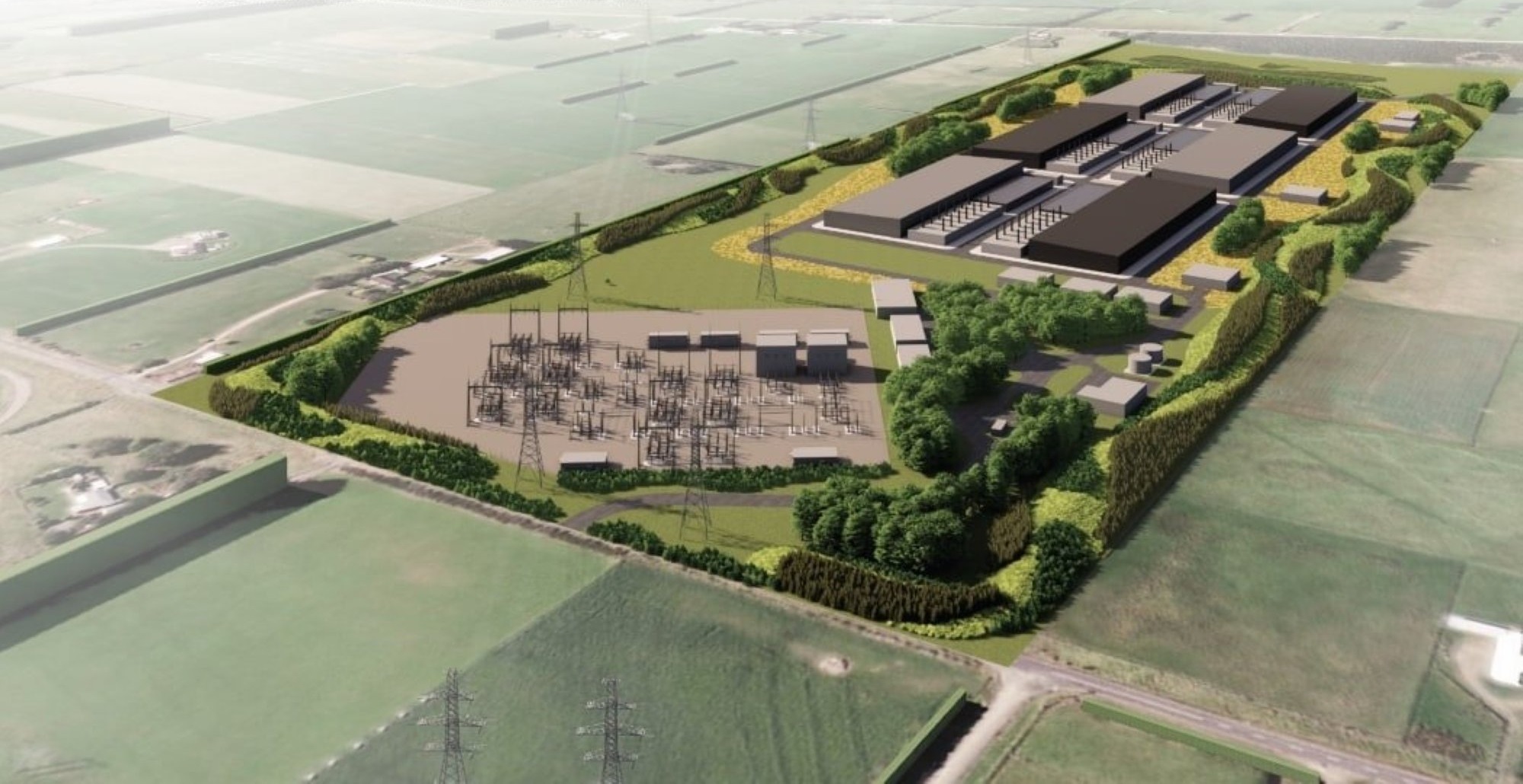
Datagrid New Zealand announced yesterday the signing of a 140MW long-term power purchase option agreement (PPOA) with Mercury Energy, securing electricity price certainty for Datagrid’s next-generation AI data centre platform.
The data centre is a 280MW hyperscale data centre campus in Makarewa, near Invercargill, purpose-built for advanced AI, sovereign cloud and high-density computing workloads.
Resource consent has been granted for the project.
The purchase of the 140MW of electricity — 3% of national demand — was seen by Datagrid as a long-term price hedge for its flagship hyperscale campus.
Mercury Energy chief executive Stew Hamilton said having guaranteed customers buying a significant amount of generation means "we can continue to invest significantly in new renewable generation for New Zealand, which is key for meeting future demand growth, building resilience and ultimately helping with energy affordability."
Mercury is building the second stage of the Kaiwera Downs wind farm, near Mataura. Stage two of the development will bring a total of 46 turbines and bring the capacity up to 198MW.
It is also going through the process to upscale its wind farm at Mahinerangi. The process is going through the Fast Track Approvals Act legislation. There are 12 turbines in place at the moment, producing 36MW. Another 44 turbines are planned to add another 190MW to the project.
Data centre projects overseas, particularly in the United States, have come under fire for overloading networks, increasing costs to other power users and depleting groundwater levels.
But these events would not happen in New Zealand, Datagrid said.
The deal yesterday gives generators revenue certainty they need on new renewable projects — something that has historically been difficult without a large, committed offtaker, Datagrid said.
The demand it created was expected to enable new power capacity to be built, not compete with existing supply.
It would not push up prices as more renewables in the system improved security of supply and puts downward pressure on prices over time.
New Zealand households were not subsidising Datagrid’s connection. Datagrid was contributing to the infrastructure that serves them.
Datagrid’s load also naturally complements New Zealand’s existing demand patterns: national electricity demand peaks in winter, while data centre cooling and power demand is typically higher in summer.
Datagrid was engaged with Transpower well ahead of the facility’s expected commissioning in late 2028. Transpower had publicly confirmed confidence in the grid’s ability to meet the facility’s needs alongside new generation coming online, Datagrid said.
Concerns about data centre water consumption were well founded for facilities in hot climates. But Southland’s average annual temperature of around 9°C–10°C means the facility can rely on natural free cooling for most of the year. Mechanical cooling would be rarely needed.
Rainwater captured from the roofs of the data centre buildings was expected to supply most or all of the facility’s water requirements.
The consented maximum water use is 220 million litres per year, although actual usage is expected to be significantly below this. A single mid-sized dairy farm in New Zealand consumed a comparable volume annually, Datagrid said.


