
PHOTO
Labour has promised to ban big companies from charging excessive prices, if elected in November.
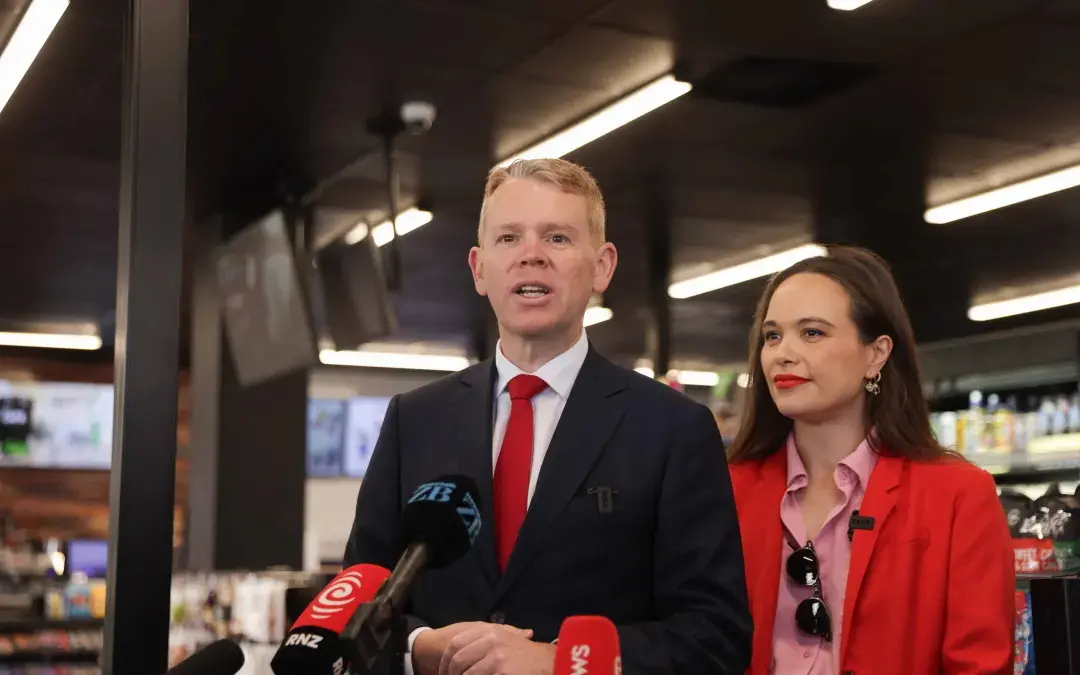
Leader Chris Hipkins said a handful of big businesses were guilty of price-gouging - that is, charging more than necessary for essential items.
"Right now, a company big enough to dodge competition can charge excessive prices for the basics, like food and fuel, and there's no law against it," he said on Wednesday.
"Labour will change that, by making it illegal for big powerful companies to rip off New Zealanders on the essentials."
Commerce and Consumer Affairs spokesperson Arena Williams said 97% of New Zealand businesses were small and would not be affected by the policy.
"It also only applies in markets for essentials, like food, power, fuel, transport, telecommunications banking, and insurance.”
Labour's policy document said the law would apply where a company had enough market power that customers could not realistically shop elsewhere, suppliers had nowhere else to go, or new competitors struggled to enter the market.
The full policy includes:
- Making it illegal for big companies with substantial market power to charge excessive prices for essential goods and services, or to pay unfairly low prices to suppliers.
- Setting a legal test for price gouging: holding prices "well above what they would otherwise be in a competitive market, sustained over time".
- Requiring companies that gouge to pay penalties and hand back every dollar of excess profit.
- Giving the Commerce Commission power to investigate price gouging and supporting consumer groups and suppliers to do the same.
Williams said similar rules were already in place in the United Kingdom, Europe, Canada and Australia.
How the ban would work
Williams said the Commerce Commission would investigate dominant companies and take them to court - and consumer groups could too.
They would have to prove price-gouging was taking place - not necessarily for a single product, but across a range of essentials.
"We'd see cases being brought about that collection of goods and the prices that are being charged across it.”
That would likely be a class action, with a group of consumers bringing a claim against a company, Williams said, and if a company was guilty of gouging, that group would need to be paid back for being overcharged.
More competition policy to come
National also made a competition policy announcement on Wednesday.
If re-elected on November 7, it is proposing to sever Pak'nSave from New World, contingent on whether a Commerce Commission review finds that splitting the Foodstuffs-owned supermarkets would leave shoppers better off.
National believes this would help drive down grocery prices.
But Hipkins said National was simply announcing another review and New Zealanders needed "decisive action", which his party would take.
"We'll have further announcements about how we increase competition,” he said.
