

PHOTO
Rotorua's mayor says it's a "welcome surprise" councils will take charge of how they spend new International Visitor Levy funding if National is re-elected on November 7.
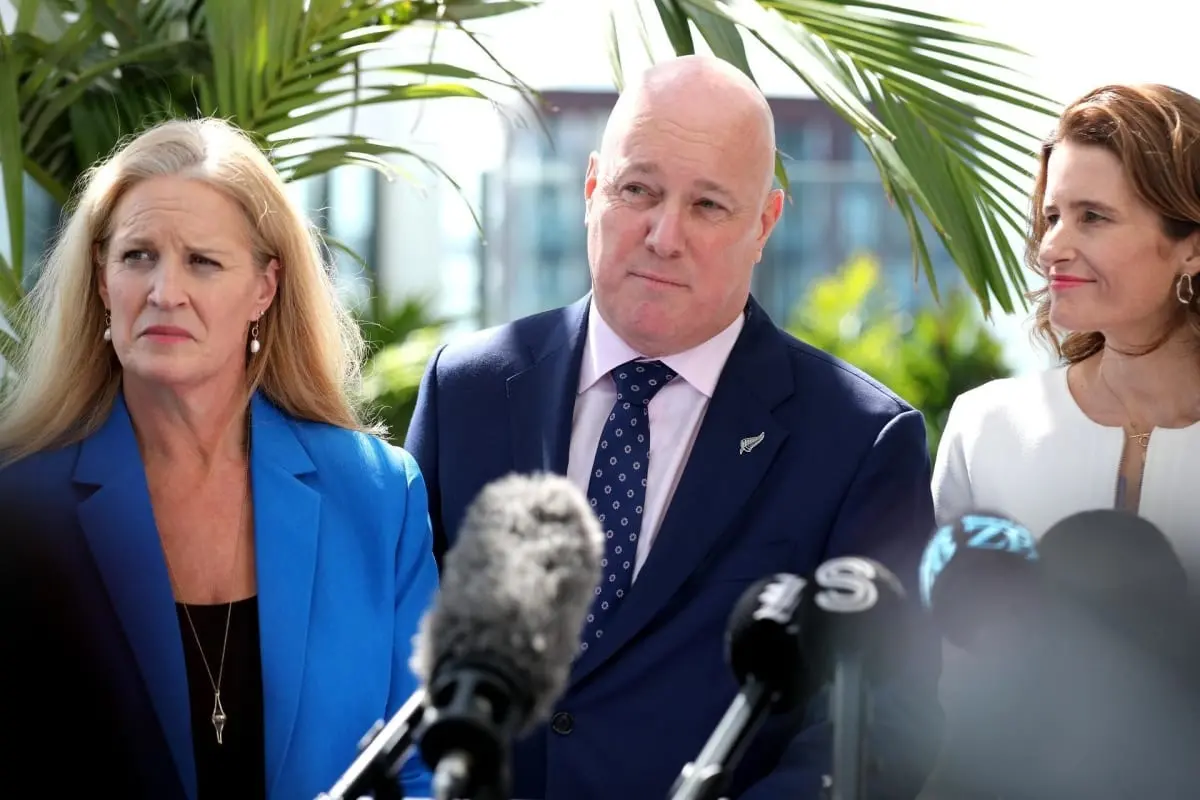
National's alternative to a bed tax announced by Prime Minister Christopher Luxon, Tourism Minister Louise Upston, and Finance Minister Nicola Willis would redistribute the International Visitor Levy tourists pay at the border.
Instead of the $100 levy going into government baselines, they announced $100 million a year would go to the Department of Conservation, $50m to tourism projects and the rest to councils.
Each council's share would depend on the number of overseas tourists who stayed in its area.
This would also be topped up with more than $105m taken from future operating allowances.
The new policy is a replacement for a bed tax which National had originally agreed to consider but has now ruled out.
Auckland mayor Wayne Brown said it was a step in the right direction but would still leave his council millions of dollars short compared with the take from a bed tax.
Rotorua mayor Tania Tapsell, a former National candidate, said it was "such a relief" to hear of the new policy.
"We do need significant investment in our regions and actually this has come as a welcome surprise because we've actually got what we wanted as councils.
"We said we want to make the decisions for our communities and that's exactly what's going to happen - a significant amount of money guaranteed over the next few years."
It was crucial councils decided how the money would be spent. The South Island would focus on infrastructure, Auckland on attracting events and Rotorua would be looking at destination marketing, Tapsell said.
She believed Queenstown would get more than $80m over the next four years to help with its infrastructure spending.
Rotorua, which hosts around 1 million foreign tourists a year, would get around $20m over four years.
Tapsell said the region would have got more with a bed tax — however, it was still a significant amount of money.
Using the visitor levy was preferable to avoid New Zealanders having to pay any levy, she said.
"This is quality over quantity."
The new money would also lift a burden from ratepayers. Rotorua with a population of 78,000 hosted 2 million visitors annually.
"This is going to help us without hurting the pockets of those domestic visitors."
‘A good first step’
Sudima NZ operating officer Les Morgan also praised the levy announcement which he said was a good first step.
He said a lot of work had been done on the bed tax and it was disappointing to have it "tossed aside".
However, the levy was the second most favoured option.
The raising of the levy from $35 to $100 had so far had little impact and showed visitors were prepared to pay it, Morgan said.
He was among those concerned that while it was positive that councils would receive the levy funding, it was not "fresh investment".
It was redistributing existing money.
With the government aiming for 4.7 million visitors by 2034, there remained "a huge funding gap" to pay for the infrastructure upgrades that would be needed.
"The money is definitely welcome but we most definitely need extra funding."
