
PHOTO
The prime minister has officially opened the South Island’s largest solar farm at Christchurch Airport.
Prime Minister Christopher Luxon was in the city on Thursday to open the $273 million Kōwhai Park farm.
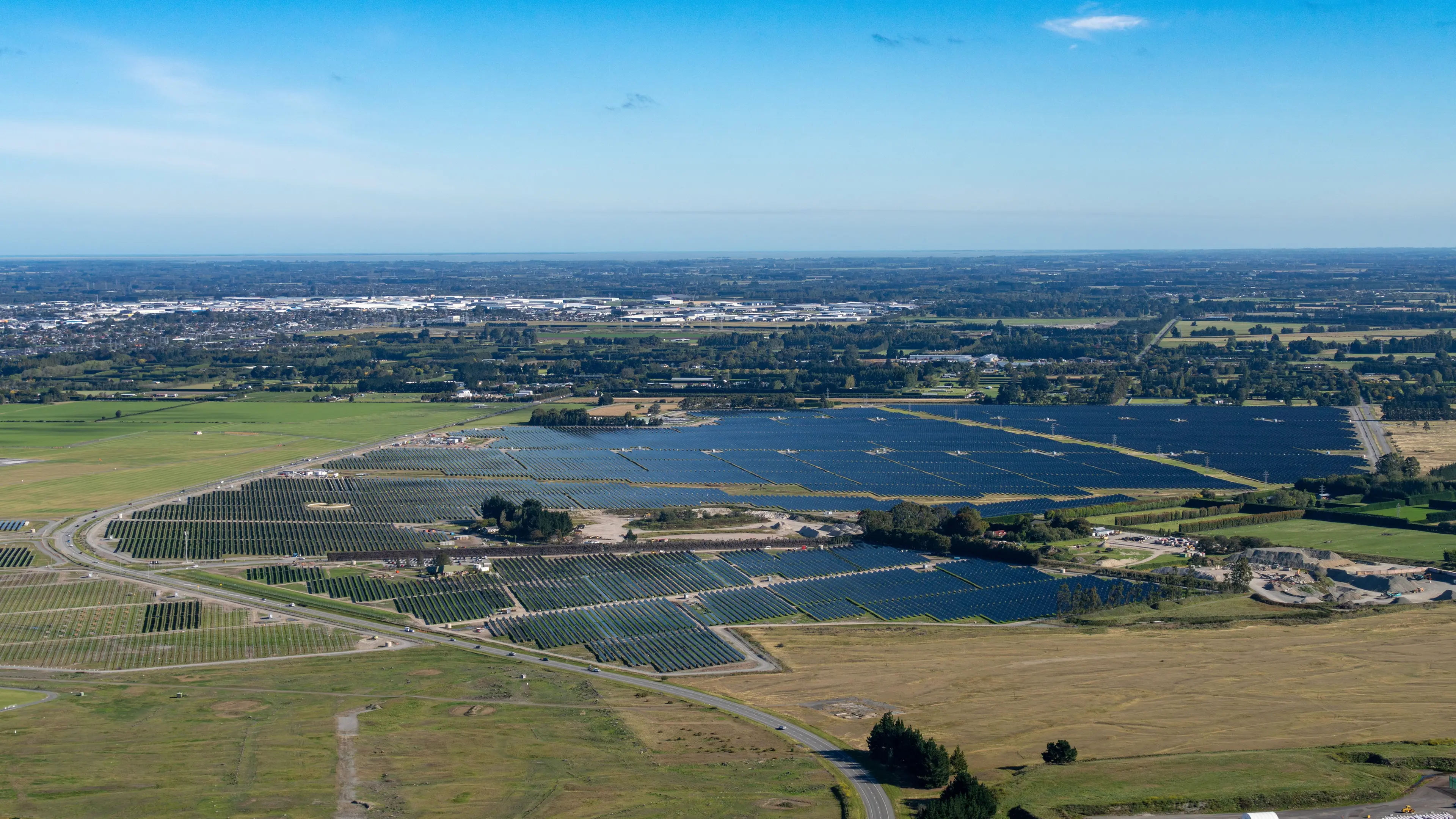
Developed through Contact Energy and Lightsource bp’s joint venture partnership, the solar farm is expected to generate 275GWh of renewable energy a year. That’s enough to run about 36,000 average New Zealand homes.
The airport and Canterbury-based dairy company, Synlait, will source electricity from Kōwhai Park under long-term power purchase agreements.
Synlait will buy 25% of the electricity generated to power its Dunsandel and Dairyworks plants.
The farm has about 300,000 solar panels, stretching across a 230ha site.
Contact chief executive Mike Fuge said the farm demonstrates the opportunity renewable energy presents for New Zealand.
“New Zealand has an incredible renewable energy advantage. Building new generation at scale gives businesses the confidence to electrify and strengthens our security of supply.
“That means a more resilient energy system, with more home-grown generation supporting a productive and prosperous New Zealand.
“We have huge aspirations for what renewable energy can deliver for this country.”
Kōwhai Park was Lightsource bp’s first completed project in New Zealand.
Its chief operating officer for Asia-Pacific, Adam Pegg, said the “park is an important milestone” for Lightsource bp.
“We are excited to bring our global experience and capability to this market and work with Contact Energy to deliver low-cost and reliable large-scale renewable energy projects.
“It also demonstrates what strong partnerships can deliver. Working alongside Contact Energy, Christchurch Airport, local businesses and the wider community, we have combined international capability with local knowledge to deliver a project that will provide renewable energy for decades to come.
“We see significant opportunity for large-scale renewables to support New Zealand’s growing electricity needs, industrial electrification and long-term energy security.
“Kōwhai Park demonstrates the scale of what can be achieved, and we look forward to building on that momentum across New Zealand.”
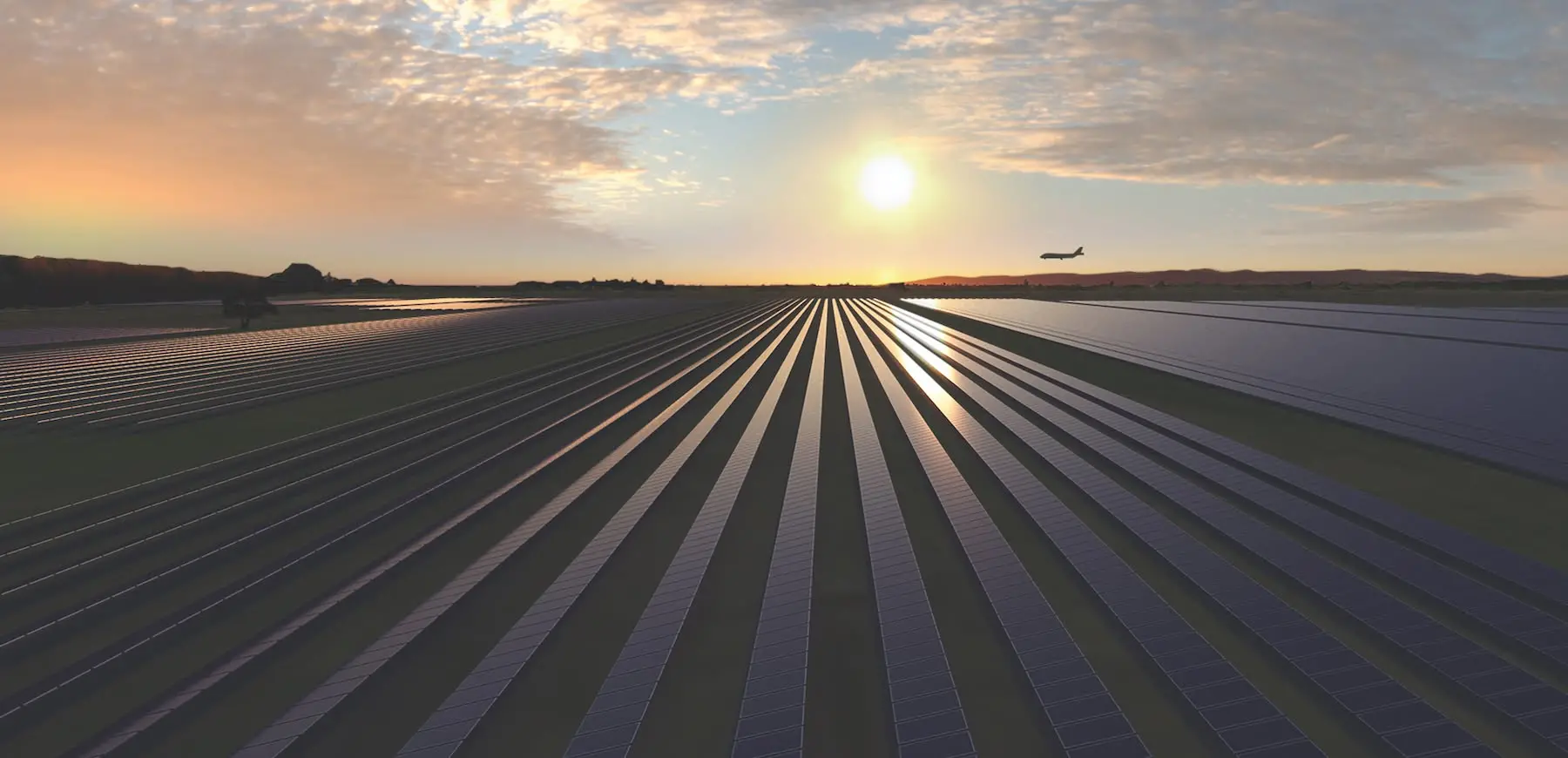
Christchurch Airport chief executive Justin Watson said it “shows what can happen when you think differently about how airport land can be used”.
“The vision started here at Christchurch Airport and bringing Contact Energy and Lightsource bp together to help realise it has been a fantastic example of what strong partnerships can achieve.
“For us, this has always been about more than a solar farm. Our vision for Kōwhai Park is to create a renewable energy precinct that can support new opportunities and deliver long-term value for our region.
“Seeing the solar farm operating today is a significant step towards that vision and something we’re incredibly proud to have delivered together.”
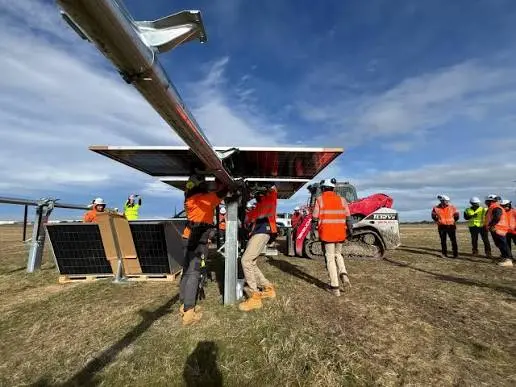
The park’s construction also delivered significant economic benefits for the region, employing 235 people at the project’s peak with 66 Canterbury businesses involved in building the solar farm.
Kōwhai Park quick facts:
-
Expected to generate 275GWh a year, equivalent to the annual electricity demand of 36,000 homes.
- Around 300,000 panels.
- $273 million investment.
- 150MWac/168MWdc of renewable generation capacity.
- 235 people employed at the project’s peak construction
- 66 Canterbury businesses involved.
- December 2021: Christchurch Airport announced phase one — a planned 150MW solar array.
- February 2023: Contact and Lightsource bp announced as partners to develop, operate the farm.
- August 2026: Commissioning started.
- October 2026: Kōwhai Park official opening.
-Allied Media