
PHOTO
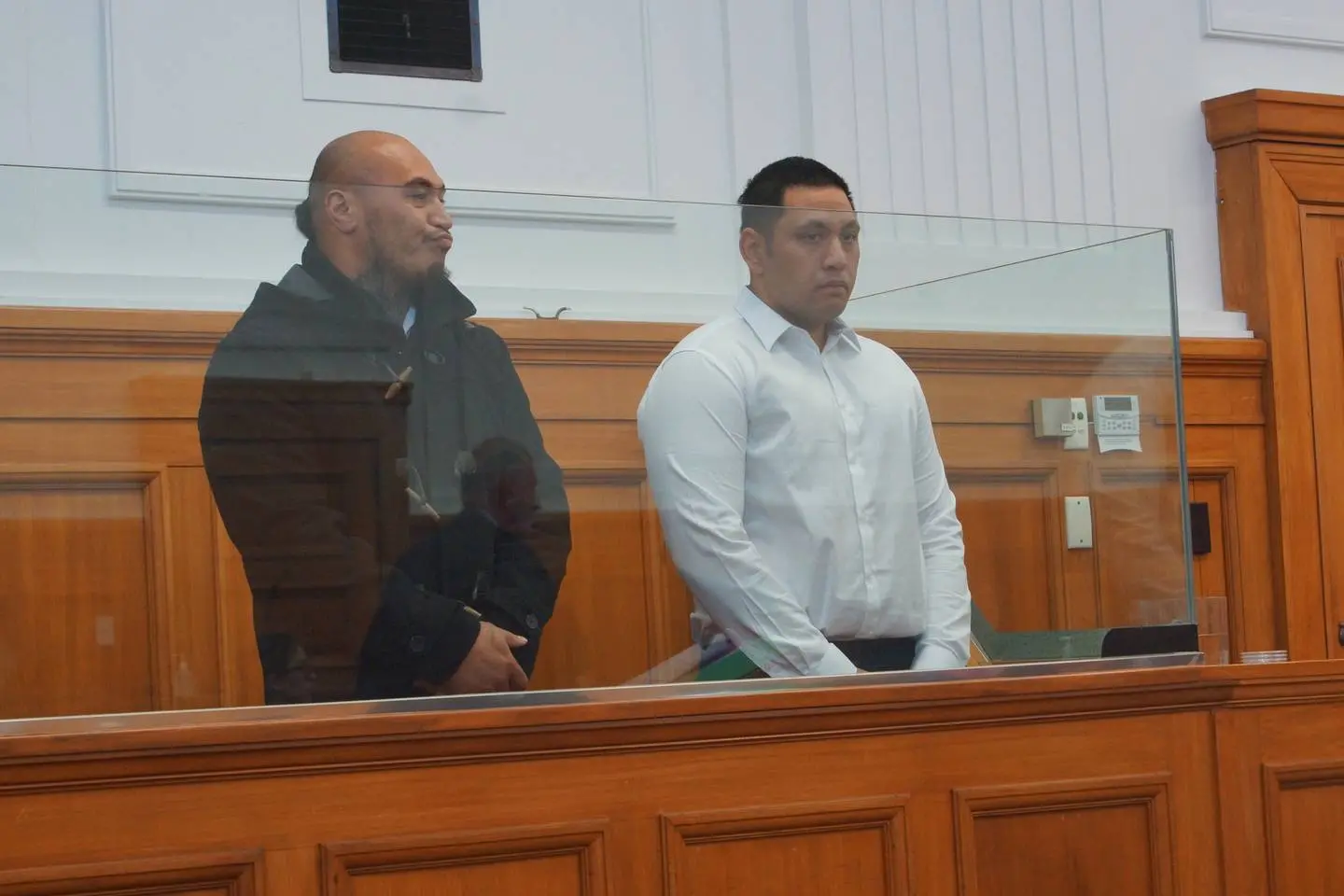
Separated from his six children and thousands of kilometres from the life he once knew, a 501 deportee says he fell in with other “501ers” who ultimately drew him into a major cocaine operation.
Peter Uelese told the Court of Appeal he was used and that his addiction was preyed upon when he became involved in moving 9kg of cocaine in an “amateurish and shambolic fashion”.
The argument formed the basis of a bid to cut the seven years and six months’ imprisonment he received in the Christchurch District Court in December 2024.
However, the court was not persuaded.
Uelese, a member of the Rebels MC, was hired to fly from Wellington to Christchurch in January 2024 to collect and then distribute the drugs to another person.
Uelese, motivated by financial reward, was set to receive $60,000 for his role, according to a summary of facts.
He drove into a container yard owned by a produce wholesaler late one night carrying a black duffel bag and a handheld drill.
Uelese forced his way into the air-conditioning unit of a container, ripping off a fan and recovering a GPS tracker and an unknown quantity of cocaine hidden inside.
He discarded the GPS tracker and placed the cocaine in the bag before returning to his vehicle.
The way he carried the bag back and forth to the car indicated there was a significant volume of cocaine in the bag, according to the summary of facts.
A police investigation concluded he had removed 9kg of cocaine from the container.
Uelese met an unknown associate two days later and supplied them with a kilo of cocaine, with a promise of a cash payment to follow.
A day later, he travelled with an associate to Burnside Park in Christchurch and met an unknown person and handed over 8kg of cocaine in exchange for $150,000.
However, Uelese misunderstood instructions given by the group who hired him. He was instructed to collect the $150,000, but not hand over any of the drugs.
A follow-up meeting was scheduled so he could receive the remaining money for the cocaine.
However, police were waiting at his Christchurch hotel that afternoon and found $143,000 in his room.
Police also found about $2000 worth of clothing receipts.
A search of his associate’s address on the same day uncovered $5000.
There was no evidence Uelese was involved in the importation. However, he was aware of the quantity involved and willingly collected and supplied the drugs on behalf of his bosses, according to the summary of facts.
At sentencing, Judge Paul Kellar adopted a starting point of 10 years’ imprisonment for the cocaine offending and applied an uplift of six months for burglary offending.
Judge Kellar allowed reductions of 15% for guilty pleas, 5% for background, and a further 5% because Uelese had been deported from Australia and had no family support in New Zealand.
Uelese’s lawyer Josh Lucas submitted on appeal that a reduction of 17.5% was warranted for background and personal circumstances, saying difficulties for 501 deportees needed to be recognised.
‘Preyed upon his addiction’
The only realistic choice they had was to develop associations with other “501ers” and usually other criminal associates in an effort to find some connection, Lucas submitted.
He said Uelese’s isolation from his family led him to associate with others who had also been removed from Australia in similar circumstances, and that some of them used him and “preyed upon his addiction” to move a large amount of cocaine in an “amateurish and shambolic fashion”.
In the Court of Appeal decision, Justices Rebecca Ellis, Cameron Mander and Ian Gault accepted deportation could dislocate offenders from their family and friend networks, and that it had done so in Uelese’s case.
Uelese was born in Samoa and lived in New Zealand from age 3 until he moved to Australia around 1997 at 14.
He had no immediate family or friends in New Zealand when he was deported in 2016 in his early 30s, according to the decision.
The judges accepted there was a causative connection between his background and offending, noting he had experienced dislocation from his “aiga” (wider family) when he moved with his immediate family to Australia.
Moreover, after deportation from Australia to New Zealand, which followed two years in an Australian detention centre resisting deportation, he struggled to adjust to life away from his family.
His six children from two relationships, aged between 8 and 21 at sentencing, his two grandchildren, his parents and his siblings all lived in Australia.
A report writer referred to a cultural expectation of Uelese, as the first-born child, to support his family.
He became involved with the Rebels MC gang largely because many were also deportees, according to the decision.
‘I needed the money’
However, Justices Ellis, Mander and Gault found Uelese had some family support in New Zealand.
And after deportation to New Zealand, he remained subject to conditions until November 2017 and was offence-free until 2022, when he received convictions for “arguably minor matters”.
Uelese was convicted and sentenced alongside fellow Rebels gang member George Junior Pikaahu after a mass brawl in Blenheim in 2021.
The large brawl between gang members and seasonal workers was estimated to have involved about 50 people.
Pikaahu was jailed for seven years for the manslaughter of Tongan seasonal worker Hiko Lynch, who died of a stab wound.
Uelese received six months’ community detention and 100 hours’ community work, plus 12 months’ supervision on the charge of assault with intent to injure, which occurred during the same brawl.
Uelese had offered no real explanation for the current offending, saying he “didn’t even know who the people were in Christchurch, it was desperate times and I needed the money, so I got involved”.
The Crown submitted claims that associates used him and preyed upon his addiction were contrary to Judge Kellar’s finding that he was not coerced or pressured and did not appear to have been motivated by addiction.
The Court of Appeal noted, as Lucas had acknowledged, there appeared to be a mathematical error in Judge Kellar’s calculation, since a total 25% reduction from the overall starting point of 10 years and six months’ imprisonment would result in an end sentence of seven years and 10 and a half months.
It appeared Judge Kellar may have taken the 25% reduction from the 10-year starting point for the cocaine offending rather than the overall starting point, according to the decision.
But in dismissing the appeal, Justices Ellis, Mander and Gault accepted the Crown’s submission that Judge Kellar’s starting point was generous and could have been at or above 11 years.
“Overall, we conclude the end sentence was not manifestly excessive.”