

PHOTO
As first-year university students take the next step into adulthood, some are giving up a traditional experience long seen as a pathway to independence because it’s no longer affordable.
Christchurch-based year 13 student Keira-Lee Mclachlan works two part-time jobs but will still study from home next year. The deposit for a one-year $20,000 University of Canterbury residence hall is simply too much for her.
“I would much rather stay at home and maybe miss out on some of the social aspects and make sure that I'm not in huge amounts of debt,” the 18-year-old says.
“I do feel like I'm falling behind a little bit. I feel like everybody that's moving away to other universities is kind of taking more of a step forward [whereas] I feel like I'm not really going anywhere.”
For generations of students, leaving home for university has been the first step towards independence. But some school leavers are deciding the experience costs too much nowadays.
University accommodation fees for next year range from $196 a week ($7448 for a full year) to $827 a week ($33,410), depending on room type, services, utilities included and location.
Auckland year 13 student Kaitlin Thomas, who also has a part-time job and plans to study commerce at AUT, has opted to study from home rather than spend about $20,000 a year on accommodation on top of tuition.
“I feel it's kind of like, at this stage, financially unrealistic for most people.”

Scholarships that would help cover costs are also highly competitive, Thomas says. Auckland year 13 student Pluto Hooper was accepted into a University of Auckland hall but turned it down after missing out on a scholarship.
“It just sucks to miss out on that core part of university,” Hooper says.
“[Even if there was an accommodation loan] I'm going to have, I think, $100,000 in student debt by the time my study ends. So another $20,000 on top of that is just too much.”

Census data suggests about 247,000 people in New Zealand aged 18 to 29 live with their parents - a growth of almost 25 percent since 2013.
Finding a job
Graduates and young job seekers are contending with high youth unemployment. According to the Canterbury Student Association (CSA), Student Job Search recorded about 400 fewer Canterbury listings in the first half of this year compared with the same period in 2025, while active accounts and applications skyrocketed.
There is another trade-off for those who are lucky enough to land a job. Mclachlan says young workers want to take as many hours as possible to make a good impression and save, while still doing well academically and having time to rest.
“We are also seeing students having to make difficult decisions between prioritising study, paid employment, and their wellbeing,” says CSA engagement vice-president Max Hodgson.
And accommodation is only part of the bill. Hodgson says students have been struggling with rising grocery, transport, utility and course-related costs. Student groups around the country reported rising demand for hardship support this year.
Why not go outside of halls?
Flatting isn't necessarily an easy alternative. Median rent is $400 for a one-bedroom flat in central Auckland and $480 for a two-bedroom flat in Ilam, Christchurch, according to Tenancy Services’ market rent tool.
Ray White economist Atom Go Tian says student growth has remained high despite falling net population growth. That is adding rental demand around campuses while the market has fewer property investors.

For some students, however, staying home is not an option. Desired courses may only be available further afield. Timaru year 13 student Irene Zachariah initially considered flatting when she questioned whether her family could afford University of Otago accommodation and tuition.
“But once I talked with someone who had actually taken this course before, she had actually told me that it's good to go into a hall rather than going flatting. Because especially like the Health Sciences First Year, it would be better for someone to actually help you with it and meet other people who are going through the same things as you.”
A scholarship will cover part of her costs, with savings from a part-time job and help from her parents making up the rest. She hopes to find casual work that fits around study too.
“Even through all the academic times we have to study, making good friends, spending time with them is equally as important. Because the thing is, if you keep studying continuously for hours and hours and hours, after one point your brain cannot really function properly. So, of course, we do need some time to let off some steam.”
What does a hall room cost in 2027?
The range is wide, and universities that have cheaper halls still offer considerably more expensive options.
At the lower end, Lincoln and Victoria University of Wellington offer options at $200 and $196 a week respectively, although both also have accommodation costing about $600 a week.
The highest price found by RNZ was Canterbury's College House at $827 a week – which is a rise of $2430 next year to $33,410 for the full year. By comparison, a shared apartment room at Canterbury's Hīnau would cost $227 a week, excluding a meal plan.
Elsewhere, options range from $296 to $669 a week at Otago, about $360 to $468 at AUT, about $385 to $580 for first-year halls, about $280 to $536 at Waikato, and about $280 to $470 at Massey.
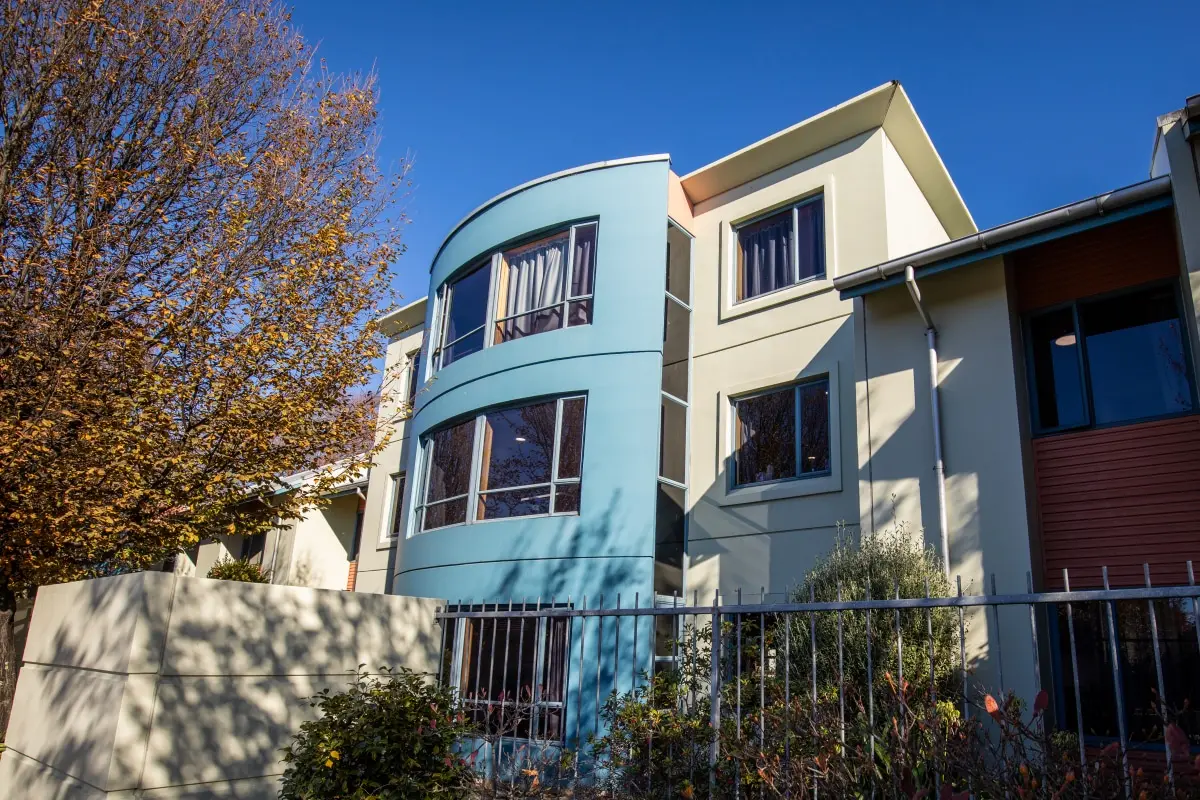
University of Canterbury spokesperson Paul O'Flaherty says they aim to keep increases to university-owned halls to a minimum while covering rising operating costs, including food and fuel. (Earlier this year, seven universities told RNZ they collectively carried several thousand un-subsidised domestic students last year and expected more of the same this year.)
College House, owned and operated by a board of governors, sets its pricing separately through an accommodation provider.
The University of Auckland says its average increases of 3.7 to 3.8 percent are broadly in line with inflation, and fees cover services including utilities, furnishings and pastoral care.
Is there financial help around?
Students can borrow weekly living costs through StudyLink, which must be repaid, or receive an allowance if eligible, but neither provides a lump sum for accommodation or hall deposits.
Single students under 24 with no children and living away from home can receive a maximum allowance of $333.38, after tax. Allowances include an accommodation benefit of “as much as $60 a week, depending on what hostel you live in”. Income(s) are factored into how much pay a student gets.
Some universities also offer hardship grants after other options have been exhausted. The University of Auckland's Student Emergency Fund does not cover accommodation fees, although it can help with other living expenses. A spokesperson said students who are finding it hard to meet their payments are encouraged to speak to the relevant team and discuss support options.
Eligibility criteria changes were recently made to Jobseeker Support too.
