
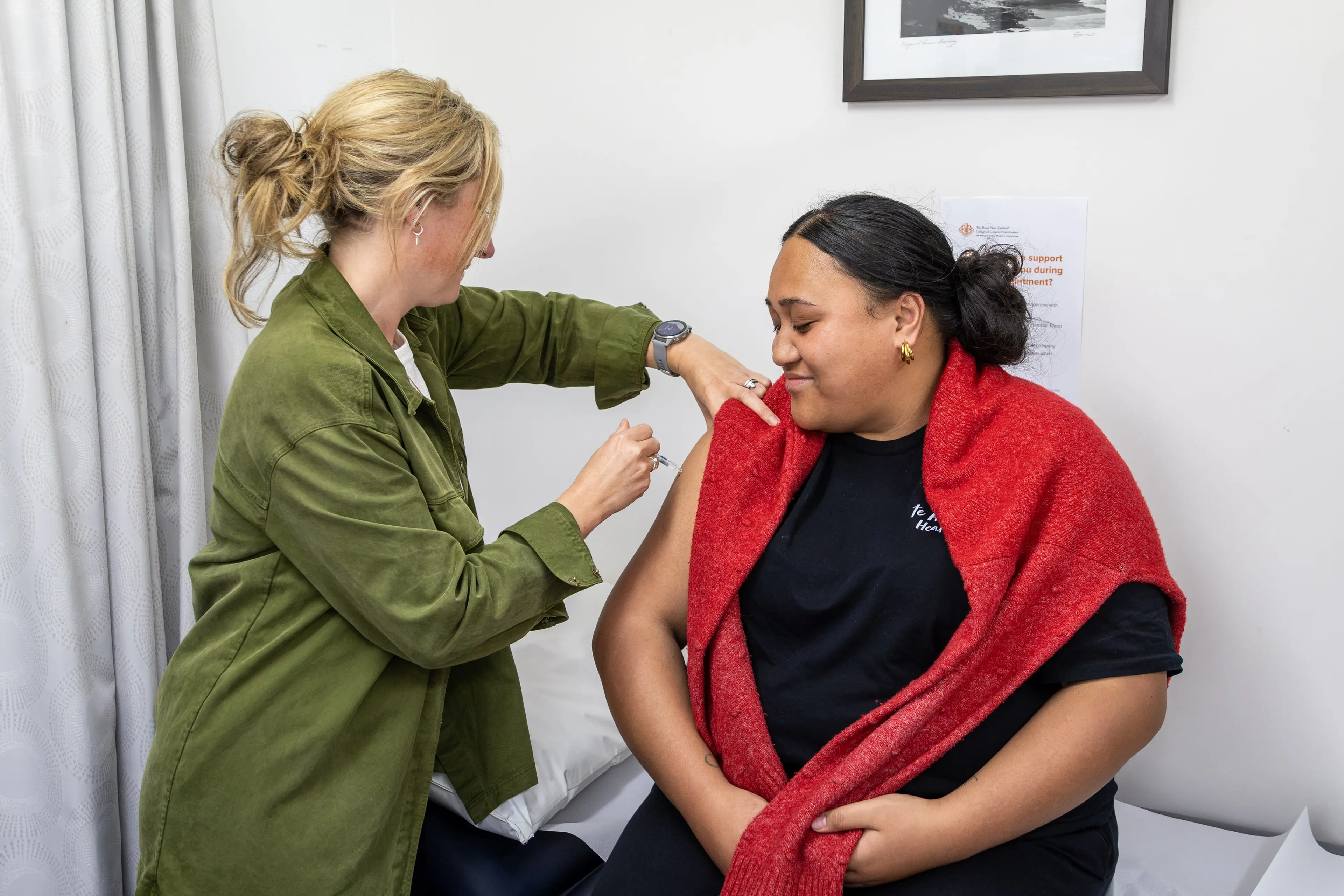
PHOTO
While hospitals and GP clinics struggle under the rising tide of patients suffering from winter illnesses, figures show less than 25% of the country's population received the flu vaccination this year.
Health New Zealand data also showed that the percentage of people getting a free flu shot over the age of 65 had steadily decreased from 70% in 2022 to 59% this year.
He Waka Tapu, which provided health and social services to Christchurch's eastern suburbs including Te Aranga Health, said there were a number of reasons people did not get immunised, with flu shots costing between $25 and $40 for those who did not meet the free vaccine criteria.
Operations manager Zack Muhrer said 200 people took up the offer of free flu vaccinations last year as a result of a Te Aranga Health contract with Pegasus Health but the scheme was not in place this winter, when only 50 people paid for vaccines at the clinic.
Muhrer said staff were also encountering post-Covid-19 resistance to vaccines.
"There is still this social hesitancy to get vaccinated. So we find everything from flu jabs, to Covid jabs, to childhood immunisations, you need to have a lot of whanaungatanga (connection) and build that rapport with patients and have those conversations many times before they are willing to get their child immunised or get themself a vaccine," he said.
When RNZ visited Te Aranga Health medical centre, Aranui woman Sandra was taking her four-year-old grandson to get his vaccinations.
She said her entire household had been hit hard by the flu over winter.
"My son had it for a couple of weeks and then came right, and then bang, had it again. So that's three, four weeks off school. My mum's just got it, so she's pretty bad at the moment. My husband has had it, I've had it a few times. One time I ended up in hospital with the start of bronchitis," she said.
Sandra said she normally received a flu vaccination but this year other things got in the way, particularly because she was the only person in the house who could drive.
"I was just too busy and running around trying to get everyone what they need for their flu and just trying to keep up to date with it all," she said.
The flu vaccine is free for some people, including those aged over the age of 65, people with certain long-term health conditions, pregnant people and as of last week, children under the age of five.
Health NZ's director prevention - immunisations Nikki Canter-Burgoyne said more people received flu vaccinations in 2026 than in either of the previous two years.
In the year to date, 1,251,430 people had received the flu immunisation, or about 23% of the population.
Between April 1 and September 30, 2025, 1,206,948 people had the vaccine, while over the corresponding period in 2024, 1,167,439 had a shot.
In 2022 the number of people who had the flu vaccine had risen to a peak of 1,276,175.
Figures showed 49% of Maori over the age of 65 had a free flu shot this year, and 48% of Pacific people.
"Health New Zealand continues to encourage New Zealanders to get vaccinated against influenza. It is not too late to receive a flu vaccine, which remains the best protection against serious illness from flu," Canter-Burgoyne said.
University of Auckland Associate Professor and vaccinologist Helen Petousis-Harris said there were many reasons people chose not to get vaccinated, including vaccine fatigue and an increased distrust in institutions post-Covid-19.
She said people also underestimated the impact the flu could have on their long-term health.
"What we know is that people are six times more likely to have a heart attack, as an example, a week after having the flu, so it just shoots up dramatically. Older people in particular can become more fragile and so unable to get back to the things they used to be able to do," Petousis-Harris said.
She said the best benefit came from consistently getting the flu vaccination each year, particularly for the old and the young.
