
PHOTO
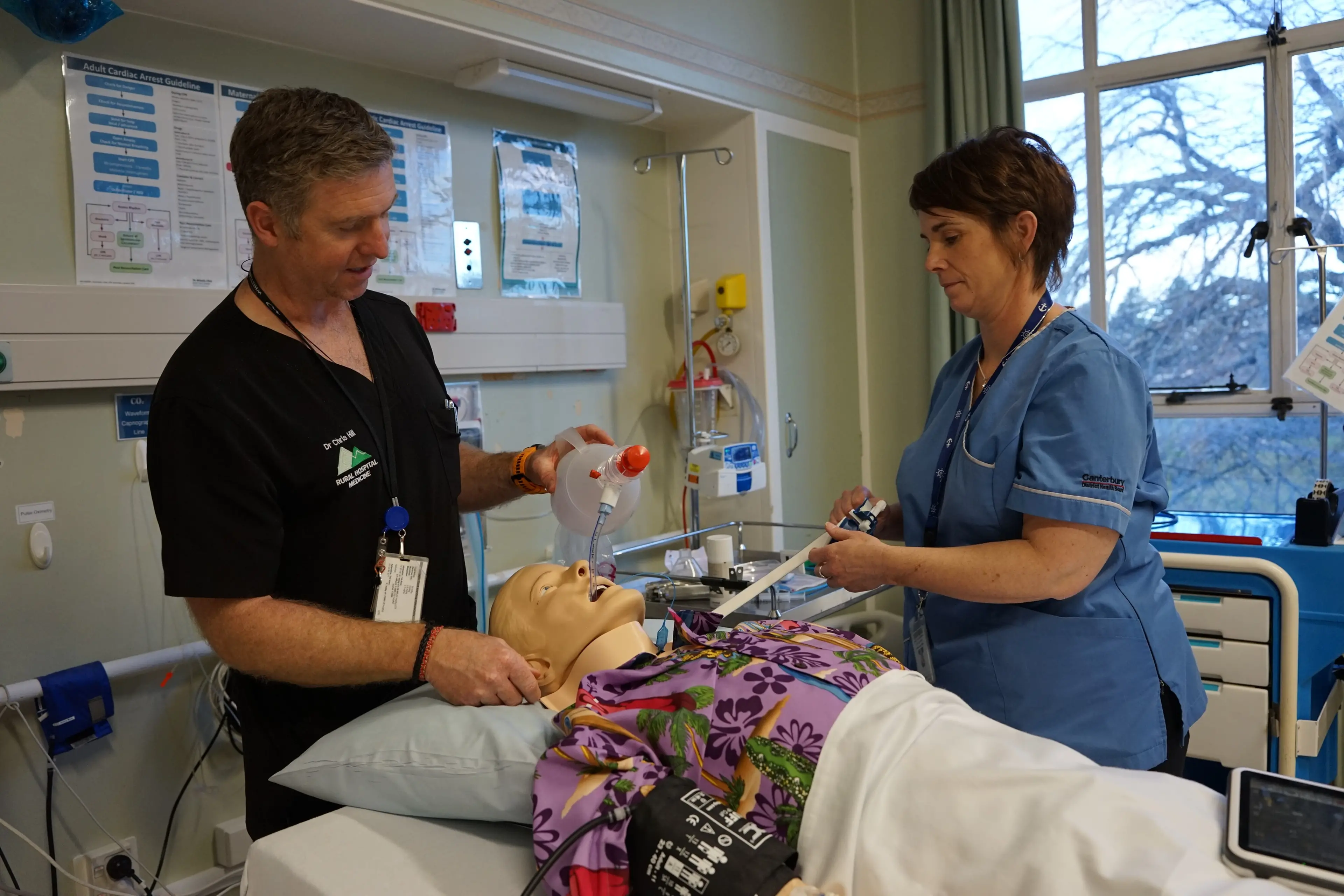
There are two fake rooms inside Ashburton Hospital. And often, they are occupied by fake patients.
"Twenty years ago, they were just, kind of, lumps of plastic," Dr Chris Hill said, looking at a mannequin through an observation window of one of the hospital's simulation suites.
"The modern iteration ... it breathes, it can talk, it opens and closes its eyes, we can change its airway, so you find it really hard to be able to put a breathing tube in."
Hill, a senior doctor at the hospital, is also the clinical lead of the Rural Health Academic Centre, Ashburton (RHACA), a training and research facility for students and new healthcare workers.
The simulation suites are helping ready a new generation of rural doctors, nurses, and support staff.
"[Mannequins] allow us to do these complex procedures, but in a safe environment, where you can make mistakes."
The suites are used to run training and re-training courses for rural hospital staff - refreshing important skills that are not exercised often in smaller areas.
They are also used to train a handful of University of Otago students, who spend a year in the hospital through the Rural Medical Immersion Programme (RMIP).
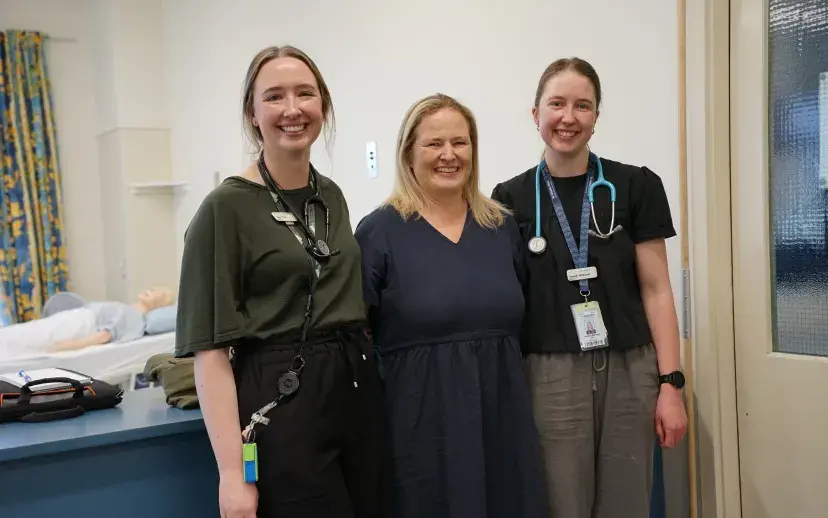
Hannah Wilkinson was selected for the RMIP in 2023 - and she is back on rotation from Christchurch as a house officer, or junior doctor.
"It was a super supportive environment, and really sold working in rural environments," she said.
Low staff numbers in rural hospitals posed a challenge - but also an opportunity.
"Because there's less people on the ground, you get the chance to do things that you wouldn't necessarily [get] in Christchurch, because someone more senior might need to gain that experience before you're given that priority.
"Everyone's just doing their best with the number of people that we have. But also, the community feel is really, really nice here."
Fellow former RMIP member Samantha Tait also returned to Ashburton as a rural registrar, through a hospital medicine training programme.
Over her study and career, she has seen cases that you would only come across in a farming town.
"Especially the emergency department; lots of bowled over by cows, bitten by sheep, just things that you wouldn't even have to think about in the larger hospitals."
Ashburton's location is a plus for her.
"We can work some pretty long hours, so being close to the outdoors and having all this beautiful countryside to go and visit on our days off is just awesome.
"There are still those that enjoy working and living in big cities, but definitely a lot of my colleagues have enjoyed going out and living and working rurally."
It is that combination of experience, contact time and community that sells RHACA and Ashburton's RMIP to the future practitioners of rural healthcare.
"Our students spend roughly 60 percent of their time in general practice and another 40 percent in hospital," doctor and RMIP coordinator Dr Janine Lander said.
"A lot of students have rural backgrounds, and they're quite motivated to get back to rural communities.
"[Others] just have rural intentions in their future, maybe it's something that they've experienced but not necessarily lived in."
She said recent research showed RMIP graduates were at least six times as likely to head back into rural practices for postgrad.
Dr Lander said good work is done locally to support university students, and she would like to extend those efforts to high school students.
"We're really keen to get into the high schools and encourage our local students to start thinking about health professional careers.
"It's just the most rewarding career I can think of."
