
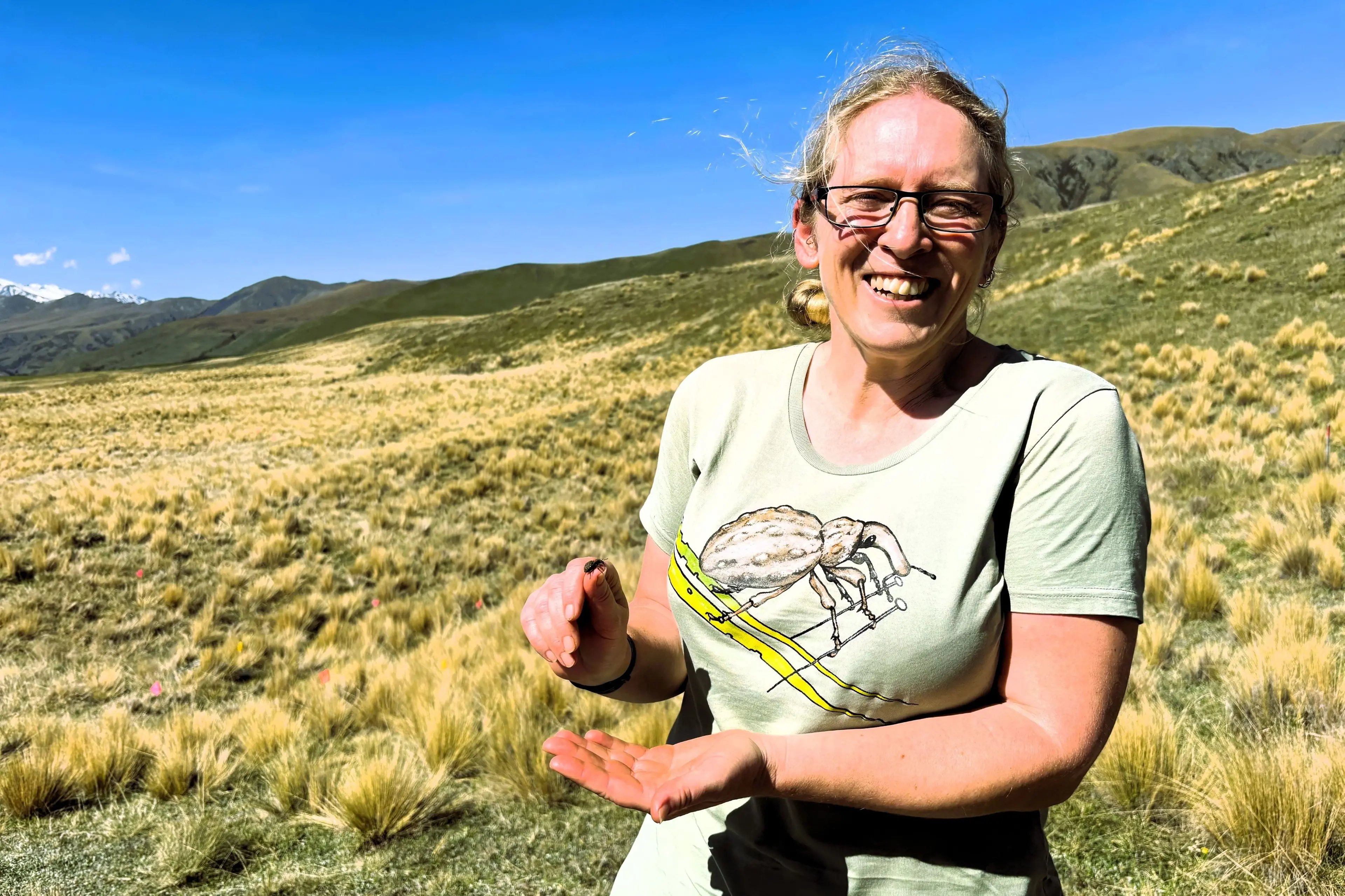
PHOTO
Clawing back a critically endangered ancient weevil from the brink of extinction is the goal of a new trial being run by the Department of Conservation (DOC).
The Canterbury knobbled weevil is one of New Zealand’s rarest beetles, and is known to be genetically ancient, or a ‘living fossil’.
Thought to be extinct, in 2004 a small population was discovered in Burkes Pass, near Takapō/Tekapo and another small pocket of weevils was found in Mid Canterbury in late-2024.
It was then DOC scientists hatched a plan with Te Rūnunga o Arowhenua to raise the rare beetles in captivity.
DOC senior science advisor Tara Murray said in a statement that the first hurdle was the weevils survival in lab conditions.
“We started with just a few in a specialist lab, working with an amazing weevil specialist Barbara Barratt at the Bioeconomy Science Institute at Invermay,” she said.
“It was fairly experimental, feeding them all kinds of interesting things, including carrot chunks.
"They were easier to breed than we expected and quite hardy. We began with six and now we have more than 200 which is cool,” she said.
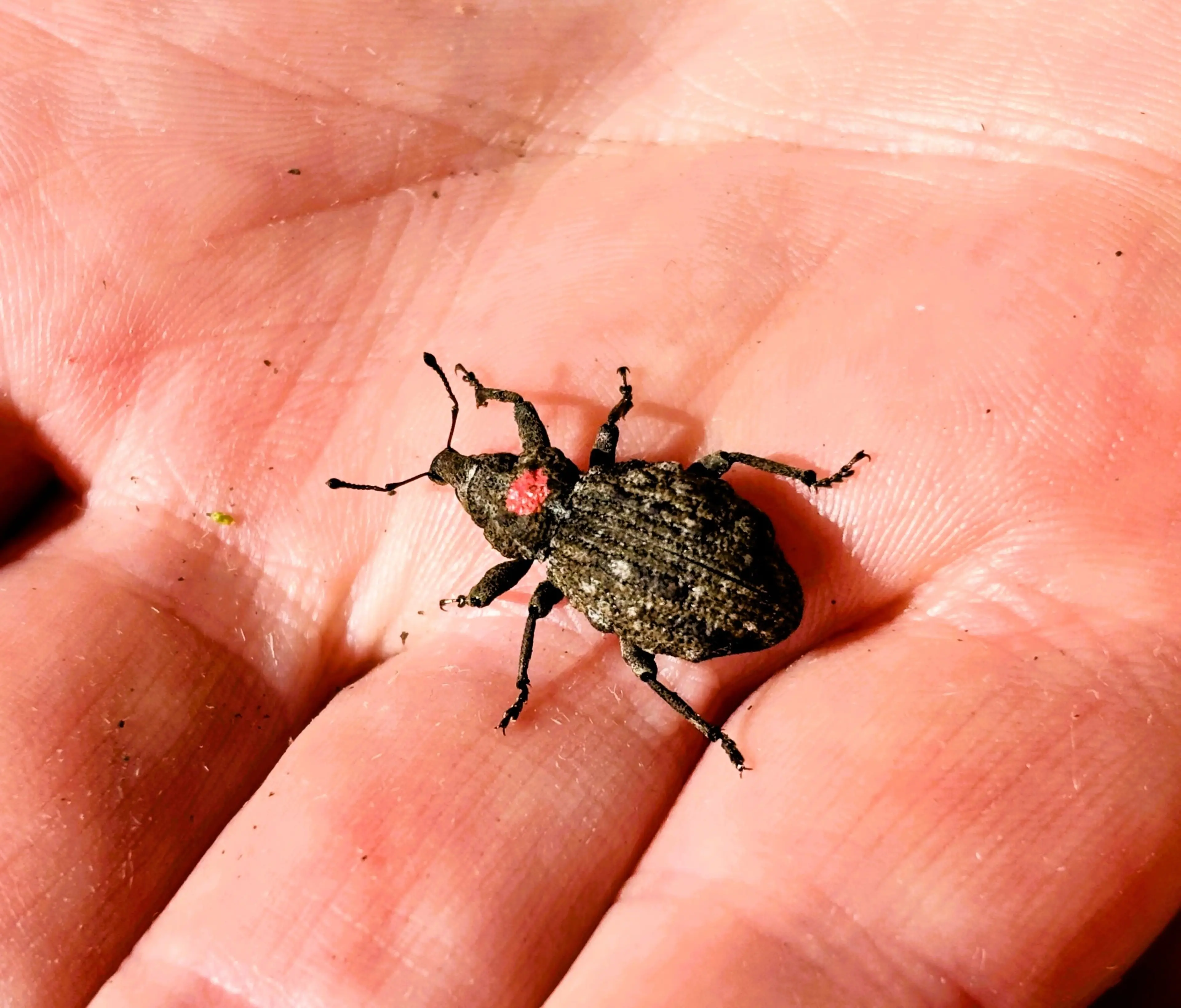
The team has now released weevils back into Ōtūwharekai/ Ashburton lakes area in a trial to see how they fare.
“We’ve found a good spot with Aciphylla plants (taramea/spear grasses), which are a favourite of knobbled weevils.
"They're amazing creatures, like little tanks with snouts."
One of the reasons for the species’ decline was the removal of spear grasses from landscapes, which means the weevils lose their habitat.
“The release has gone really well. It’s amazing seeing them scuttle down into the depths of the spear grass to find a new home,” Tara said.
“What we’ve done here is a ‘soft release’, starting with protective covers over the plants. We’ll monitor how the weevils are doing and remove the covers in a week or so.”
She said it was “incredibly satisfying” to be able to release the weevils back into an area they once would’ve thrived in.
"The Ōtūwharekai/Ashburton Lakes is a special place in terms of conservation and is very significant to Te Rūnanga o Arowhenua.
"They are our partners in this project, and we are all invested in the survival of this species and the protection of the land around it,” she said.
Pending the results of the trial, plans will be developed to collect more and establish new populations in other areas.
Monitoring at Burkes Pass will also continue so any weevils detected can be brought into the captive rearing facility to begin trying to boost its small population.