
PHOTO
Two donated artworks by prominent artists with strong connections to Ashburton District have been given to council for its civic art collection.
They are both watercolour paintings.
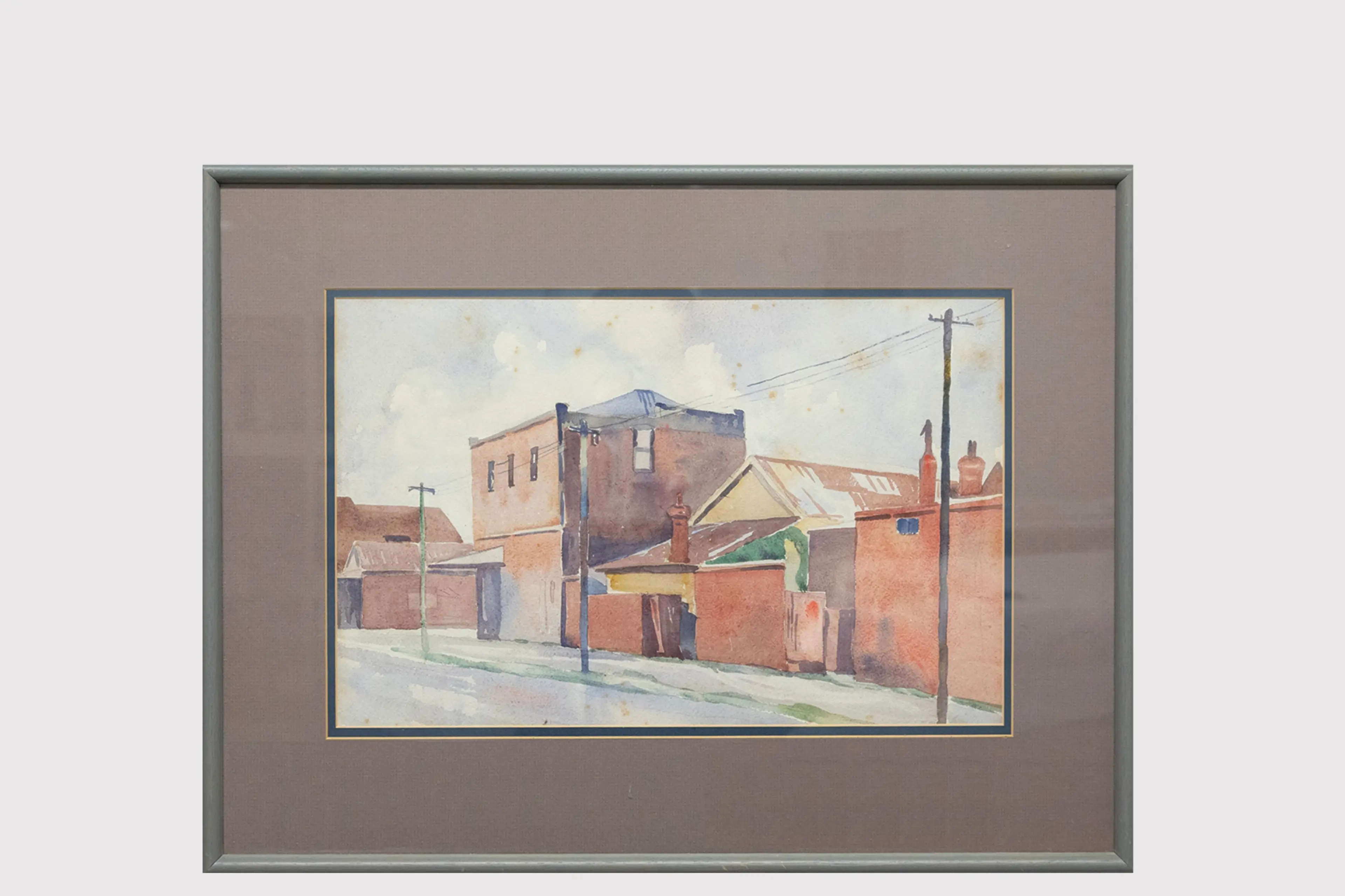
One, painted by the late Kath von Tunzelmann, is untitled and depicts purple and blue toned flowers; and another, by the late Nancy Waller Baxter, titled ‘A Wet Day, Ashburton’, depicting historical local buildings.
Mayor Liz McMillan thanked the donors for their generous gifts to the public.
“We’re very grateful for these additions to our public collection because they help preserve our local history and give people more access to pieces that might otherwise remain in private ownership.”
Kath von Tunzelmann (1920s–2008) was a respected Ashburton-based artist and an important figure in the local arts community.
She was a founding member and later patron of the Ashburton Society of Arts.
She exhibited widely and was active in arts organisations, including the Mid Canterbury Community Arts Council.
Nancy Waller Baxter (1910–1986) was an artist with links to both Christchurch and Ashburton, having spent part of her early life in Ashburton.
She trained at the Canterbury College School of Art and exhibited with the Canterbury Society of Arts from 1938 to 1941, as well as with the New Zealand Academy of Fine Arts in the early 1940s.
It’s envisaged these works will join the civic art collection display rotation once they have received conservation treatment and reframing.
Art from the collection is displayed on rotation within Te Whare Whakatere, council’s library and civic centre and Rokowhira Art Gallery and Museum.
McMillan said it was timely to receive these artworks on the same day council formally adopted its first Arts, Culture and Heritage Strategy.
“It’s a happy coincidence to accept these gifts on the same day our strategy was adopted and is a lovely way to bring the strategy to life on day one.”
The strategy was co-created with the community and aims to preserve local heritage, support public art and artists, and improve access to culture.