

PHOTO
Local government leaders are calling on the next Government to put more money into flood and climate resilience.
Local Government New Zealand (LGNZ) says councils cannot fund climate adaptation and disaster recovery on their own, and investing more in resilience would save money long-term.
Last year, Prime Minister Christopher Luxon said the Government may not be able to continue bailing out flooded homeowners in the future.
According to the Climate Commission, 97% of Government spend was on responding to natural hazards, with only 3% spent on building resilience.
Canterbury has been dealing with earthquakes, flooding, weather events, fires and climate adaptation over the past 16 years.
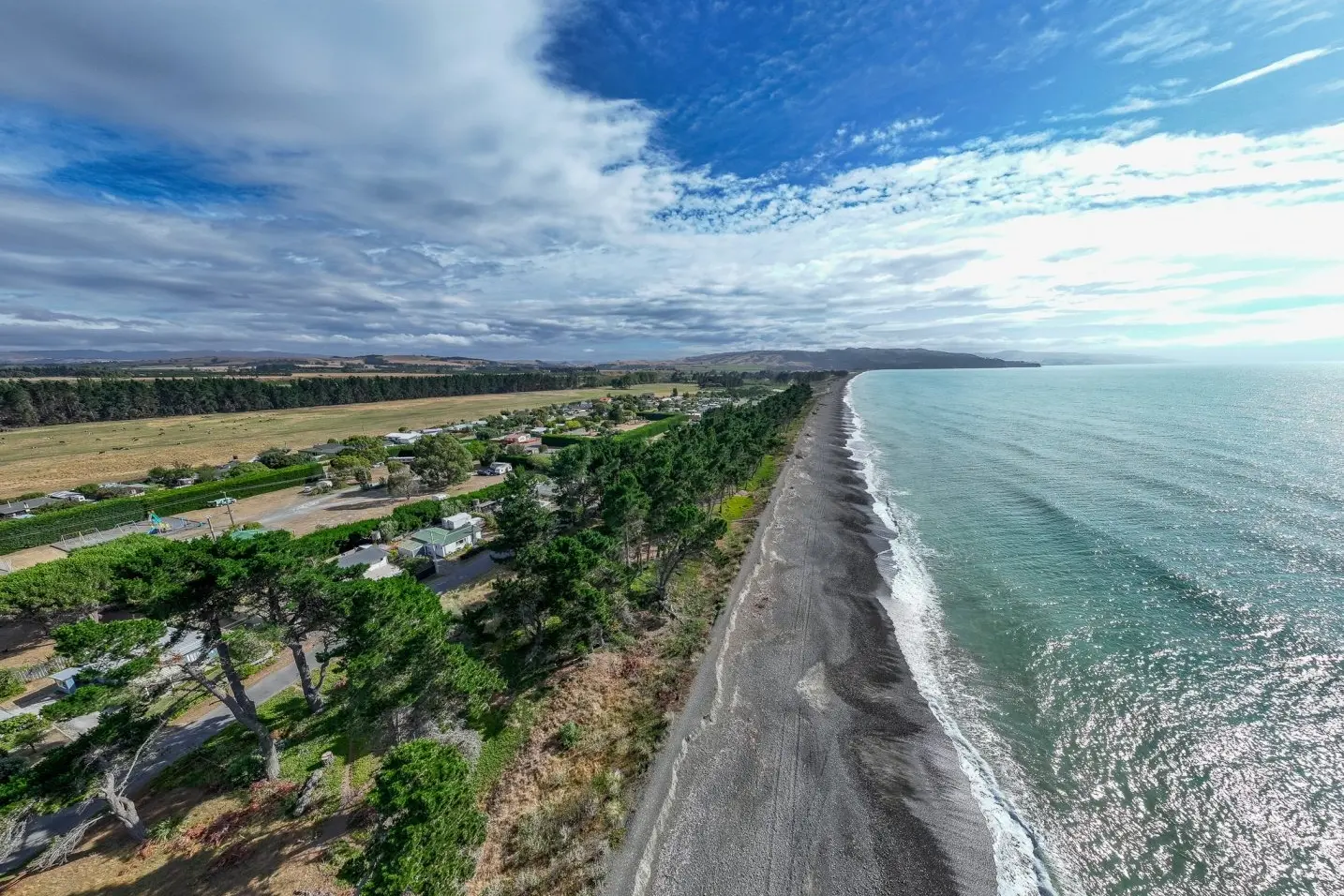
Hurunui District Council chief executive Hamish Dobbie said local ratepayers largely foot the bill after events such as the 7.8 magnitude earthquake in November 2016 and the July 2026 flood, and for coastal protections such as the Amberley Beach bund.
“We have always taken care of ourselves. Generally speaking, ratepayers pick up the bill and then apply for funding when its available.”
Dobbie said building up a national fund like ACC would make a difference for councils, but warned the money came from the “same pockets”.
Environment Canterbury (ECan) chairperson Dr Deon Swiggs said New Zealand needed a more co-ordinated approach to climate adaptation and resilience.
“Climate adaptation is too large and too expensive for local government to deliver alone.”
Regional and unitary councils have been calling on successive Governments to co-fund flood protections for several years through the Before the Deluge reports.
The Ministry of Business, Innovation and Environment’s Kānoa Regional Infrastructure Fund has invested $200 million to co-fund regional flood resilience work since 2024, including more than $18m across 12 projects in Canterbury.
But ECan’s repair bill in Kaikōura from the July flood alone is estimated at $33m.
Dr Swiggs would like to see national baseline investment in flood protection of $240m a year from Government and $160m a year from councils.
LGNZ chief executive Scott Necklen said councils needed more certainty around co-funding after a national disaster and more national investment in resilience.
“New Zealand cannot keep responding to severe weather events on an ad hoc basis, with councils and communities left waiting to find out who will pay.”
Mr Necklen said the Government Policy Statement (GPS) on Land Transport, expected to be released after the election, is an opportunity for the incoming Government to consider how it invests in resilience.
“We need to change the current systems to promote increased climate resilience of infrastructure, communities and economies.
“This includes a sustained central and local government investment pipeline for flood protection and wider resilience work.”
Mr Necklen said the Before the Deluge reports showed how the co-investment approach of Government working with councils could work.
“The next step is to move beyond one-off funding decisions and establish a long-term programme to support the economy and local communities.”
■ LDR is local body journalism co-funded by RNZ and NZ On Air.