
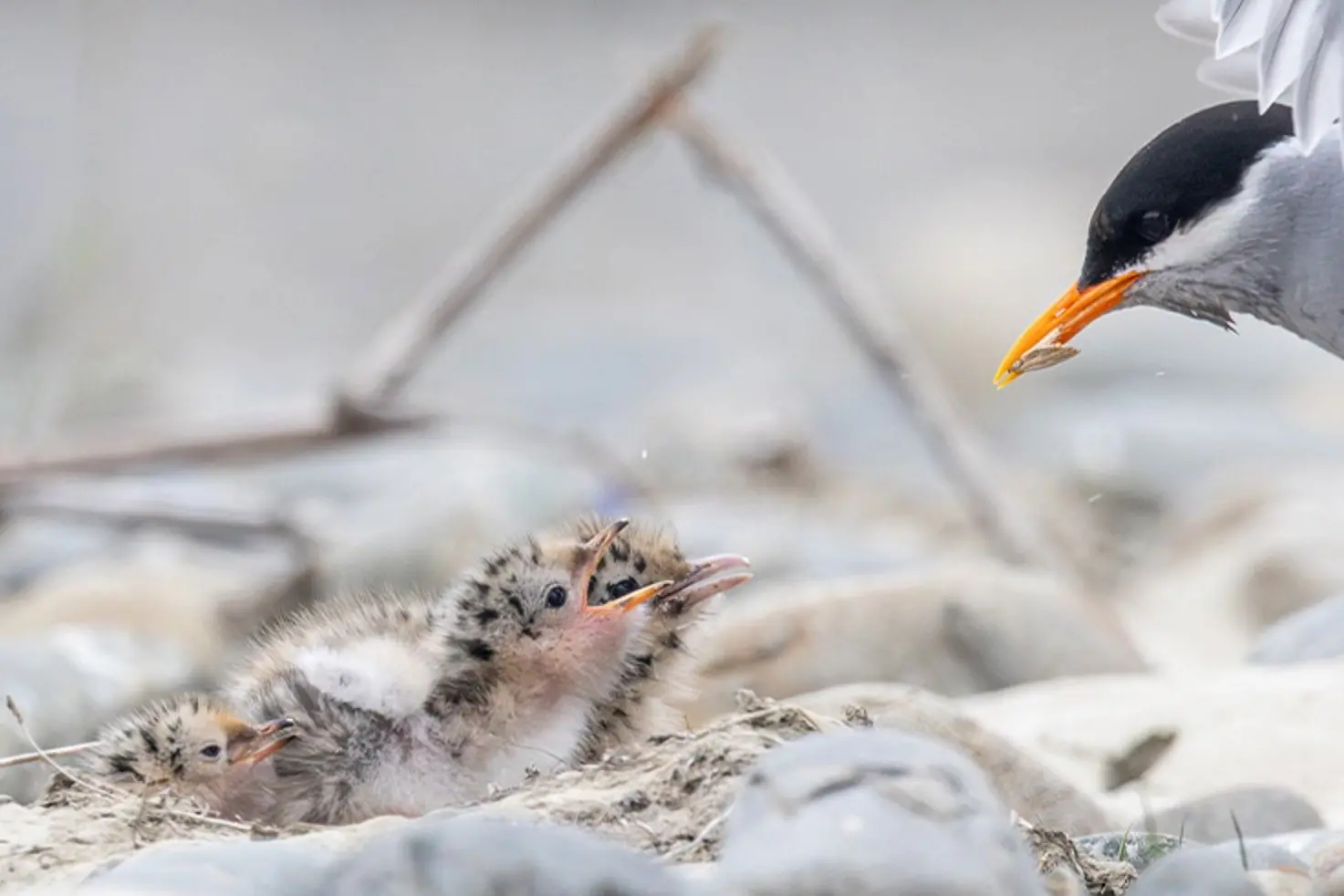
PHOTO
Canterbury’s regional council is reminding river users to watch out for nesting birds.
Whether you're walking the dog, casting a line, riding a motorbike or heading out in a 4WD, a little extra care on Canterbury's rivers could make a big difference this spring.
Each spring and summer, thousands of birds nest on the wide gravel beds of the Waimakariri, Ashley Rakahuri and other Canterbury rivers.
But spotting them isn't easy, Environment Canterbury principal biodiversity advisor Frances Schmechel said.
Eggs and chicks are ‘‘remarkably well-camouflaged’’ among the stones, which helps protect them from aerial attacks, but makes them vulnerable to disturbance from dogs, people and vehicles passing through.
Species including ngutu pare / wrybill, pōhowera / banded dotterel, tarapirohe / blackfronted tern and tarāpuka / black-billed gull depend on Canterbury's braided rivers for nesting habitat.
‘‘You may not realise there is a nest or chick nearby until it’s too late,’’ Ms Schmechel said.
‘‘A vehicle, an offlead dog or even someone walking through a nesting area can disturb adult birds, causing them to leave their nests, or can accidentally destroy a well-camouflaged nest.
‘‘Some species, including wrybill, banded dotterel and oystercatchers, will quietly slip off their nests when people get too close, so you may never know they were nesting there in the first place.’’
Ms Schmechel said dogs could be particularly disruptive, because they can cause birds to leave their nests from much further away.
‘‘They may also chase or kill chicks, so it’s important to keep dogs on a leash and away from nesting areas.
‘‘The best thing people can do is stick to established tracks, preferably away from the riverbed, avoid driving on riverbeds and give nesting birds plenty of space.’’
Eggs and chicks also faced threats from predators such as stoats, cats and southern blackbacked gulls.
Weeds and changes to river flows can also reduce the open gravel habitat many species need to nest successfully.