
PHOTO
New drone technology is helping conservationists uncover the lives of one of Canterbury’s most endangered birds at Te Waihora/Lake Ellesmere.
The Department of Conservation (DOC) is using thermal-imaging drones to locate and monitor nests of the critically endangered matuku-hūrepo, or Australasian bittern, which has just begun its spring breeding season.
Fewer than 1000 bittern remain nationwide, with fewer than 50 thought to survive in Canterbury. The birds are notoriously difficult to find due to their excellent camouflage, secretive behaviour and preference for dense wetland habitat.
DOC biodiversity ranger Allanah Purdie said the technology was providing insights that had previously been impossible to obtain.
“The drone pictures have incredible detail. We are able get up close to their nests without disturbing them and see how they’re faring,” she said.
In Canterbury, bitterns nest mainly around Te Waihora/Lake Ellesmere and coastal wetlands. Purdie said understanding how many birds were breeding, how many chicks survived and what was causing nesting failures was crucial to protecting the species.
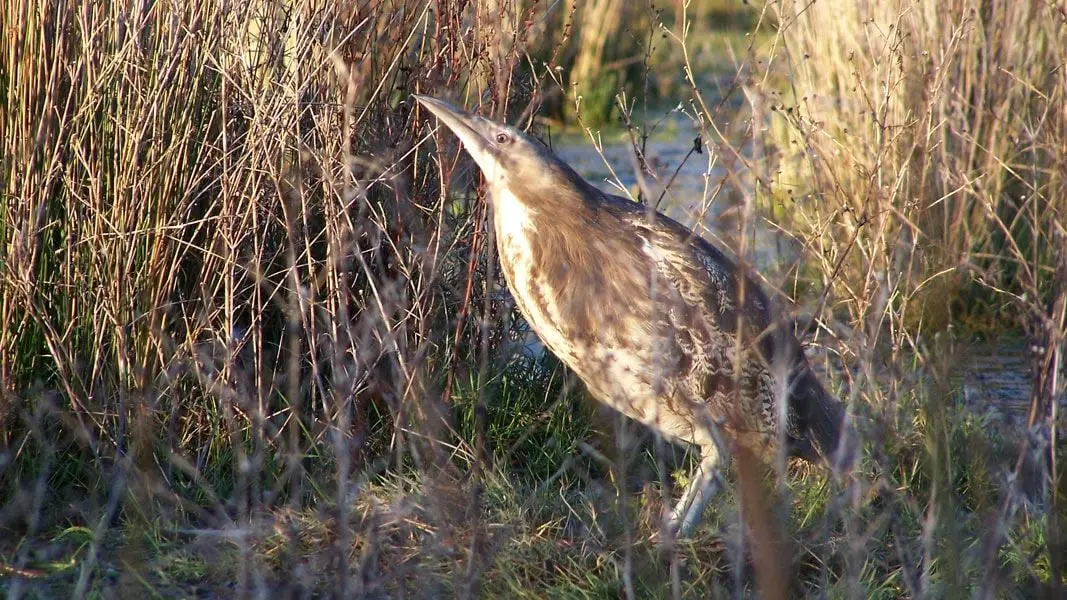
Traditional monitoring methods have largely relied on recording the distinctive booming calls of males, meaning little is known about female birds and their nesting success.
The drones combine thermal imaging with high-resolution video, allowing operators to detect hidden birds before zooming in for detailed observations.
Drone operator Daniel Manchester, whose company Proform is working with DOC, said the technology was transforming conservation efforts.
“It’s like being able to find a needle in a haystack,” he said.
“With thermal imaging, we can pinpoint a small white dot of a bittern and then zoom in to see high-definition pictures in a completely camouflaged habitat.”
The work is also highlighting wider environmental challenges facing the lake.
Purdie said the lake’s wetland habitat was under pressure and young bittern were often found in urban areas searching for food after leaving the nest.
“It is important for us to better understand the impact that chick starvation is having on bittern numbers, and nest monitoring with drones is helping reveal that picture,” she said.
Bittern feed on small fish such as bullies and tuna, or eels. During summer, when lake levels are lower and water temperatures rise, many of those fish move away from the lake margins into cooler, deeper streams, making them harder for bittern to catch.
Purdie said the fate of the species was closely linked to the health of wetlands such as Te Waihora.
“The bittern are our ecosystem health indicator, and if we can improve the health of our freshwater and fish life, our children’s children will continue to hear their spine-tingling booms every spring,” she said.
Members of the public can help monitor the species through the Love Bittern Project’s annual Matuku Muster survey, which runs until the end of November. Conservationists hope the additional data, combined with drone monitoring, will help safeguard one of Canterbury’s rarest wetland birds.