
PHOTO
Library users may notice fewer programmes and exhibitions this year as the Selwyn District Council looks to save money.
Funding for library programmes and exhibitions has been cut by about $200,000 as part of cost-saving measures aimed at reducing the rates increase.
From July 1, the targeted library rate for each household increased by $7 to $278, less than the $14 increase forecast in 2024.
This financial year, 1.8% of the $9.374 million collected through the targeted library rate will be spent on programmes and exhibitions.
Council community services and facilities director Denise Kidd said there would be a greater focus on programmes delivered by library staff, including story times, sensory baby time and coding club.
“While we will spend less on externally provided programmes, we expect to continue offering a wide range of learning opportunities by drawing on local volunteers, community groups and residents with skills, knowledge and expertise to share.”
Kidd said exhibitions would also remain on display for longer and be circulated between libraries across the district rather than being shown only at Te Ara Ātea.
“We will also be looking into providing more community-led exhibition opportunities to display local content.
“The intention is to reduce costs while continuing to provide quality exhibition experiences for visitors.”
Information released under the Local Government Official Information and Meetings Act shows the council spent $106,988 on exhibitions at Te Ara Ātea over the past two years.
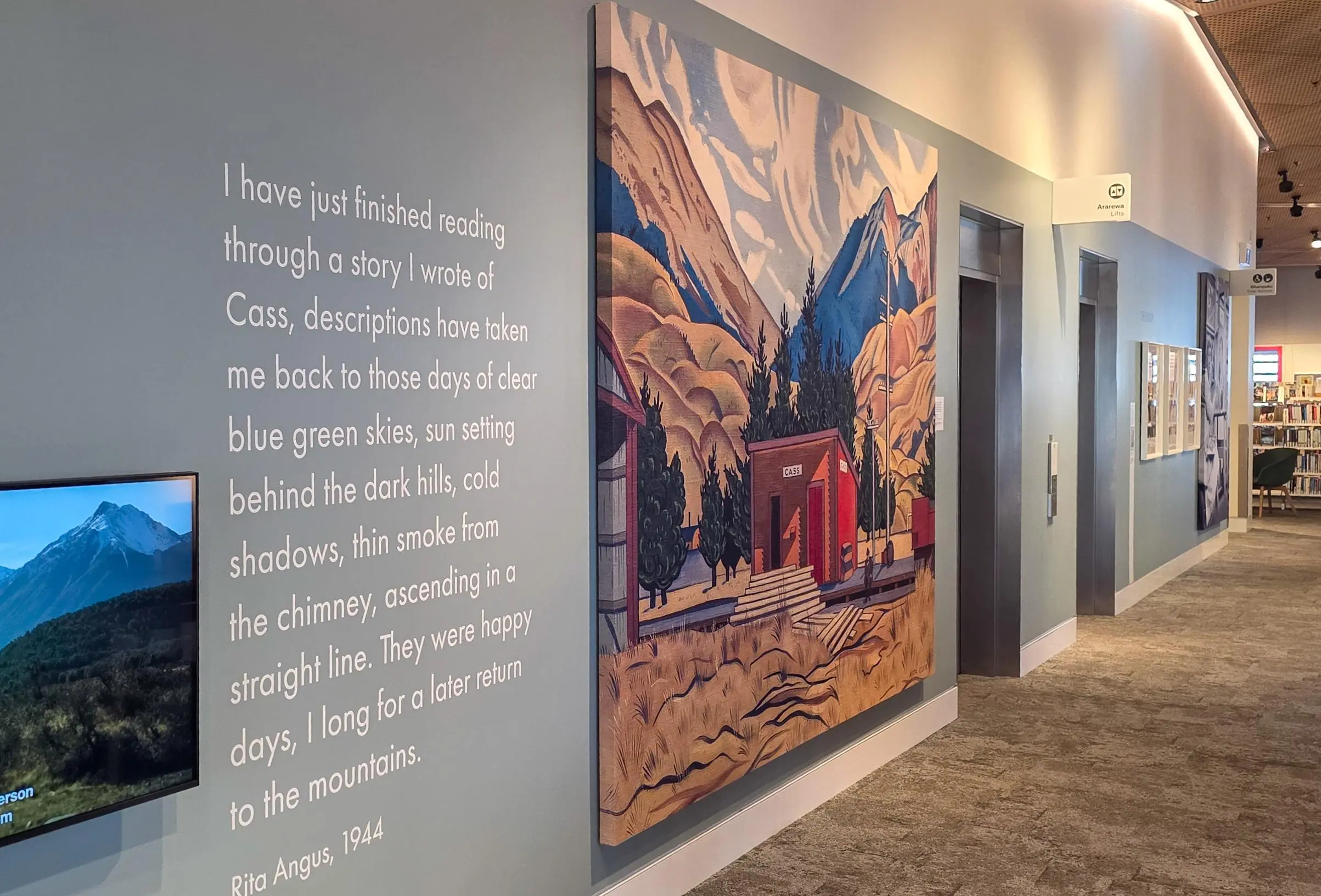
The current exhibit Rita Angus: He Haereka ki Cass – A Trip to Cass cost the council $38,185.
The exhibition celebrates a 1936 journey by artists Rita Angus, Louise Henderson, and Julia Scarvell to Cass near Arthur’s Pass.
Rolleston Ward councillor Sophie McInnes did not want to see such significant cuts to the library budget.
“I was heartened by the narrative that this is a trial rather than permanent,” she said.
“It will be interesting to see how many people actually notice it because there are some people that use this stuff heavily and others who don’t even realise it’s there.”
McInnes said she wanted to hear feedback during the year as the council develops the 2027-37 Long Term Plan.