PHOTO
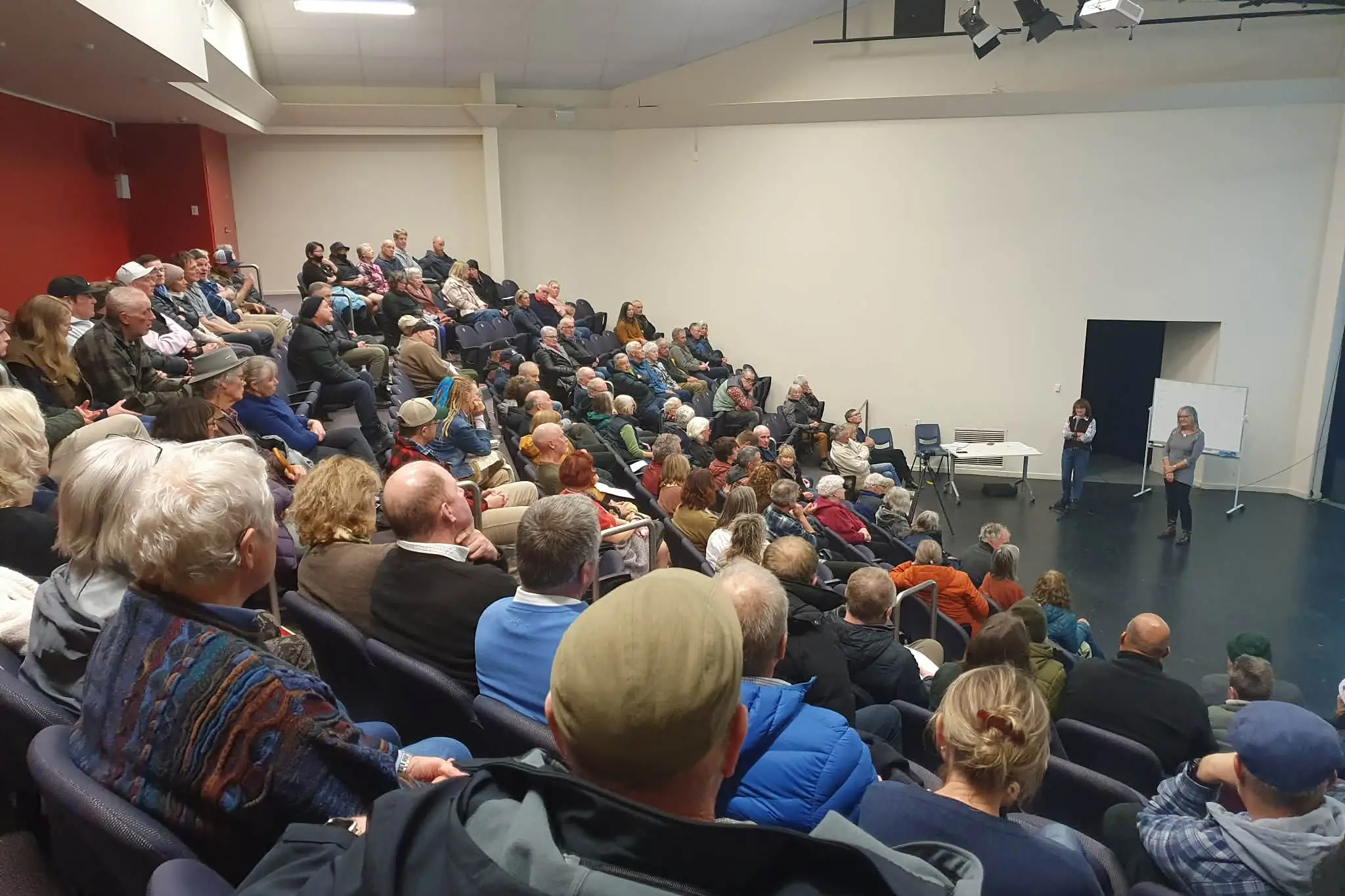
Mackenzie residents have gathered to learn about proposed fast-tracked solar projects that will be decided by Wellington.
Last week's meeting was held at the Twizel Events Centre and attracted around 125 locals.
Twizel Community Board chairperson Mary Murdoch organised the event to help address the lack of local awareness.
“We want to know what people think ... find out if they are happy or not,” Murdoch said.
“And whether they want to do anything about it given the complete lack of ability to submit in the direction of the Mackenzie District in which we live.”
Murdoch’s presentation outlined the proposed Balmoral Station, Grampians, Point Solar, Twizel Solar and Bright Fern Energy projects, as well as the recently consented Haldon Station solar project.
She said changes to legislation, including the Resource Management Act, could enable projects to go ahead without community input and without any district council influence.
“If the current DOC reforms and the Natural Environment Bill get passed before the election, the minister in charge ... will have override on any decisions and conclusions.”
The Natural Environment Bill was introduced by Minister Chris Bishop in December and would replace the Resource Management Act in establishing its own framework for the use, protection and enhancement of the natural environment, setting mandatory, nationwide rules.
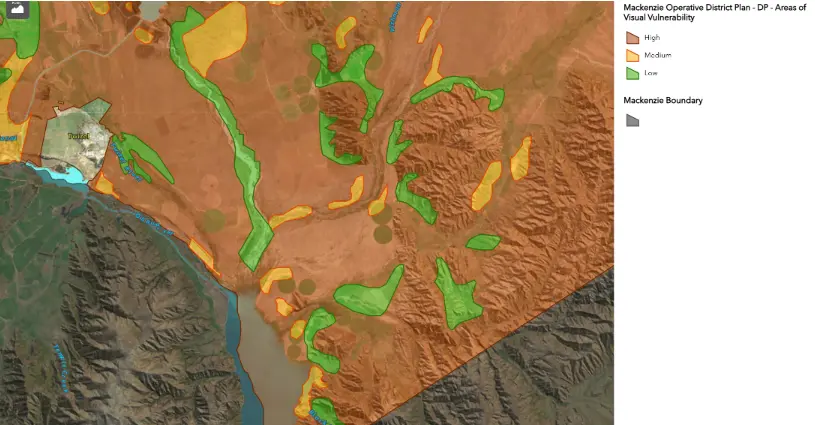
This means local government will be legally forced to comply with central government directions, restrictions, and limits on the land they work in.
She said this appeared to be a potential abuse of the government’s executive power.
“It is unquestionably undemocratic.”
Combined impacts of solar farms on the Mackenzie’s landscape, ecology, environment, traffic, accommodation shortages, and existing business success were also discussed, Murdoch said.
“[There are] potential issues with combined visual, landscape and ecological effects, amplified traffic and accommodation issues in the constructions phase, [and] existing businesses suffering if their staff move on to construction.”
Murdoch said residents had discussed the introduction of specific land overlays to protect areas natural landscape, and of forming sustainability coalitions as seen in Southland and Queenstown.
“[A] sustainable growth coalition might be the way to go. Small groups doing research and getting independent expert advice to put to the Fast-Track panel,” she said.
“Ultimately we have to push back where we can and get compensation for the district/town where we can’t.”
She said a survey had been sent to residents, and while it was still being collated it had already received an overwhelming response.
“People are not happy about what’s going on,” she said.
- LDR is local body journalism co-funded by RNZ and NZ on Air