
PHOTO
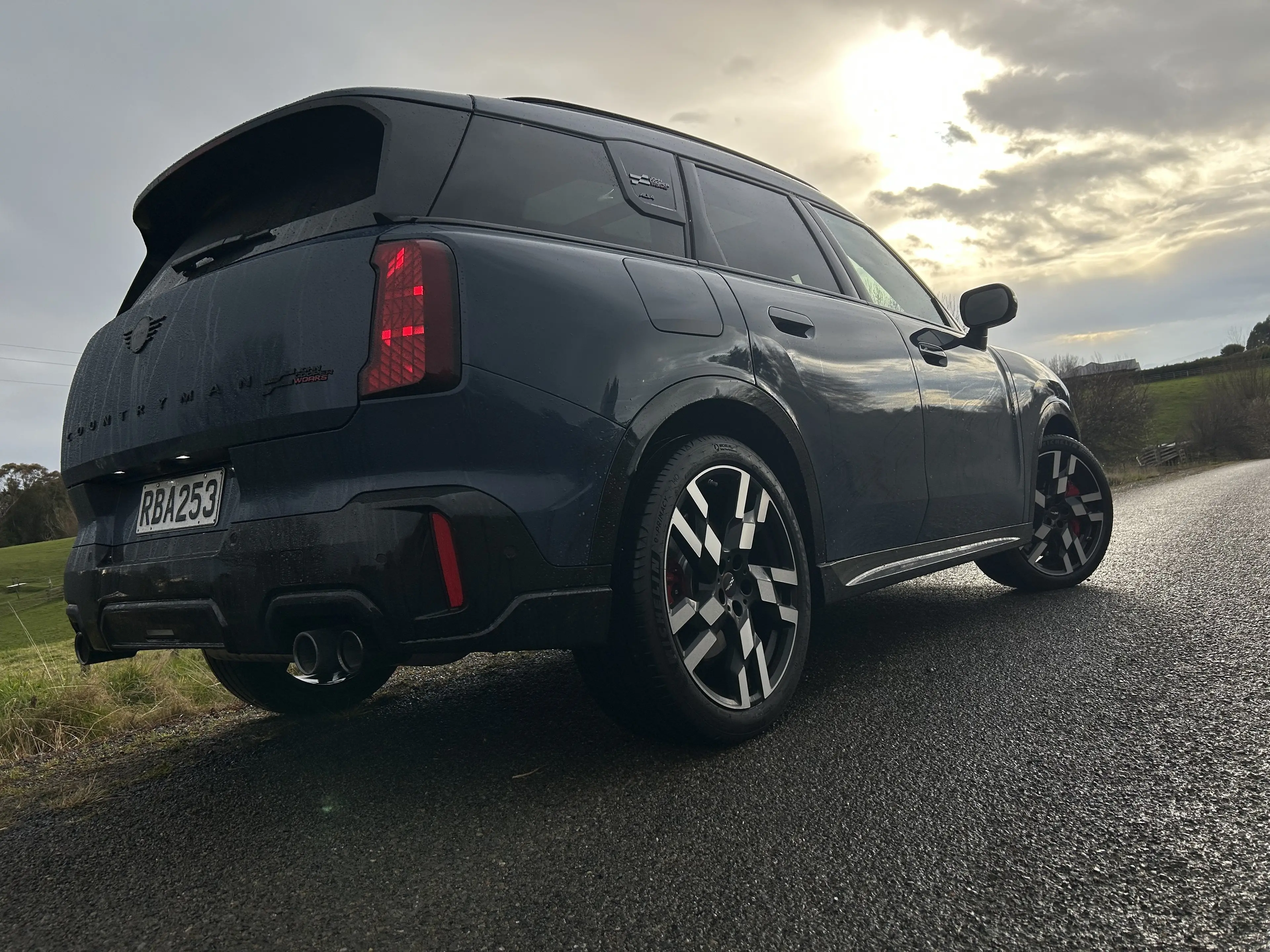
Nostalgia not being what it used to be is a wry consideration very much hammered home by the Mini Countryman.
Similarity in size to the original British Motor Corporation car hasn’t been a consideration of modern parent company BMW for ages. All the same, the latest edition of the largest car in what is now a whole portfolio of products really reinforces just how far this nameplate has upsized. Not far shy of 5m long, the third-generation Countryman is 130mm longer (and also 60mm taller) than its predecessor, which in itself was no small thing.
Attracted or turned off? In BMW’s eyes, there’s good business in having Mini models in all shapes and sizes.
The Countryman achieves very strong buy-in, fitting comfortably with customers looking for a medium-ish family SUV with a distinctly different styling outlook.
Even so, Munich assures that this car is as "maxi" as a Mini will ever get. And it at least has a positive spin: the Countryman is the variant that feels most sorted for big drives and full family duties, given you’re getting easily the most commodious second-row seating ever lent to a Mini.
It also has a boot that, while not huge, is at least decently sized, offering 505 litres, expanding to 1530 litres with the rear seats folded down. All of which adds up to a model that should comfortably carry a family of four and most of their gear with relative ease.
The JCW designation assures buyers they can expect to travel briskly, too. With no diesel models any longer, Mini now gives buyers a straight choice of petrol or electric in all its models, but with the Countryman there’s a twist to the John Cooper Works playbook.
Buy a JCW Aceman and it is electric only. Go for a JCW Cooper and you can choose either powertrain. Buy a Countryman and it’s electric in the mainstream edition — but not in JCW form.
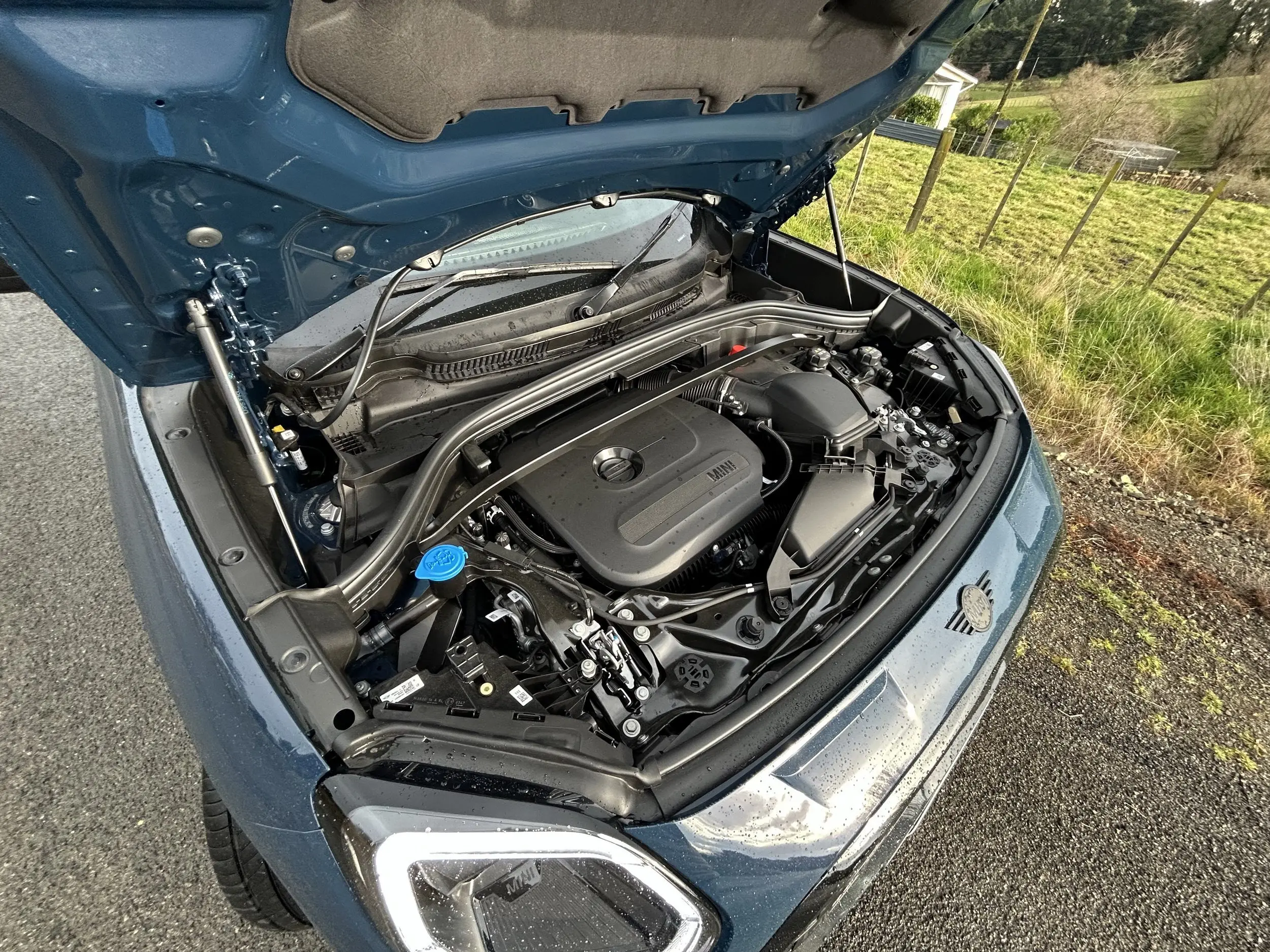
The flagship once again uses a turbocharged 2.0-litre four-cylinder engine driving all four wheels, hence the ALL4 badging.
With 221kW and 400Nm available, the latest format reaches 0-100km/h in 5.4 seconds. That makes it two-tenths quicker than the Countryman SE electric, which has 233kW but carries much more weight due to its batteries. However, before getting too excited about it being the hero, bear in mind that this petrol version has 7kW and 50Nm less than the previous one, which could crack the standing start to open-road legal limit in under five seconds.
It’s not common for performance models to lose zest, but in this case it’s because of the transmission. This car has a seven-speed dual-clutch gearbox, whereas the previous one had an eight-speed unit. Dual-clutch types are snappier and often more suited to sportiness; those traits are certainly evident in driving. BMW/Mini says this, along with greater efficiency, drove the change. But they also tacitly admit the new transmission cannot handle the higher torque the previous one could manage, hence the pullback.
Will that make much difference in the drive? JCW, those three hallowed letters in the Mini canon, raise very high expectations.
The slick gearbox and traction advantages mean you can make the most of the engine’s muscle in most circumstances. It often feels feisty. Yet mid-range urge is a tad less expressive. By way of wider family comparison, if this car wore a BMW badge, it would more likely present as an M Performance model rather than a full-out M.
The exhaust note has become less overt as well. You get at best some rhythmic thudding and rumbling from the pipes, but very little outright bark.
The general feeling of being less than fully pugnacious comes by virtue of its bulk. The cited kerb weight of 1660kg will raise eyebrows, as it feels heavier too.
Even so, the handling is decent, with direct, weighty steering, minimal body lean, and plenty of grip in corners and traction out of them. In terms of ride refinement, it may well be the JCW that appeals most to passengers, as there’s actually some welcome suspension compliance.
Mini styling is so distinctive it could be spotted from space, and while some of the design can seem a bit awkward in the extra-large proportions this model demands, that hasn’t stopped it from being loud and proud. In its latest format, it follows much the same styling makeover given to the Cooper hatchback. As a result, it looks more modern, more minimalist, and yet also more angular than before. What’s clever is that while clearly new, it also remains familiar.
The squared-off daytime running light signatures, the smoother tailgate, and the "floating" C-pillar behind the rear doors—which makes the roof appear detached—are the most obvious new-era elements. The LED rear clusters also offer two alternate graphical displays to the questionable default Union Jack motif.
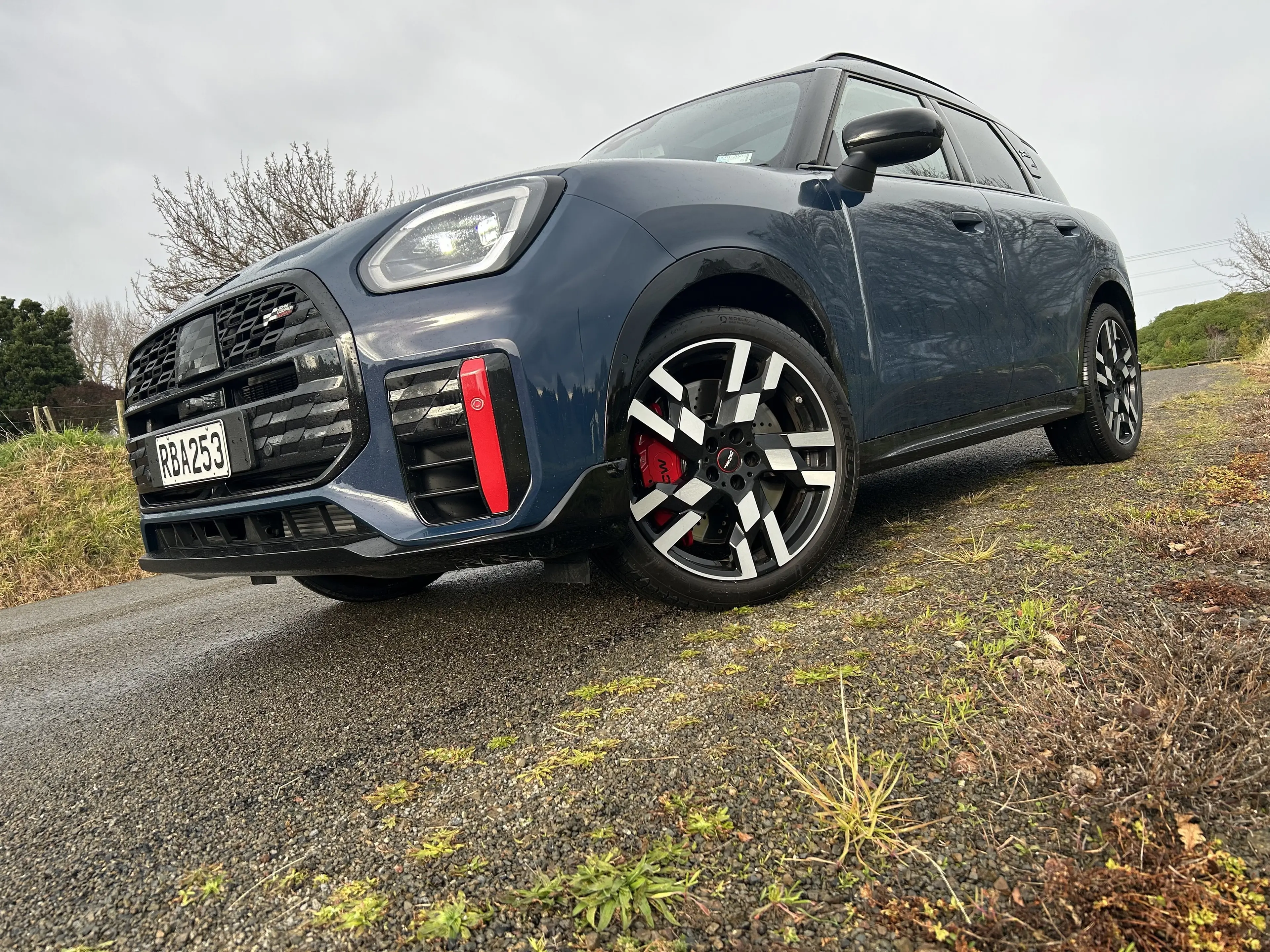
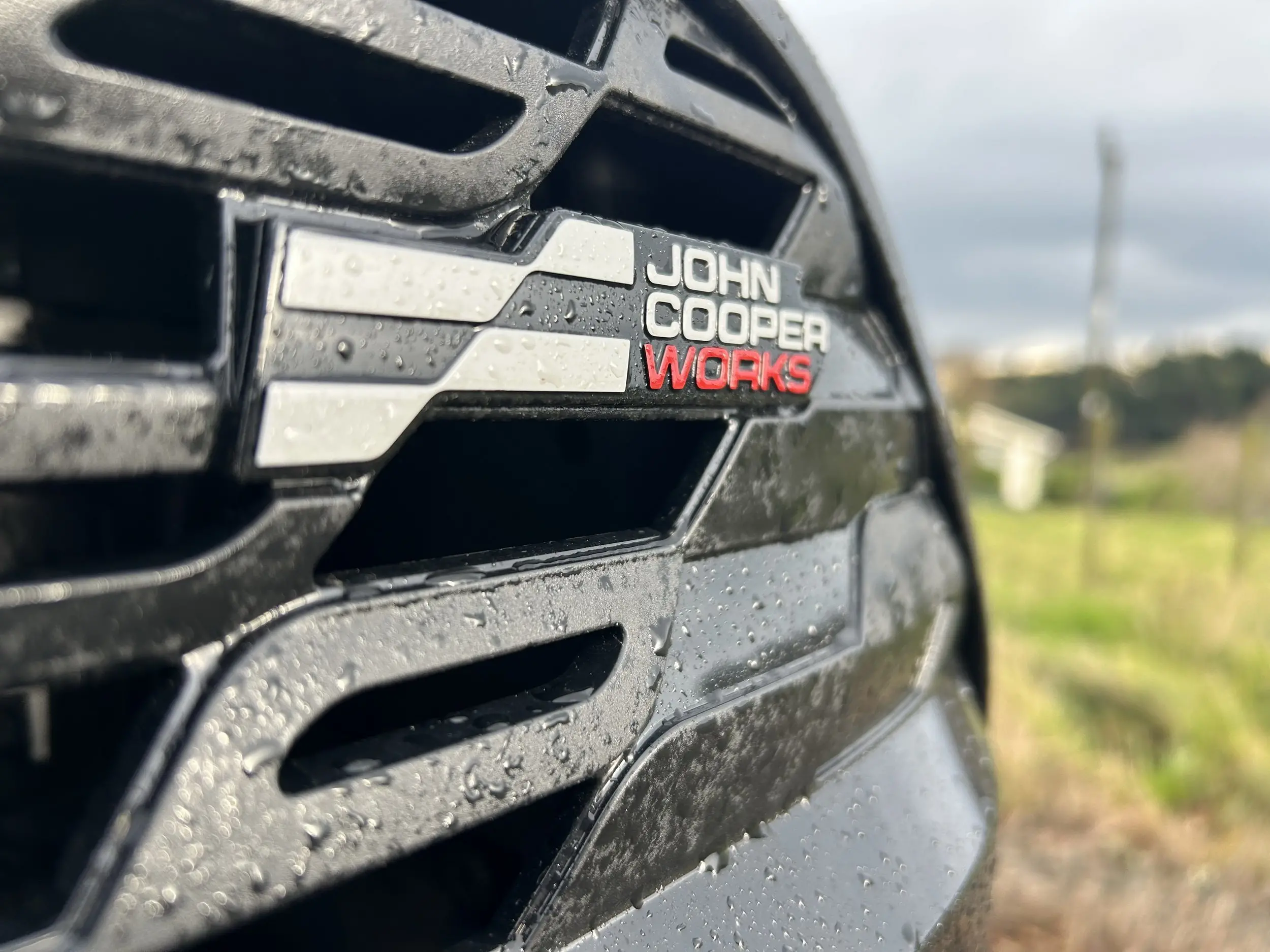
The JCW additions bring big alloys, quad exhausts, and a meaty lower body kit.
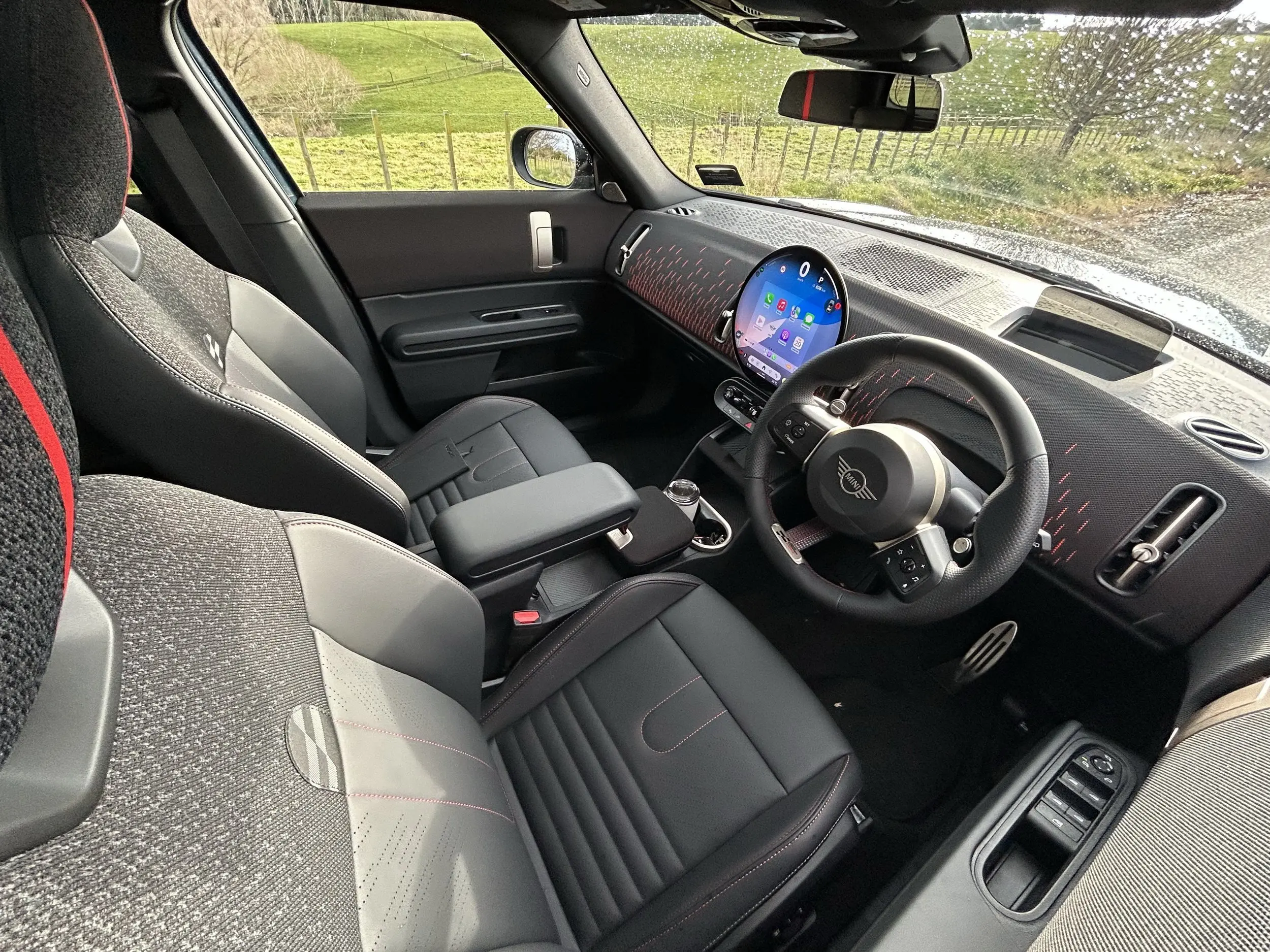
If you think the exterior is only an evolution, just wait until you see the interior. That’s where the attractions and eccentricities of Mini-ness really shout.
Everything has been stripped back, with a dashboard almost devoid of anything except a few air vents and a massive 9.4-inch circular OLED touchscreen running the company’s latest Operating System 9. Below this is the Toggle Bank, including the twistable drive selector, engine start, and the Experience Mode switch, which cycles through drive modes and "mood" themes.
Though the look attempts to hark back to the original Minis with their big central speedometers, it also leans heavily on modern tech. All climate controls are integrated into the screen, and there’s nothing in front of the driver except the steering wheel and a pop-out head-up display.
It’s outrageous, yet strikes a reasonable balance between retro and minimalism — though the digitised dog called Spike, who pops up to help with various functions, will likely be permanently kennelled after a couple of days.
The general look and quality are good. The cabin feels classy, and as the flagship, the JCW delivers a generous amount of standard equipment, including many desirable features. The seats are excellent, and the upholstery mixes recycled fibres with upscale coverings. Combine that with ample space and you’ve got a comfortable car.
There’s no secret to Mini’s schtick; the recipe is more or less unchanged. So much is about being seen to be different — and not having any misgivings about that. Even though the Countryman is easily the most practical product wearing this badge, it remains a design-led car, so price and positioning follow accordingly.
You get competence here, but Mini mainly wants you to revel in the sense of character and charisma. Still, expect some to ask how far a brand can be stretched before it runs the risk of snapping.
AT A GLANCE
MINI COUNTRYMAN JCW ALL4
Overall rating: ★★★★
Design and styling: ★★★★★
Interior: ★★★★
Performance: ★★★★
Ride and handling: ★★★★
Safety: ★★★★★
Environmental: ★★★
SPECIFICATIONS
$83,990.
Engine: 2.0-litre four-cylinder turbo petrol, Maximum power 221kW, Maximum Torque 400Nm.
Transmission: Seven-speed direct shift, all-wheel-drive.
Safety rating: Five-star ANCAP.
Fuel and economy: 8.3l/100km, tank capacity 54 litres.
Emissions: 188 grams per kilometre on combined cycle.
Wheels and tyres: Alloys, 255/40 R20 tyres.
Dimensions: Length, 4477mm; width, 1843mm; height, 1645mm.
Kerb weight: 1660kg
By Richard Bosselman