
PHOTO
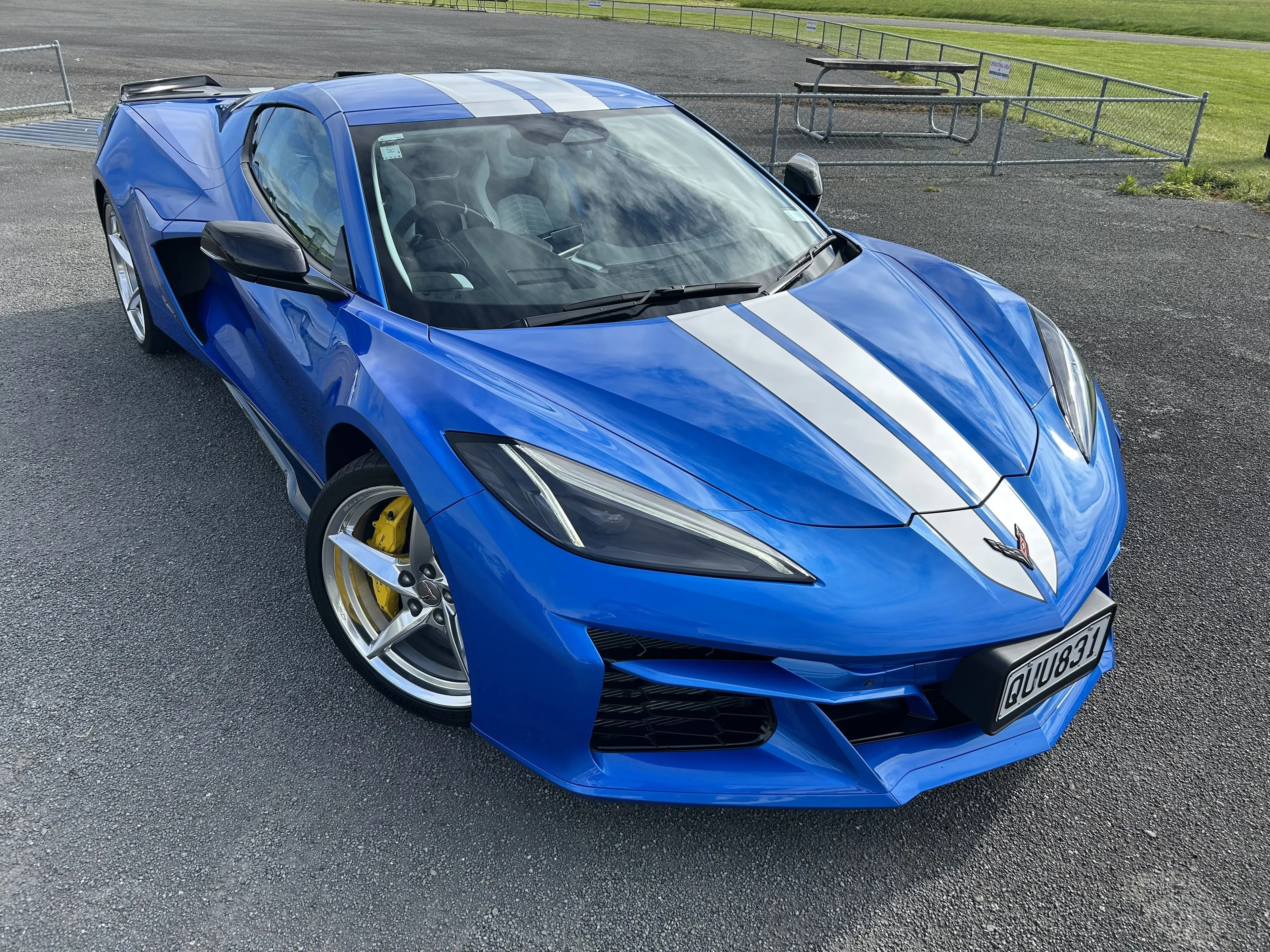
FIRST DRIVE
The most affordable mid-engine hybrid supercar on the market — costing a fraction of a Ferrari or McLaren — is quite a pitch for the Chevrolet Corvette. But it’s worth clarifying: some C8s deliver more noise than substance when compared with machinery from Maranello and Woking. Some, however, absolutely do hold their own.
Among those that unquestionably rise to the challenge is the E-Ray, sampled here.
Performance sells. You’d imagine that being the most powerful road-going Corvette ever built would guarantee it pedestal status, and yet ...
Here’s the thing about the C8 Corvette: it marks a complete reset, built around fresh thinking. Abandoning the front-engine, rear-drive layout that defined the previous seven generations dating back to 1953 was no small move.
But the wholesale re-engineering has undeniably produced a better car.
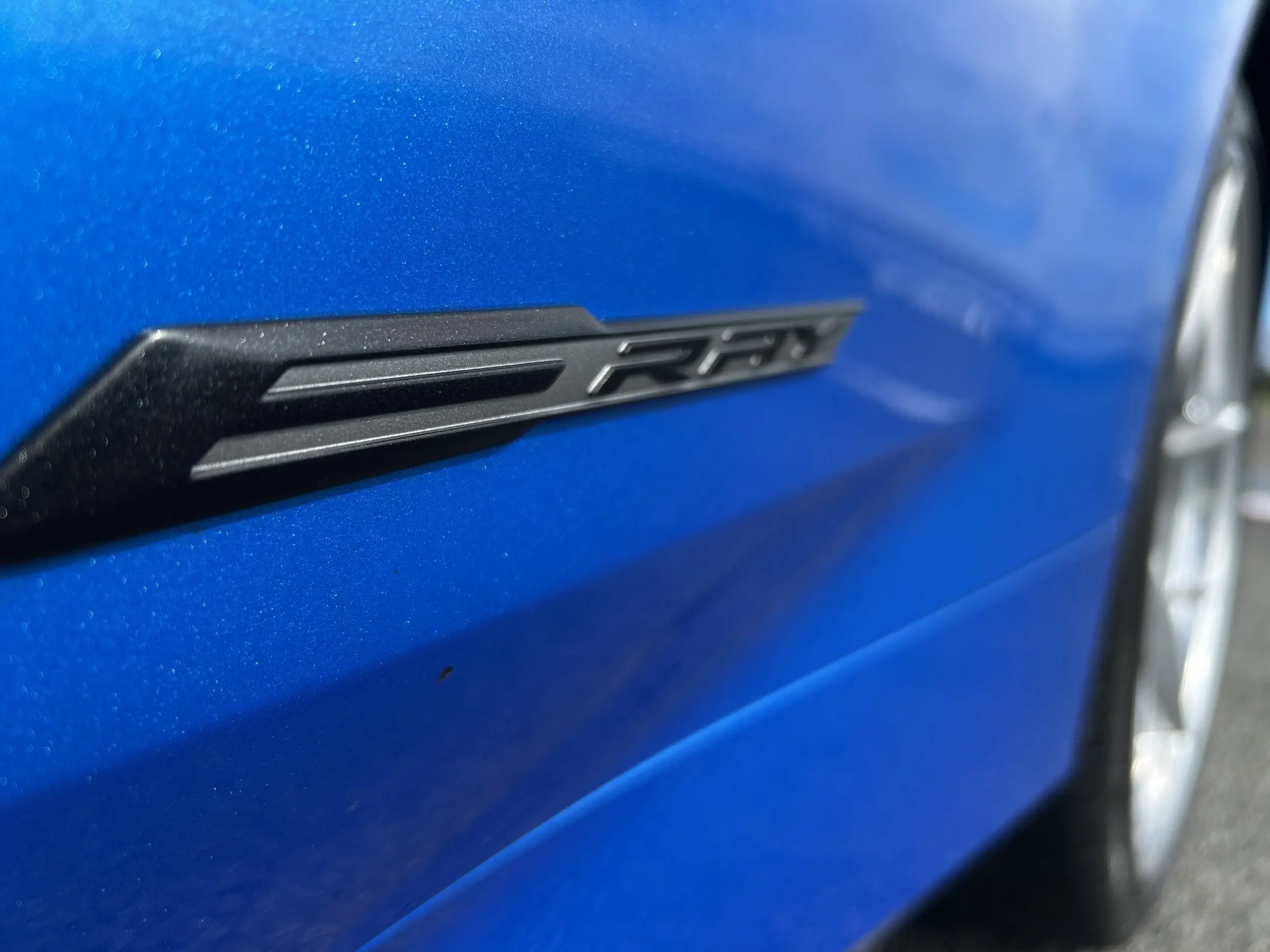
Now, the E-Ray. The name hints at what’s going on. Base Corvettes are Stingrays. An electric ray is a real sea creature — hence the ray-shaped badge on the boot lid — but the name also cleverly plays on convention.
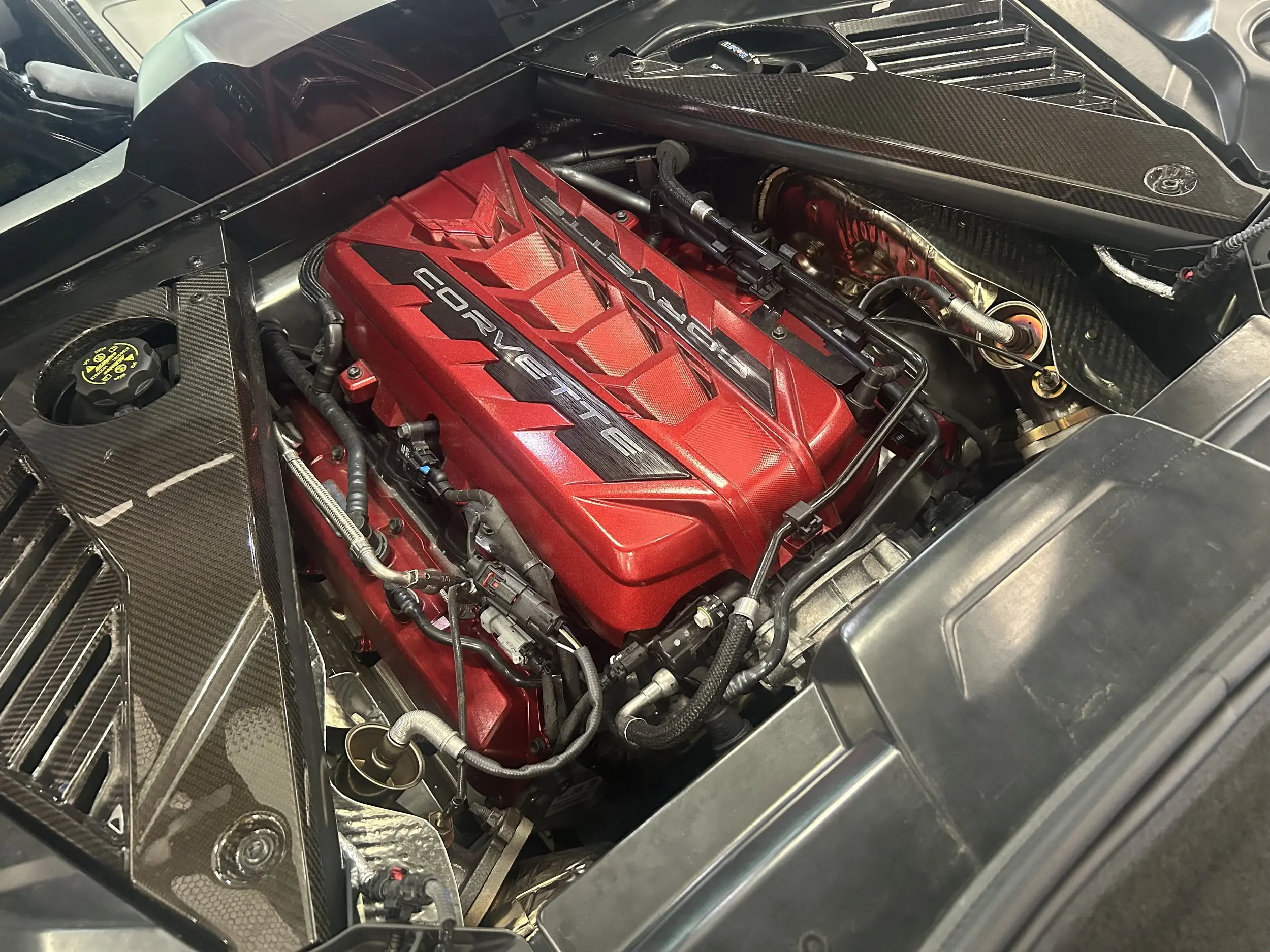
You might expect GM to reserve the e-badge for the upcoming fully electric Corvette rather than this one, which pairs a 6.2-litre V8 — shared with the 2LT and 3LT Stingrays — with an electric motor.
Even so, this "halfway there" hybrid, which also becomes the first all-wheel-drive Corvette, represents an enormous leap.
Some may wonder what kind of machine emerges from such an engineering shift. To them I’d say: take a ride. I had the E-Ray for just over an hour, time vanished, and almost every moment felt special.
First, the shove. Official 0–100kmh is 2.9sec. On paper, that places it on par with the fastest pure-petrol Corvette available here, the Z06, which is rated at 3sec. The Z06 is lighter, but its 475kW/595Nm 5.5-litre V8 trails the E-Ray by 13kW and a huge 211Nm. Independent testers consistently show the hybrid is even quicker off the mark than GM claims — many peg it at 2.5sec.
The way it launches is different too. The E-Ray simply loads up, squats, and fires down the road. A hint of tyre squeal, but no wheelspin. Everything hits at once, making it brutally effective. My first run was in the everyday setting; my second in max-attack. The first startled me. The second left me breathed out.
That composure under hard acceleration carries into corners. I previously drove a 3LT — sharp, capable, but prone to oversteer if you’re too heavy footed.
The E-Ray behaves differently. The rear-mounted V8-push pairs with strong electric pull from the front axle, giving significantly more traction. It’s not quite Audi quattro-like, but in my brief time with it, it immediately felt less intimidating and far smoother in how it deploys power.
The engineering shines through in the steering too, which is slightly heavier than the pure rear-drive Corvettes but remains communicative and well-weighted. Hitting apexes feels natural.
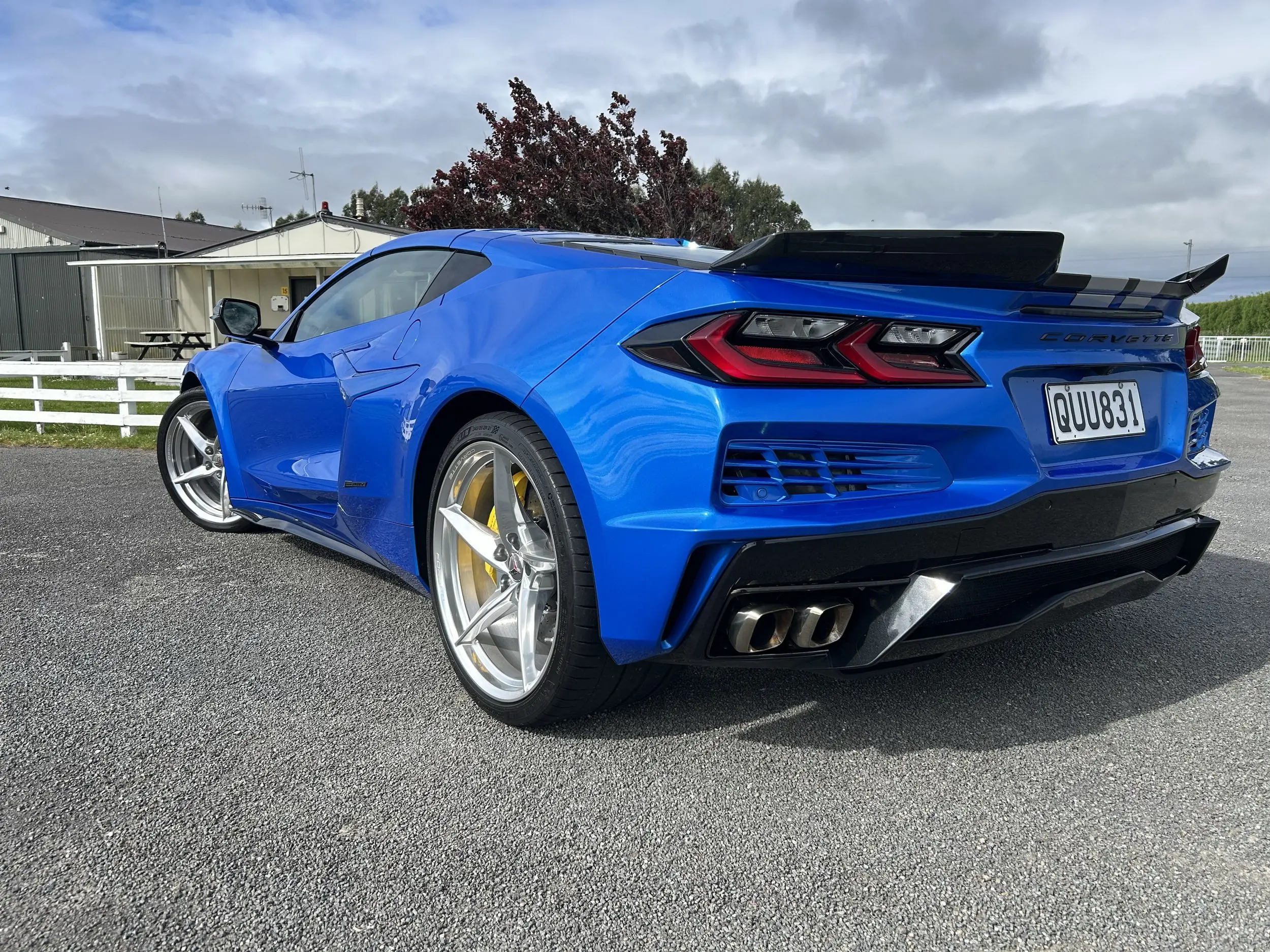
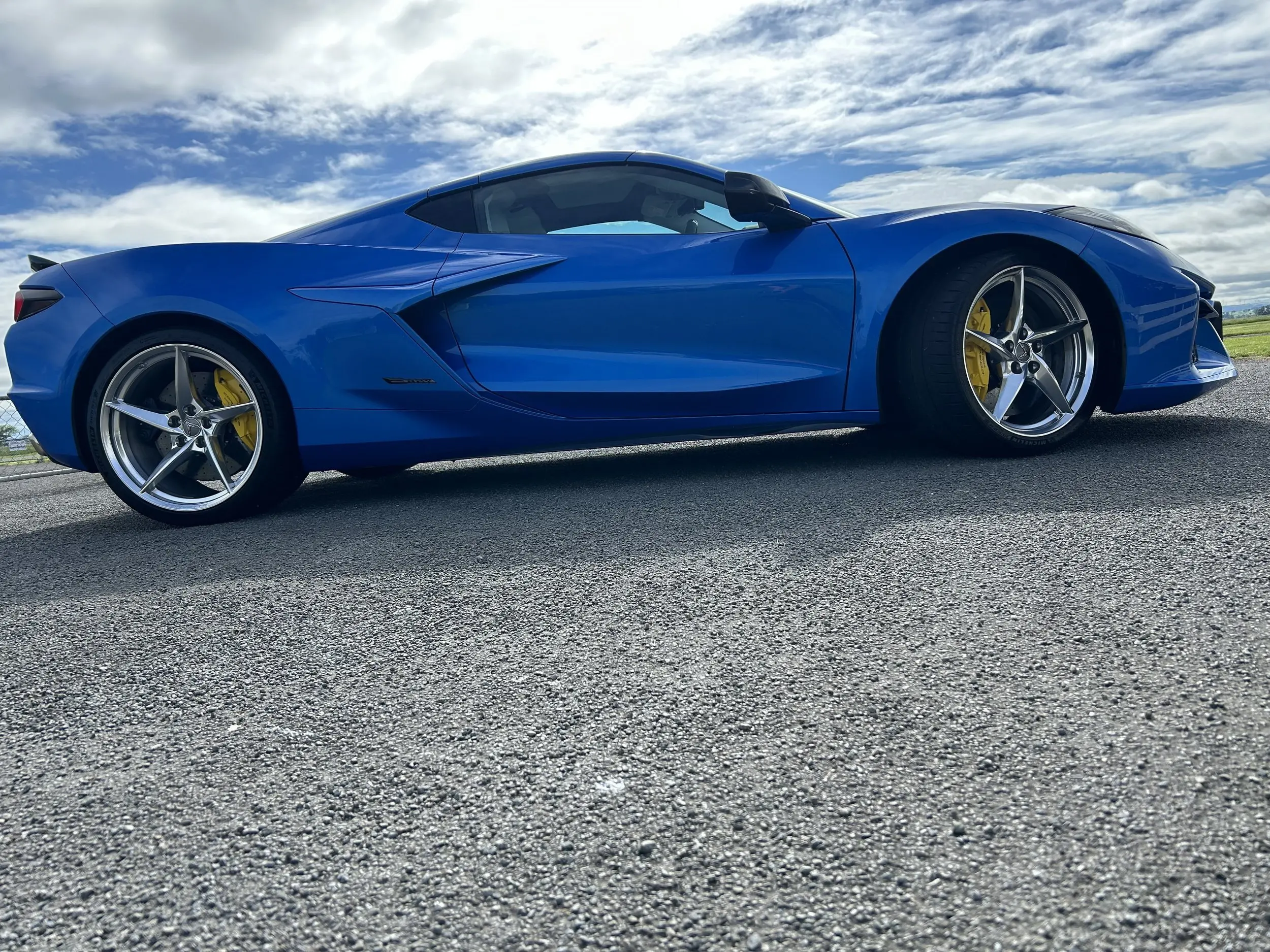
No mystery why grip is immense. The E-Ray runs staggered 20 and 21-inch wheels, fitted with Michelin Pilot Sport or Pilot Sport 4S tyres. The rears are monstrous 345-section rubber.
Electrification widens the car versus a Stingray by just over 9cm. Packaging the hybrid hardware wasn’t too painful, since the current Corvette was designed from day one with hybridisation in mind.
The 1712kg dry weight (1749kg with fluids) is 110kg heavier than a standard Stingray.
To compensate, Chevrolet fits carbon-ceramic brakes and Magnetic Ride Control 4.0 as standard, likely with E-Ray-specific tuning.
GM engineers say weight was a key reason the E-Ray isn’t a plug-in hybrid. Adding a charging port, cables, and extra electronics would have added even more bulk.
The battery recharges only via the engine or regenerative braking. Running partly electric grants the car some environmental credit — though not too much. It uses about 2L/100km less than a Stingray in ideal conditions, but it’s very easy to spoil that number.
Still, the 1.9kWh lithium-ion battery — mounted in the central spine between the seats — holds enough to give up to 6km of electric-only range in Stealth mode.
The soundtrack is interesting. The V8 still dominates, but the electric motor sometimes introduces a noticeable, slightly odd high-pitched note. More distracting in this test car was some tappet noise.
The E-Ray gets a sportier body kit, body-coloured accents, and a unique rear spoiler. The cabin includes eight-way powered, heated, and cooled leather seats, with carbon fibre and suede microfibre throughout.
I drove GMSV’s 2025 demonstrator. Its cockpit is still the version with the long vertical strip of buttons bordering the driver. The 2026 model shifts to a much cleaner layout.
Chevrolet doesn’t market the E-Ray as a track weapon but it still offers a dedicated circuit mode. Drivers can choose maximum short-burst performance, draining most of the battery in a lap or two, or a more conservative setting for longer sessions.
The car maintains a minimum charge level so the electric motor can assist with stability corrections — like helping pull the car straight in a slide. You can monitor engine-motor behaviour via the Performance App with its detailed telemetry.
While the electric assistance enriches the experience, the car’s widened stance makes an already large vehicle feel even more of a lane-filler. Look in the wing mirrors and you mostly see aggressive angles and huge intakes.
And then there’s the price. Stingray coupes and convertibles range from $192,000 for the 2LT hardtop to $224,500 for the 3LT convertible. The E-Ray arrives only as a coupe, at a $60,500 premium over the latter.
And the Z06?
It’s now $346k— meaning old-school still costs more than the new way.
AT A GLANCE
CHEVROLET CORVETTE E-RAY
Overall rating: ★★★★
Design and styling: ★★★★
Interior: ★★★
Performance: ★★★★★
Ride and handling: ★★★★
Safety: ★★★★
Environmental: ★★★
SPECIFICATIONS
$285,000.
Powertrain: 6.2-litre petrol V8 with 119kW/169Nm electric motor fed by a 1.9kWh lithium ion battery, 488kW/806Nm combined.
Transmission: eight-speed automatic transmission, all-wheel-drive.
Safety rating: No ANCAP.
Wheels and tyres: Alloys, 275/30 ZR20 front, 345/25ZR21 rear tyres.
Battery: 1.9kWh lithium-ion battery.
Fuel and economy: 95-Octane petrol 11.5 litres/100km (WLTP-3), fuel tank capacity 70 litres.
Emissions: 267g CO₂ per kilometre.
Dimensions: Length, 4688mm; width, 2025mm; height, 1234mm.
Kerb weight: 1749kg
By Richard Bosselman