
PHOTO
ROAD TEST
Before we even get to the model that is the subject of this road test, let’s back up and start with the brand.
What’s new?
One of more than a dozen Chinese marques (and counting) now available in New Zealand, Geely made its debut here in the first part of 2025, with the pure electric EX5 compact crossover.
In some respects, then, Geely might be considered a relatively new kid on the block, albeit with a couple of important qualifiers. Firstly, Geely has been producing cars for the Chinese domestic market since the late 1990s. Secondly, Geely has, since 2010, been the owner of a brand that is well established here — Volvo — and of Volvo’s premium all-electric offshoot brand Polestar.
So there’s a fair bit of pedigree behind Geely, which has a production capacity of over 2 million cars a year out of 10 factories located in various part of China.
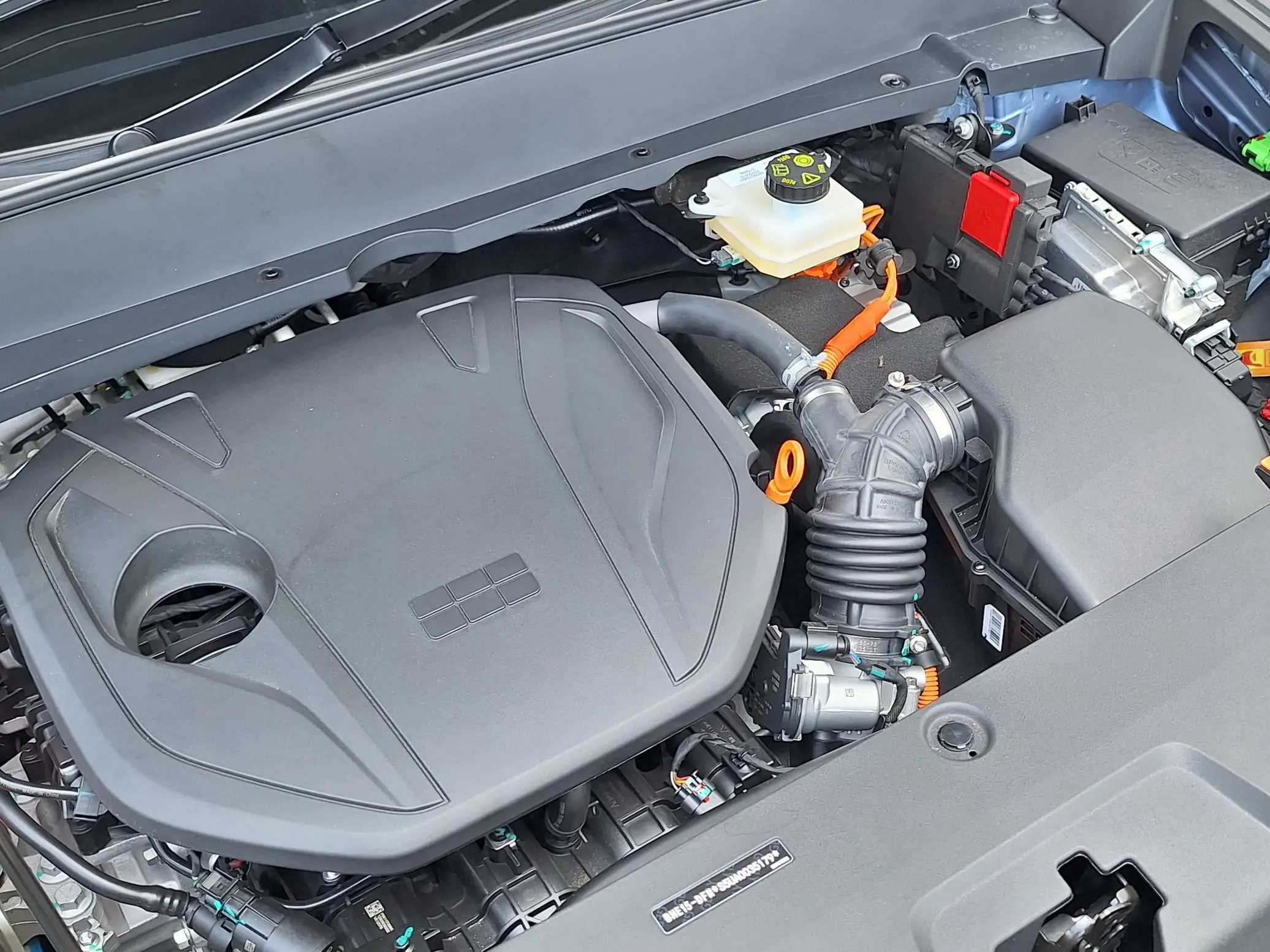
Given a final-frontier name because it is part of Geely’s Galaxy line of vehicles, the Starray is a shade bigger than the EX5, and pretty much an equivalent dimensionally to the Mitsubishi Outlander. Globally, there are both pure petrol and hybrid configurations of the Starray, but the only version we see in New Zealand is the EM-i plug-in hybrid. This provisions a 73KW/125Nm 1.5-litre petrol engine operating in tandem with a 160kW/262Nm electric motor. Power is delivered to the front wheels only.
A day-to-day down side cost-wise may be the petrol engine’s requirement for premium 95-Octane fuel. On the other hand, Starray EM-i packs a sizeable 18.4kWh battery pack, which enables a very useful battery-only range of about 80km.
As is the norm with pretty much all Chinese car brands these days, sharp pricing is part of the deal: the base-variant Starray EM-I ‘Complete’ list at $45,990, while the flagship ‘Inspire’ — as tested — carries a $49,490 tag. Mind you to achieve those prices you’ll need to take your Starray painted white, as every other colour on offer carries a $950 price premium.
What’s it look like?
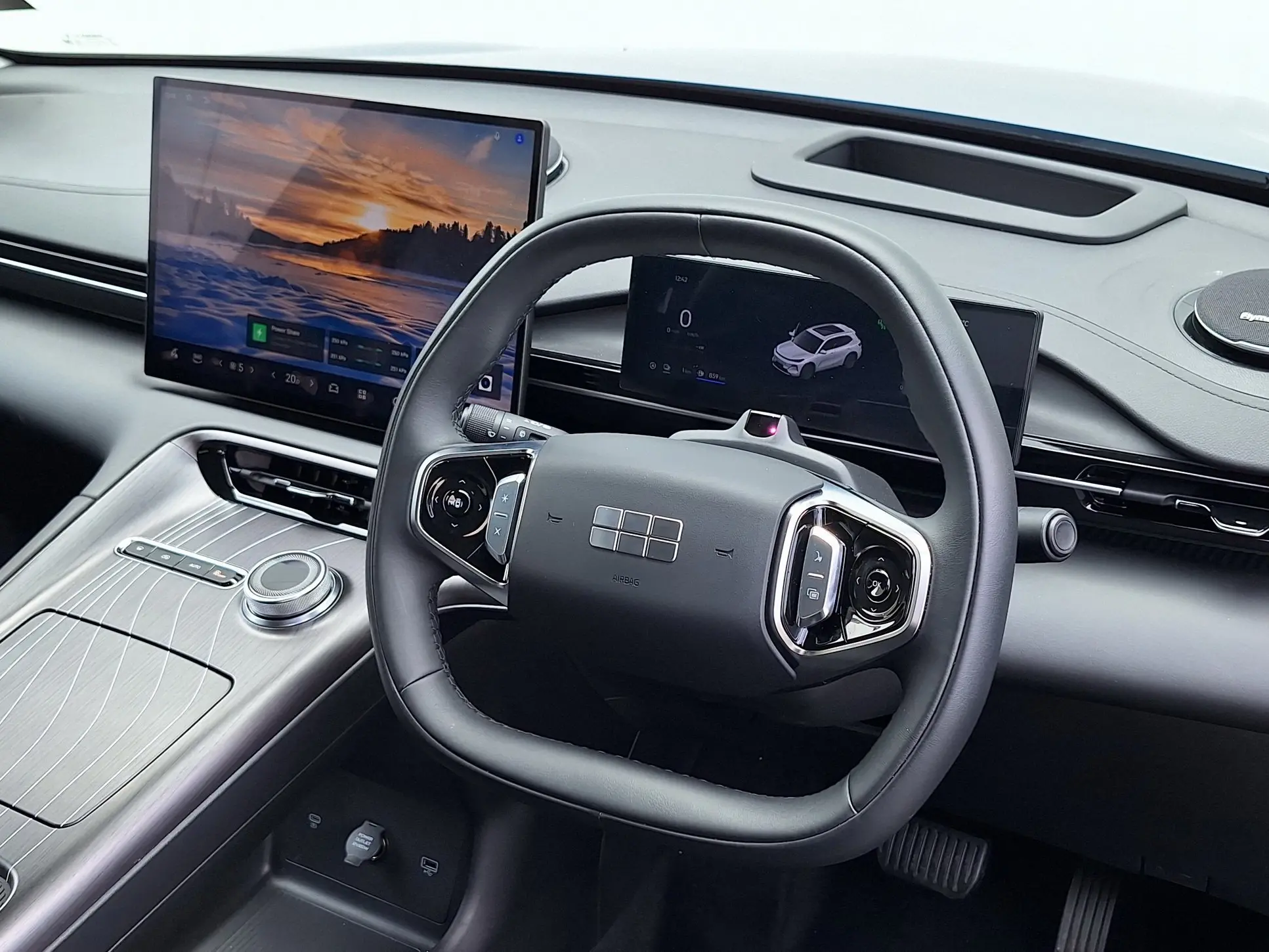
Park the Starray EM-i alongside Geely’s New Zealand debutant, the EX5, and the two models are clearly part of the same family line. Yet while the overall look is quite similar, the Starray has the stronger visual presentation. That’s because there’s some extra crispness to its creasing and detailing, which gives it a more dynamic and poised appearance.
Up front the solid grille is an interesting execution of what is typically a pure-EV feature, but seen here on a hybrid machine instead. Intakes either side of the nose disperse air where it is needed for cooling, chiselled LED light clusters immediately below the bonnet are a signature feature also seen on the EX5, but in the latter case without a connecting trim strip that separates the grille from the bonnet.
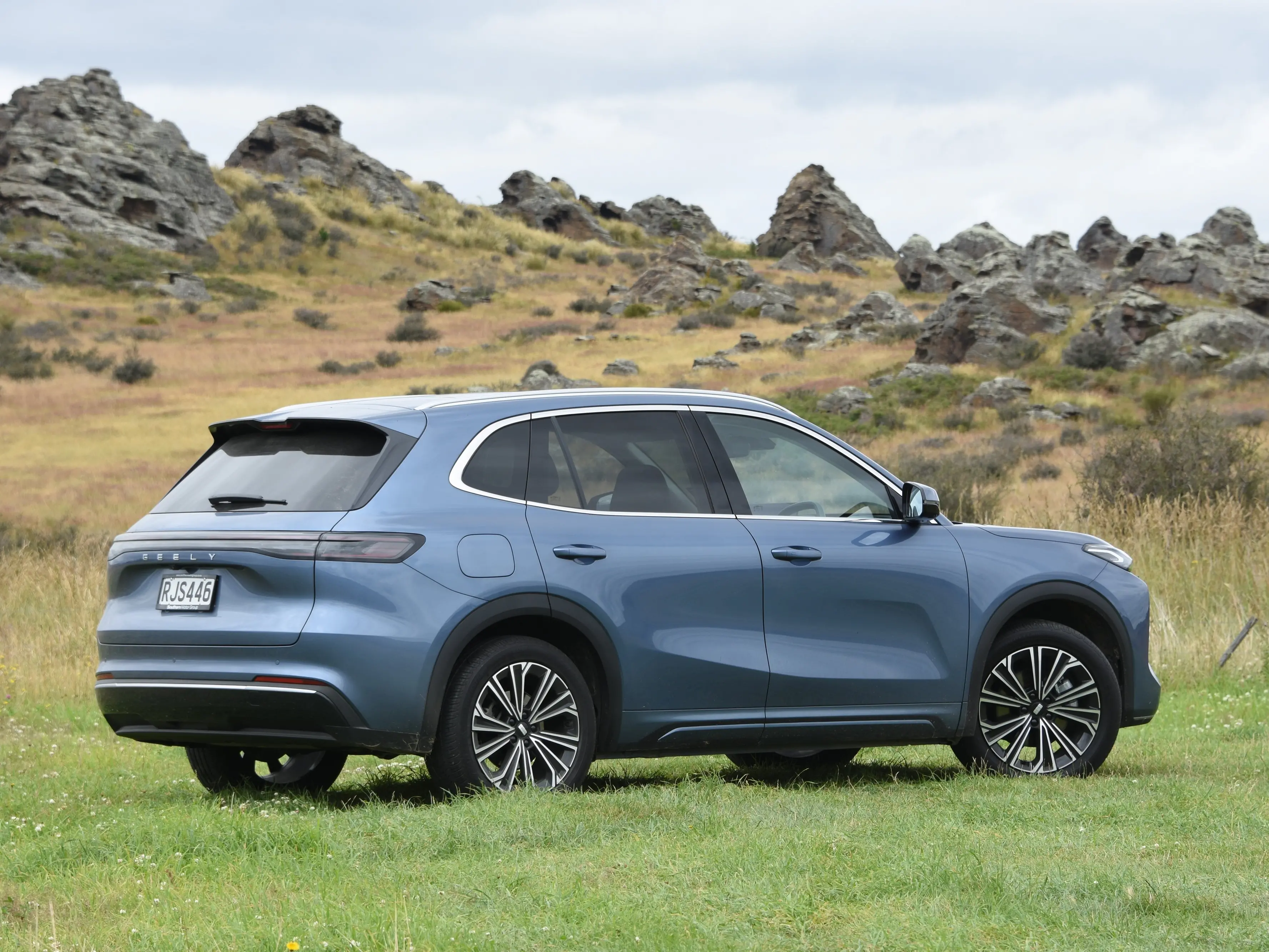
The side profile of the Starray is fairly generic, but still with interesting surfacing. At the rear the Geely name is writ large across the tail, under the light cluster that runs across the rear hatch.
Other than its running on 19-inch alloys with 235/50 tyre, as against 18-inch rims with 225/55 rubber, there’s nothing on the outside to distinguish the flagship Inspire from the Complete variant.
What comes as standard?
Despite there being the even better equipped Inspire above it, the entry-level Complete variant does live up to its name compared to many rivals from other brands, Standard creature comfort and convenience features include keyless entry and start, power-adjusting and heated front seats, heated mirrors, roof rails, climate control air conditioning, a 15.4-inch centre touchscreen, 10.2-inch digital instrument cluster, a 6-speaker sound system, and satellite navigation.
Bluetooth and wireless connectivity is included, with smartphone mirroring, wireless for Apple devices from the get-go, and for Android via a Geely operating system update. There’s also access to Geely Connected Services, which adds further digital functionality, and V2L (vehicle-to-load) functionality to enable small appliances to be powered by the car.
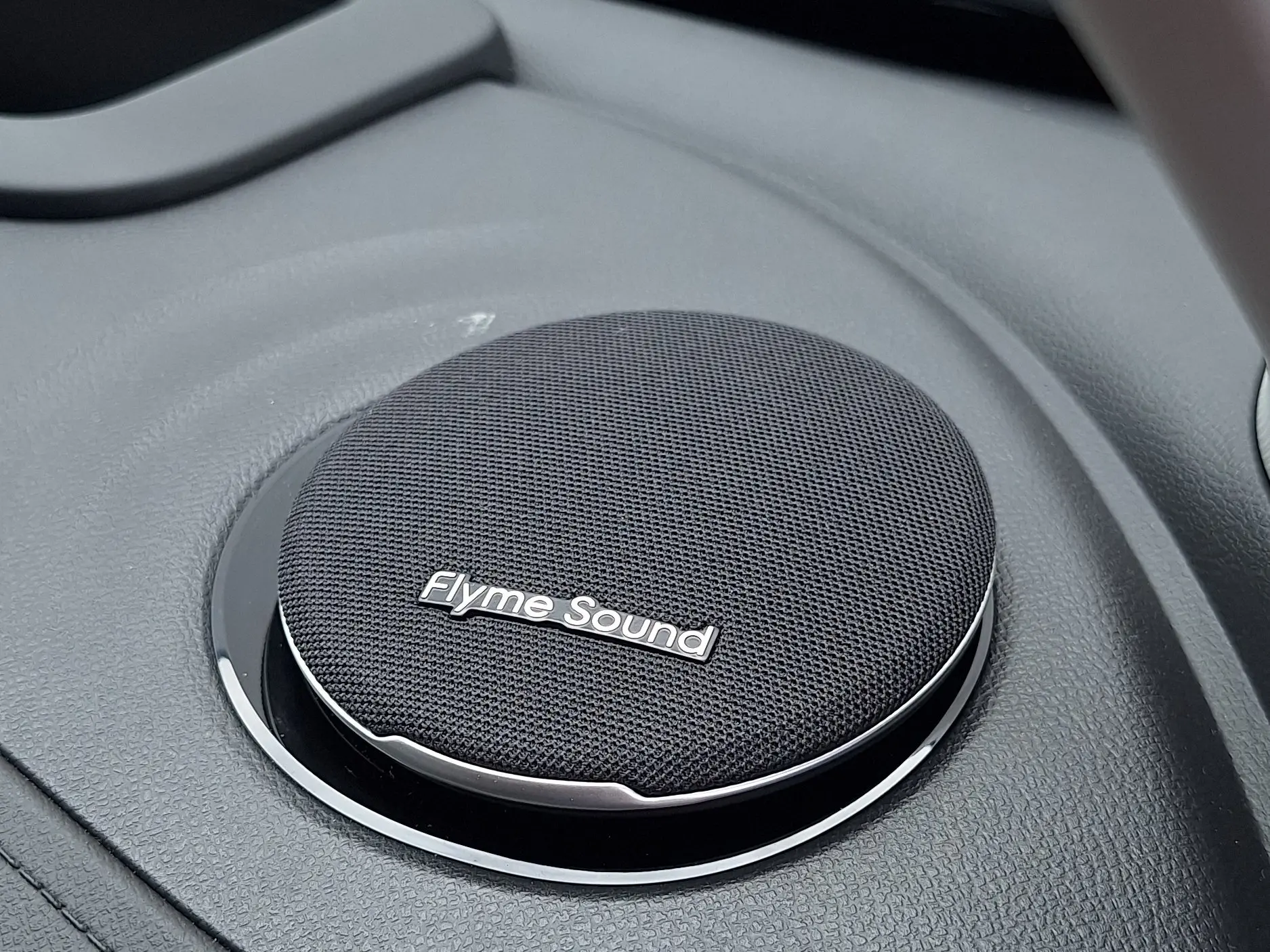
The Inspire, as tested, adds a panorama sunroof, an excellent 16-speaker sound system, wireless phone charging, 256-colour interior mood lighting, front seat ventilators, a second-row centre armrest and a power-operated tailgate.
On both variants there is no spare wheel, just an emergency tyre repair kit.
Late last year, the Starray EM-i achieved a full five-star ANCAP safety rating. Aside from lacking front parking sensors, the Complete takes the exact same safety array as the flagship Starray EM-I, including a 360 degree surround view camera, auto-dipping headlights, rain sensing wipers, and an active safety suite that runs to 18 items. These include adaptive radar cruise control (with an ‘intelligent’ function that adjusts speed to match changes in the speed limit), autonomous emergency braking, front and rear Collision Mitigation, rear cross traffic alert and braking, lane keeping assist, blind spot monitoring, driver attention and fatigue alerts, and traffic sign recognition.
What is it like inside?
Climb aboard the Starray, and the first thing you will likely be impressed by is the space.
Front seat occupants are separated by a broad, free-floating centre console and enjoy a commanding seating position with masses of head room. There is ample space in the back too, with a fully flat floor, plenty of legroom and — as is the case up front — truly generous headroom. Map pockets, a fold-down centre armrest with cupholders, rear air vents, USB charge ports, top-tethers and ISOFIX points for child seats are all provided.
The boot is class competitive when the rear seats are raised, with a standard 428-litre capacity that increases to 528 litres if the adjustable boot floor is dropped to its lower position. The downsides of lowering the floor are the loss of both a useful hidden storage area, and of the provision of a fully-flat extended boot area when the front seats are folded down.
Mind you, it’s simple to relocate the floor into its upper position; do that, fold the rear seats down, and the Starray will swallow around 2000 litres of cargo behind the front seats. Even accepting that unleashing this much capacity requires loading to the roofline, that’s an impressive carrying capacity. The load lip for the boot is also low, which is an added bonus for everyday use.
Along with being equipped to carry lots of stuff in the back, the Starray is well-appointed with convenient storage areas up front. These include a sizeable space under the centre console, a decent lidded centre bin, and both lidded cupholder and dual phone tray — nicely angled to stop devices sliding off it — on the console top.
The overall cabin aesthetic is calm and minimalist. Soft touch surfacing, patterning on key surfaces, gloss-black inserts and judicious chromed highlighting all contribute to a quality feel. So does thoughtful detailing such as anti-slip rubber mats in the main stage trays and bins.
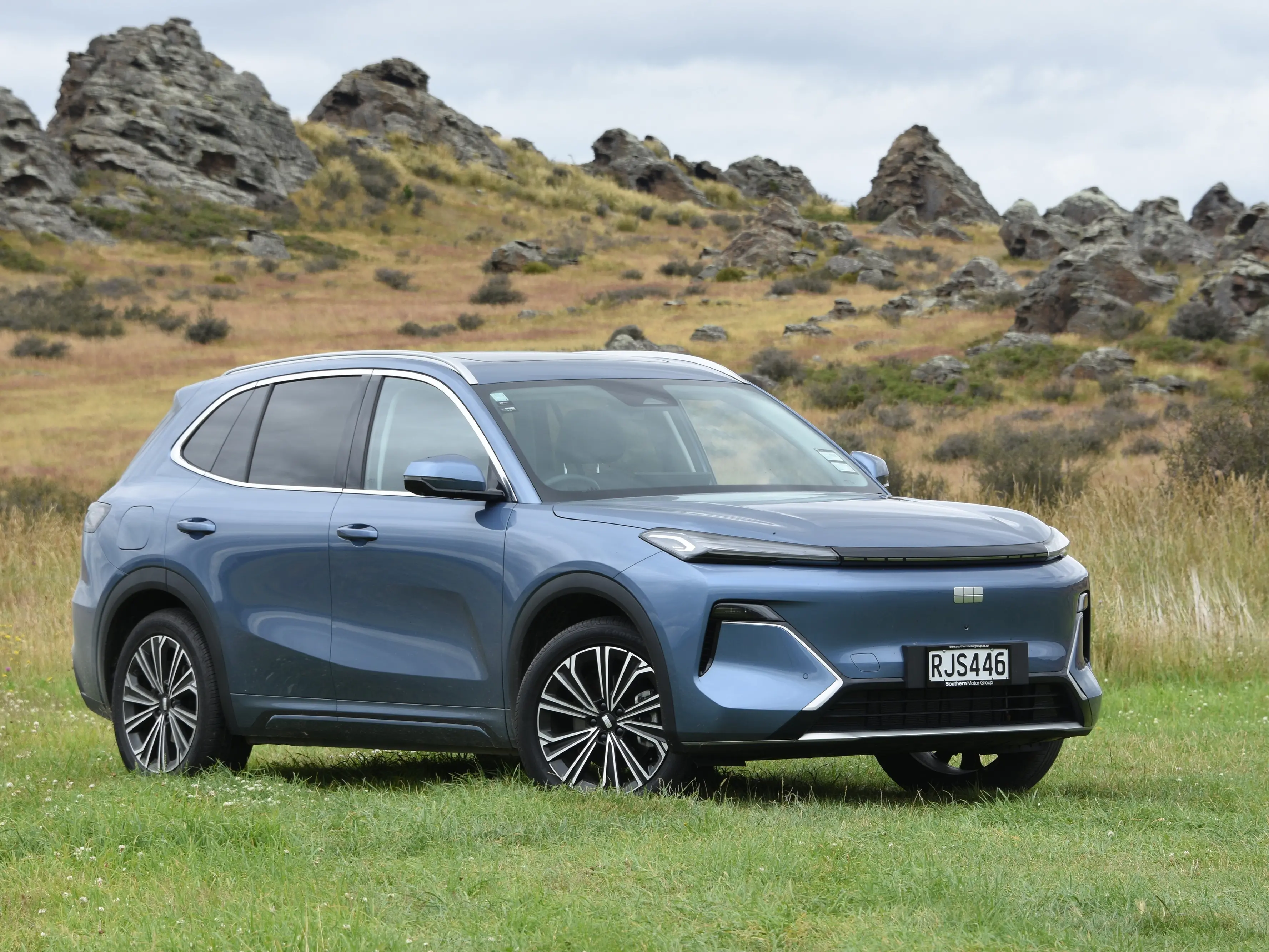
The digital displays comprise a massive 15.4-inch centre-mounted landscape-format touchscreen, a separate 10.2-inch instrument screen nestled behind the steering wheel, and a large head-up display.
The graphics on all the screens are crisp and clear and the system response times are quick. A rotary control knob on the centre console provides short-cut access to the key ventilation and audio controls. There are wired smartphone plug points (USB-A and USB-C) and 12v socket up front, albeit a little awkwardly positioned under the free-floating centre console.
Wireless smartphone mirroring for the Starray has initially been limited to Apple devices (including on the test car) but this is being rectified via a software update to allow Android Auto connectivity.
What’s it like to drive?
The Starray starts promisingly with comfortable front seats, good visibility, and a reasonably intuitive layout of key controls.
That it takes some time to learn the intricacies of using the touchscreen for core functions is an inevitability of tech-rich cars these days; in this respect the test car was no better nor no worse than many of its peers.
Another increasingly normal feature that I still find a little disconcerting is that there is no start button; one just climbs aboard, and the vehicle senses your presence and switches itself on. The drive select stalk is positioned on the steering column, once either ‘D’ or ‘R’ is selected, the car will move off once the accelerator is pressed.
The Starray’s mechanical set-up differs from most hybrids in that for almost all the time, it’s the petrol engine that is charged with playing a helping-hand to the electric motor rather than the other way around.
For this reason, as well as minimising fossil-fuel burn, keeping the car’s battery reasonably well-charged should be a priority in day-to-day use. This should be easily achieved with regular overnight AC home charging, while there’s the bonus — not always provisioned on plug-in hybrids — of using commercial DC fast-chargers.
Achieving maximum home-charge rate of 6.6kW will require a wallbox, and while the 30kW maximum DC charge rates is low, one must remember that the Starray’s battery is only an 18.4kWh one and giving it a decent boost won’t take long.
The electric-first bias of the drive system is a big plus for round-town motoring, almost all of which can be accomplished without recourse to the petrol engine. As well as being kinder on the environment, this set-up contributes the Starray EM-I’s impressive round town refinement.
Venturing on to the highway and Geely’s Starray also lands well for low levels or wind noise and well-contained road noise. Ride comfort is also good, with a suspension set that tends towards the softer side absorbing surface imperfections well at both round-town and at highway speeds.
Performance-wise, the combined force of the electric motor and petrol engine endow the vehicle with a respectable turn of speed. With the electric power predominating so long as there is adequate battery charge, the pleasing EV characteristic of refined power delivery with maximum torque instantly available is there to impress, enabling snappy overtake at both round-town and highway speeds. Should the battery deplete too much, though, both accelerative vim and mechanical refinement take a tumble.
Petrol consumption officially rates at 2.4l/100km, but in real world situations will depend on the mix of motoring, vehicle load, terrain and weather. On test, the petrol engine was barely troubled around town, so petrol consumption was virtually nil. On a 160km highway run, including some serious hill work, a still pleasing 6.1l/100km return was recorded.
With a suspension set-up oriented towards comfort, handling is benign, but hardly razor-sharp. Anyone with an ounce of motoring enthusiasm in their veins will prefer to set the steering for maximum weight, and the regenerative braking for maximum response.
A final aspect of the driving experience that was truly irritating was that perennial contemporary bugbear of overly intrusive ‘driver assist’ systems. Accepting that some of these so-called ‘aids’ such as the incessant speed limit warning chimes can be deactivated, I was disappointed in particular by the so-called ‘intelligent’ cruise control. This system maintains the set speed on straights, adjusting to keep a safe following distance, much as other adaptive cruise controls do. So far, so good. But the system also slows the car in corners to a ridiculously cautious level, and worse still seems to apply braking in the corner, which is not actually safe driving practice.
The bad news is enthusiastic types will need to grit their teeth with this, or choose not to use the system at all. The good news is that a calibration change need only be a software update away. Please take heed Geely.
Verdict
Irritations over intrusive safety systems aside, Geely’s Starray EM-I is an impressive effort from a Chinese maker that is seeking to build a major international presence. While by no means a car to set pulses racing, it is competent, spacious, stacked with features, and both well-finished and sharply-priced.
AT A GLANCE
GEELY STARRAY EM-I INSPIRE
Overall rating: ★★★+
Design and styling: ★★★+
Interior: ★★★★
Performance: ★★★+
Ride and handling: ★★★+
Safety: ★★★★★
Environmental: ★★★★
SPECIFICATIONS
Price: $49,490 ($50,440 as tested).
1.5-litre four-cylinder petrol with permanent magnetic electric motor, combined power 193kW.
Transmission: E-DHT hybrid transmission, front-wheel drive.
Safety rating: 5-Star ANCAP.
Wheels and tyres: Alloys, 235/50 R19 tyres.
Battery: 18.4kWh lithium-ion battery.
Fuel and economy: 95-Octane petrol 2.4 litres/100km (WLTP-3), fuel tank capacity 51-litres.
Emissions: 54 grams CO₂ per kilometre.
Dimensions: Length, 4740mm; width, 1905mm; height, 1685mm.
Kerb weight: 1739kg.
By David Thomson