
PHOTO

( Fe29 Gallery)
The focal point of "Drawings in Space" is a series of recent wall mounted works by Morgan Jones, made between 2023 and 2025. These reliefs, as the artist calls them, are constructed out of white card and then painted white. The lighting conditions at Fe29 Gallery enhance the works, creating a dramatic and intricate interplay of shadow and reflection.
Alongside these recent works is a substantial range of earlier works from particular series. The show cannot really be called a retrospective, but the work represented provides ample insight into periods of Morgan’s acclaimed career: there are intricate and interlocking wall works made in the mid-2000s that muse on the logic of desktop computer design; two large scale outdoor pieces in metal; and a multitude of card or wood maquettes.
The freestanding maquettes can be viewed as works in their own right, but they also represent an important aspect of the artistic process. Morgan assembles and resolves his work through a three-dimensional construction process. From this table-top sort of scale, large works in metal can be made, for example.
All the work on show demonstrates an accomplished understanding of structural integrity, balance and counterbalance, and often not without the play of visual metaphor, seen in the work Anchor What? (2002), for example.

(Dunedin Public Art Gallery)
Including well-known and rarely seen treasures from the Dunedin Public Art Gallery collection, with support from Uare Taoka o Hākena Hocken Collections, is an expansive show on the topic of Christian religious tradition and themes in visual art.
Spanning points in time from the mid-14th century, to the Renaissance, to the 20th century and very recent works, this show covers a breadth of perspectives on the Christian tradition represented in our local collections.
Connections and comparisons are drawn between works that trace shared themes, narratives or iconographies. The viewer is drawn through the space to consider different groupings, juxtapositions or new interpretations. Earlier works from the collection originate from times when art was integral to religious practice or devotion, for example. But an important feature of the show highlights a variety of modern and contemporary responses to the traditions of Christian iconographies or religious practice and culture.
In one section of the exhibition, for example, are three works fashioned after Leonardo da Vinci’s The Last Supper and that make use of this well-known image and narrative to present poignant critical perspectives: the feminist standpoints in Margaret Dawson’s Kea. Nestor notabilis (1990) and Mary Beth Edelson’s Some Living American Women Artists/Last Supper (1972), for example, and the postcolonial critique in Greg Semu’s Auto-portrait with Twelve Disciples (2010-11).
(RDS Gallery)
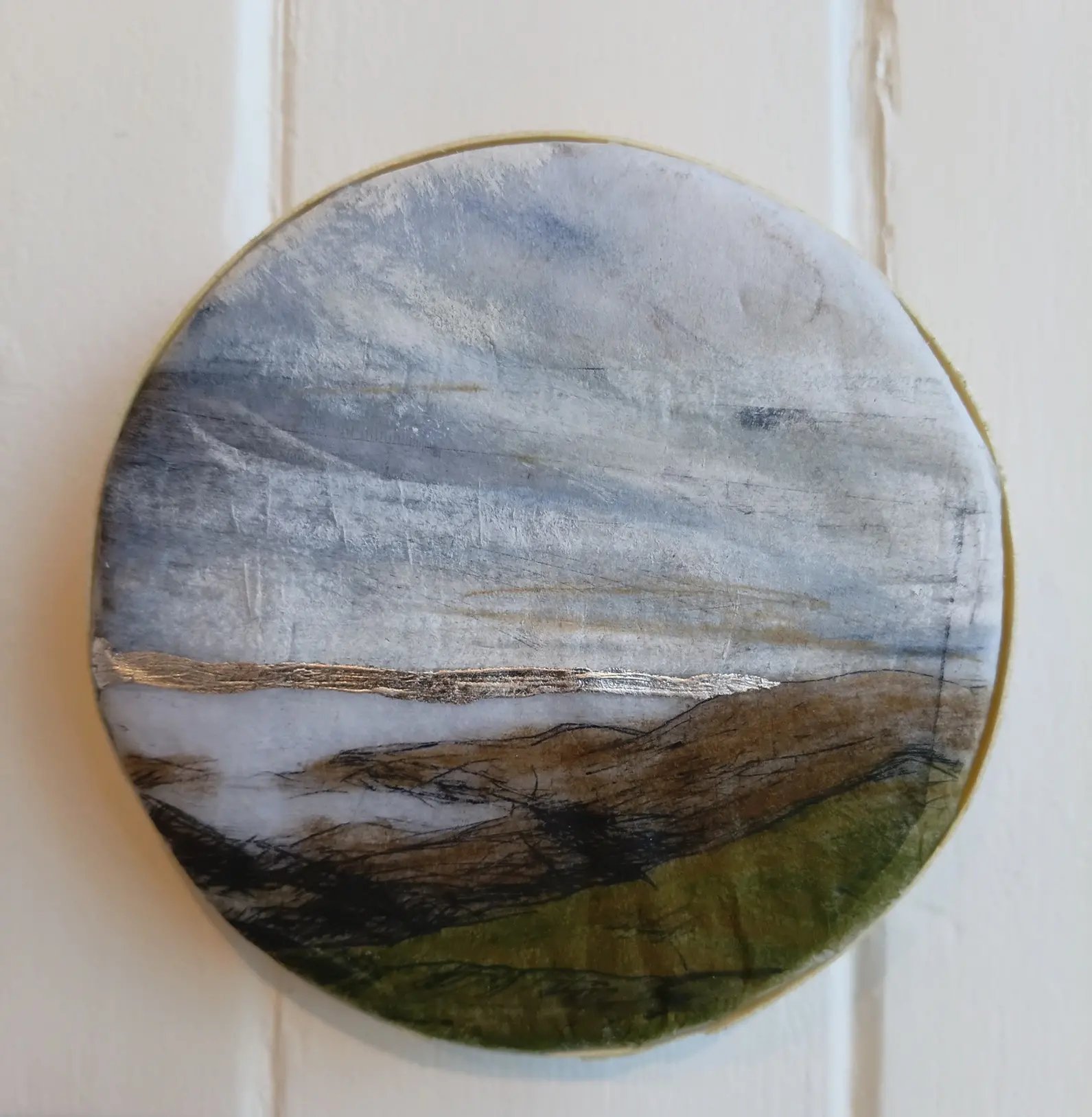
"Small Art Project: Sustainability and Scale" is a group exhibition of work by local established and emerging artists in response to the premise of "small art", as RDS Gallery puts it, "intimate works that operate on a human scale, are more accessible in size and cost, and require fewer resources to produce."
The show was set up as part of the 2026 Ōtepoti Mohoao Wild Dunedin Festival of Nature (April 10-19) with its theme of sustainability. Running until May, "Small Art Project: Sustainability and Scale" includes sixteen artists: Jon Cox, Inge Doesburg, Kirsten Ferguson, Caro Gilbert, Eliza Glyn, doNna Jackson, Bridie Lonie, Sarah McGaughran, Pam McKinley, Lisa Perniskie, Jacque Ruston, Robert Scott, Nimisha Sharma, Justin Spiers, Simon Swale, James Thomson-Bache.
From the conceptual to the material, the works exhibited are unique expressions of sustainability and scale. Many of the works are literally small in scale, like the pocket-sized works by Thomson-Bache, or the small fragments of recycled paintings by Ferguson. Some of the contributors have significant backgrounds in the intersections of art, climate science and sustainability. And others approach the principle of the show thematically, personally or through the use of materials, often highlighting domestic or self-reflective elements as key pathways for living sustainably.
By Joanna Osborne