


To do that he is exposing these issues, how the impact is intergenerational and is looking for where the roots of the current wounds are through his work as an actor and poet, including in his one-man play, Bones.
"I think one of the real major themes is uncomfortable conversations, brave conversations, and trying to hit the point where what really does make the change? How do we open up these types of conversations around these things?"
Noel admits his work is very upfront, honest and challenging.
"My approach has been to just tell real stories, but tell them as compassionately as possible, but don’t hold back. My mother was raped at a very young age. And so I knew I had to write about that. And it’s probably the most confronting part of the whole play. Although there’s some other pretty, probably full-on stuff in there. But my approach is always to err on the side of being real."
Performing Bones in Invercargill at the Poetry Pharmacy a few years ago he met Ingrid Campbell, a poet and creative arts therapist, and then artist Anne-Marie Hamilton.
"We really hit it off because this is something that she [Campbell] had been exploring."
Campbell and Hamilton were blown away by how visceral and raw Bones was.
"We thought gosh, we need to know this guy.
"From there we’ve just kind of been exploring how do we bridge cultures, how do we have these hard conversations, and how can we use art as the receptive vehicle to confront some of this stuff," Campbell says.
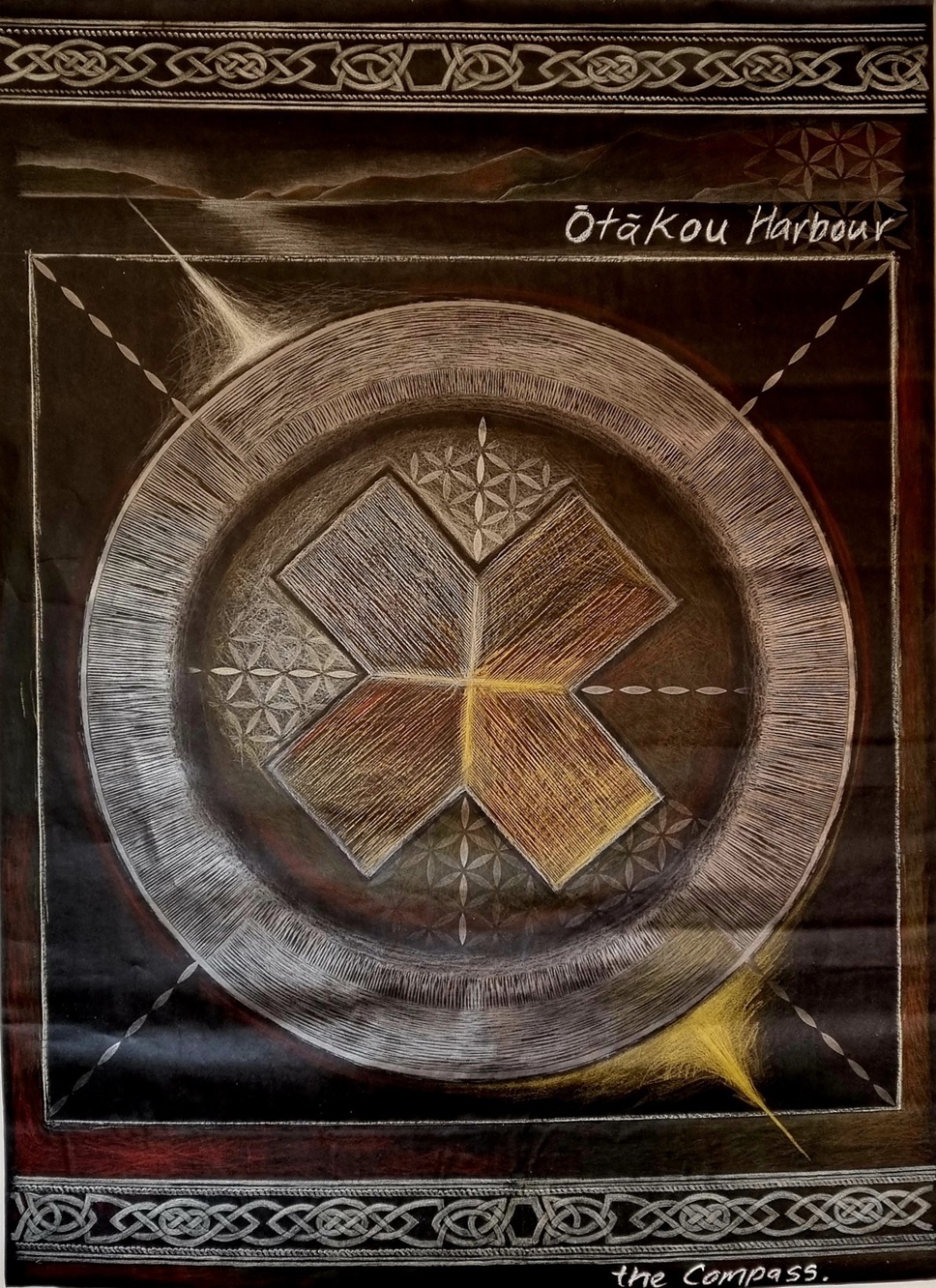
"Everything that Julian and Ingrid have spoken about culture and the gritty conversations that we often don’t have, that’s absolutely up my alley, because the sort of stuff that I’m interested in doing visually adds to that story."
For Queenstown-based Noel, he did not want Bones to just be about indigenous stories.
"I didn’t want my play to just be a Māori story. I wanted to kind of plumb what was universal around these things of abandonment and loss. And to sort of say, well, it’s much deeper. It’s a human story. These are human stories. And these happen to people no matter where you are or come from in the world."
Together they have created Rite of Return, which sees Noel and Campbell share their poetry and stories and Hamilton the art she has created based on their stories.
"Anne-Marie’s work represents making the invisible visible in a very visually robust way. And so one of the things that I got to observe as more of a poet and writer was the way in which Anne-Marie was able to share storytelling through this art form. And so what I see her creating at the moment is this beautiful representation of our individual stories being encapsulated in one whole and our whakapapa and our heritage," Campbell says.
The music, storytelling and art interact together as the trio speak to each other. They hope to project film of Hamilton doing frottage using custom-carved woodcut panels, as the others speak.
"It is really exciting and quite different."
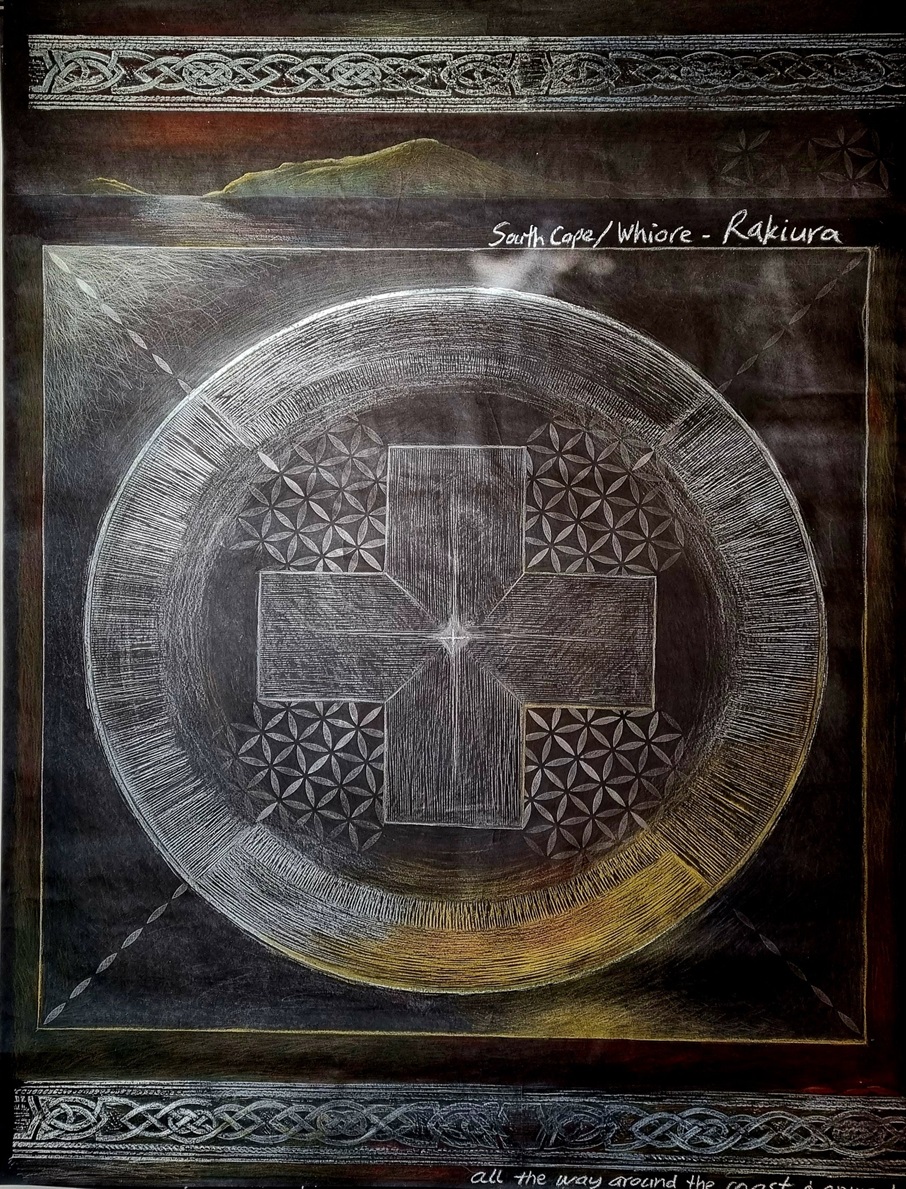
"It’s really just a matter of connecting with people while they’re doing that, and just people can just have a go at producing some artwork for themselves. The beauty of this is that people enjoy doing art, but often feel a little bit nervous about what am I going to draw. The beauty of it is that they pick up a piece of graphite and just go over the top of the paper and it appears from underneath," Hamilton says.
It is a practice Hamilton happened upon after making printmaking blocks.
"I really enjoy the simplicity of the graphite and the paper, and just how you are able to also do lights and darks as well. I absolutely love how it all works."
As she likes making large pieces, she carves her images out of MDF wood. One of the works for the fringe includes images given to her by Noel and Campbell. It has taken around 60 to 80 hours to complete.
"Although I’m cutting it out, I’m adding pieces of each of us into it. It’ll be a highly patterned piece of work, which is not normal for some of the work that I have done. It’s a significant piece for me. It’s sore hands and blisters, but it’s all worthwhile."
The image from Noel was a painting his mother Evelyn Patuawa-Nathan, one of the first Māori women to ever have a book of her poetry published, painted for an exhibition in Whangārei back in the late 1970s.
Campbell, who is of Swedish, Scottish and Cook Islands descent, provided an image of a Cook Islands tatau (tattoo) that she got done on the island a few years ago, as well as a representation of her Swedish grandfather, a famous ocean rower.

The aim of Rite of Return is to bridge the gap between culture and the aspects of intergenerational trauma, and the stories and wounds that people carry throughout their life.
"Then looking at art being the vehicle for transformational change. The thing that I learned from poetry was that it gave me a buffer, I guess, where I didn’t feel misunderstood any more as a person. If people misunderstood me, I put it down to the fact that they misunderstood poetry and not me. And so that created this kind of filter in which I could say exactly how I felt."
Campbell examined that further in her masters, writing poetry every day for nearly 18 months as she dissected the impacts of spiritual abuse and religious trauma in her own life.
"But also how I was seeing it being impacted on my Pacific people, especially, and the aspects of colonisation. I think within that, one of the things that I see us as a team really caring about is often we’re fighting the wrong war about othering people and the ‘them and us’, whereas actually what we want to say is, ‘yes, let’s have hard conversations, but let’s also look at the things within our diversities and differences that actually make us human and more connected than we realise’.
"And let’s not use those things as weapons, but let’s use our pain points as opportunities to transform not only our lives, but the lives of others."
Tired of the usual discourse on the subjects which they feel are incredibly disempowering, they see their work as empowering themselves and others to take action.
"So it’s not just standing up and shaking the same old stick. It’s like, no, let’s throw the stick away. What might happen if we didn’t look at it through those lenses?," Campbell says.

The three of them might come from different cultural contexts but they are not looking at the differences as barriers, instead as simple human experience.
"We are spiritual beings having a human experience and we have to navigate all the nuances and intricacies of that, the complexities, and yet actually it can be quite simple. And I think the arts is a way that conveys that in such a beautiful, felt experience."
As the topics in Rite of Return are quite heavy, the trio have organised for a debrief afterwards.
"We don’t want to soccer punch somebody. We don’t want to leave people with feeling so exposed, like their guts are hanging out and we send them on their way.
"So I think a really good way of ensuring a therapeutic care is that we finish well and we do a bit of a debrief and we close with karakia or something that ensures we’ve taken notice and we’ve taken care of the people."
To see:
Rite of Return, Blue Oyster Project Space, March 19-20; The Frottage Queen, Lower Octagon, March 18-19; Bones Community Gallery, March 21-22.


