
PHOTO
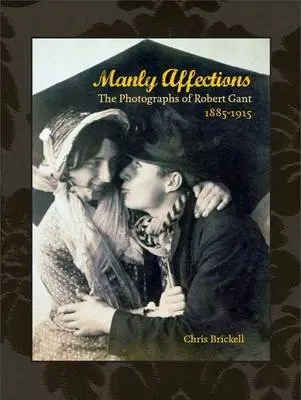
The Photographs Of Robert Gant, 1885-1915
Chris Brickell
Genre Books
Chris Brickell's beautiful new book reminds us that despite the impression that the formality of Victorian studio portrait photography creates, even New Zealand's secondary centres could find room for interesting and unconventional people.
Robert Gant was one such person.
An English immigrant, Gant chose to settle in Masterton, which by the late 1880s was transforming itself from a rough bush town to a sizeable settlement with a growing middle class and good rail links to Wellington. It was possible to stage cultural performances in Masterton while also keeping up with all the latest international trends and fashions.
Like many who worked by day in chemist shops, Gant was a keen amateur photographer. The albums he created for male friends form the basis of Manly Affections.
The photographs are of men, individuals, couples and groups.
Some of sporting teams are little different to conventional group photographs. But many show signs of affection between the subjects, an arm over a shoulder, an affectionate glance, even a kiss. While it is possible to read too much into some images, the overall effect of the 230 Victorian/Edwardian photographs taken in and around Masterton and Greytown cannot be denied.
Many men are depicted in theatrical costume as sailors, pirates or as figures from history.
Some of the images are reminiscent of Wilhelm von Gloeden's northern hemisphere work. "Classical" Greek poses were always a good way of getting a comely youth to remove his kit.
The most disturbing set of images, to a modern eye, are a series of photographs of mock hangings and beheadings. Over a 30-year period, Gant "tied his friends' hands, led them to the chopping block, and raised the axe".
The "beheadings" look crude by modern standards, but 100 years ago they would have ... er, turned heads.
Brickell places Gant's work within a wider corpus that linked sexuality to suffering and redemption. Some poses seem to have deliberately reflected American and European artists' work.
As many of these images suggest, Gant was an active player in Masterton's amateur theatrical community.
In the days before movies and radio, people made their own entertainment, whether it was amateur dramatics or pub sing-alongs. Gant and his friends frequently frocked up to perform for their fellow townsmen and women.
Brickell notes that despite his attraction to men, Gant "was more of an insider than an outsider", a mainstay of the local community.
"This non-sporty, flamboyant chemist was a pillar of the community", long remembered for the various roles he played in the life of the town.
Manly Affections is a first-class job.
Brickell engages with art and queer theory but does not force academic jargon down his readers' throats.
Designer Katy Yiakmis has given the handsome hardback a "period album" design that perfectly matches its subject matter, creating a book that is a true pleasure to own.
• Gavin McLean is a Wellington historian.