
Themes echoed in clever symmetry

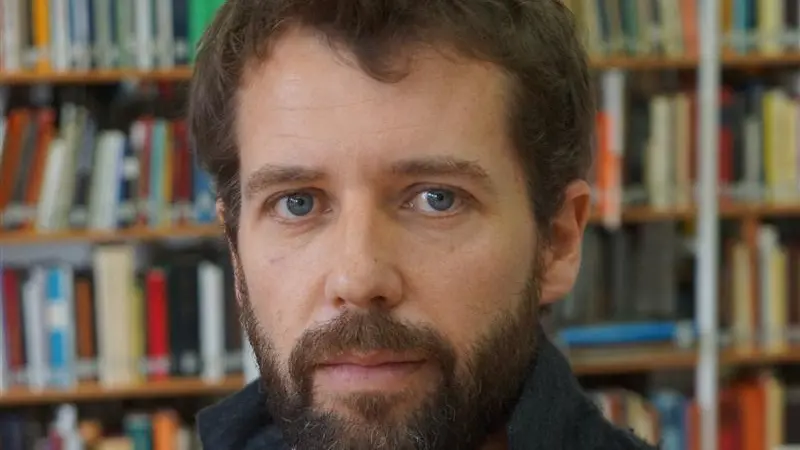
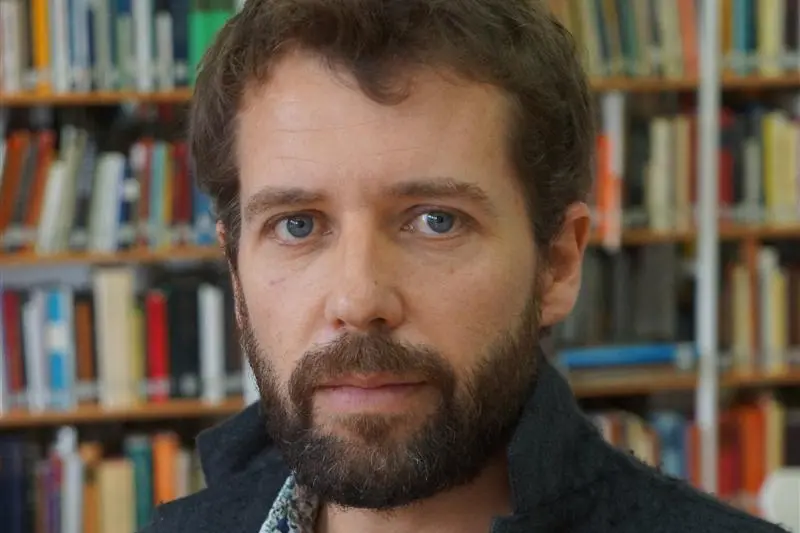
Hamish Clayton. Photo by Lisa Gardiner, Manatu Taonga.

THE PALE NORTH<br><b>Hamish Clayton</b><br><i>Penguin Random House</i>

Award-winning New Zealand author Hamish Clayton's second novel, The Pale North, is a memorable and challenging exploration of myth, memory and the role of fiction in our perceptions of the world.

It opens with a novella-length ghost story, The City of Lost Things, which follows expatriate writer Ash's return to Wellington four months after a devastating earthquake.

As he explores the ruins of the city, Ash stumbles across a dark-haired woman sheltering in a condemned building.

With her is a young girl who bears the same name as Ash's former girlfriend, Charlotte, and who refuses to leave these ruins in which her father supposedly lies.

Disturbed by the arrival of a demolition crew, the woman disappears as suddenly as she first appears, leaving Ash wandering through the shadows of both the pre-earthquake city and the two people who defined his time there: his lover, Charlotte, and his friend and collaborator, David, a photographer whose seminal work depicting an abandoned Wellington now seems eerily prescient.

This tale, which forms the first part of the book, is both a haunting narrative and a beautifully vivid evocation of our capital city, and Clayton could easily have finished his novel here.

Instead he passes the narrative to a new authorial voice, a scholar - or possibly journalist - called Simon Petherick, who reveals that The City of Lost Things is the work of an obscure local author, Gabriel North.

He then embarks upon an academic analysis of the relationship between writer and subject, myth and reality, and the power absence lends imagination.

This essay, interspersed with extracts from North's diaries, addresses all the things upon which I had been musing about while reading Ash's tale, including the identity of the girl's father, and the extent to which it is inspired by the Christchurch quakes.

It then proceeds to raise questions of its own, not least of which is whether it is Ash or David with whom North can most closely be identified.

The novel's dualistic structure is a lovely example of form following function, creating a clever symmetry in which the central themes of the first half are echoed and amplified.

It also left me somewhat ambivalent.

On the one hand, it was flattering to have my own amateur speculations about the novella validated by their reiteration in Petherick's own authoritative (if fictional) analysis.

It also renders what is an intensely specific story into one accessible to an international audience and explains certain oddities such as the repetition of several pages of narrative, which could arise from it being a work-in-progress rather than a finished story.

On the other hand, there was a point where I felt Clayton is being just a little too clever (is he Ash, Petherick, both or neither?), and I would have been satisfied with the ghost story on its own, loose ends and all.

But on balance I think the second half of The Pale North provides a depth and substance that outweigh any concern about literary pretension.

It is certainly well worth the read.

• Cushla McKinney is a Dunedin scientist.

Add a Comment