
PHOTO
FORESTRIKE
From: Skeleton Crew / Devolver
For: PC, Switch
★★★★
REVIEWED BY MICHAEL ROBERTSON
Forestrike is a rogue-like martial arts game, where you play as Yu, a disciple of The Order, a group of martial art masters. The Order though is far from what it once was; Yu is the only student left. Recently, the Emperor and the Empire have been coerced and controlled by a figure known as the Admiral, so Yu sets out to rescue the Emperor and restore peace.
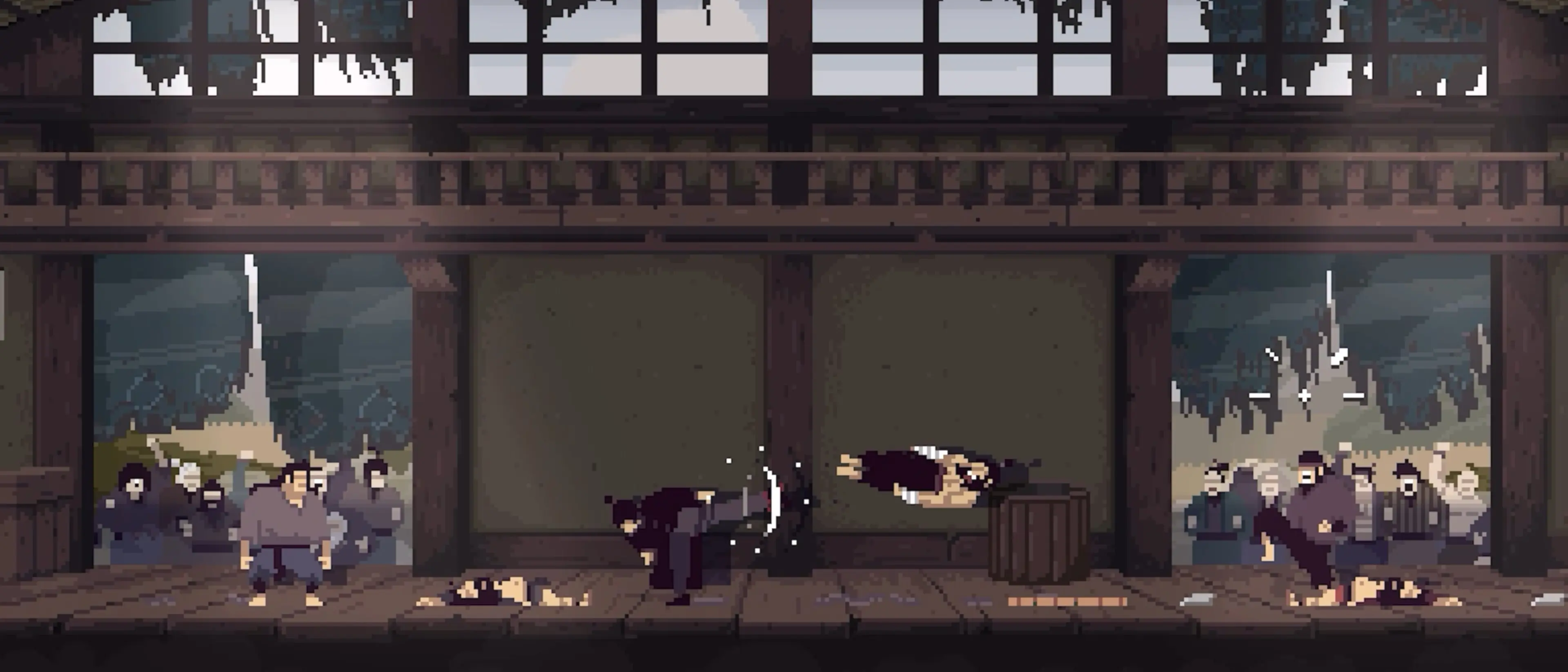
The game is a 2-D side-on fighting game, but that is underselling it a lot. Forestrike is actually really a puzzle game, but with more brawn than is typical. Yu has the ability to see into the future, called Foresight. This manifests in gameplay as the player being able to play through an encounter as many times as required; encounters will play out exactly the same if you perform the same moves at roughly the same time. You are effectively allowed infinite prep time for each "real" fight, which is just as well as the combat is fluid - and overwhelming without a plan.

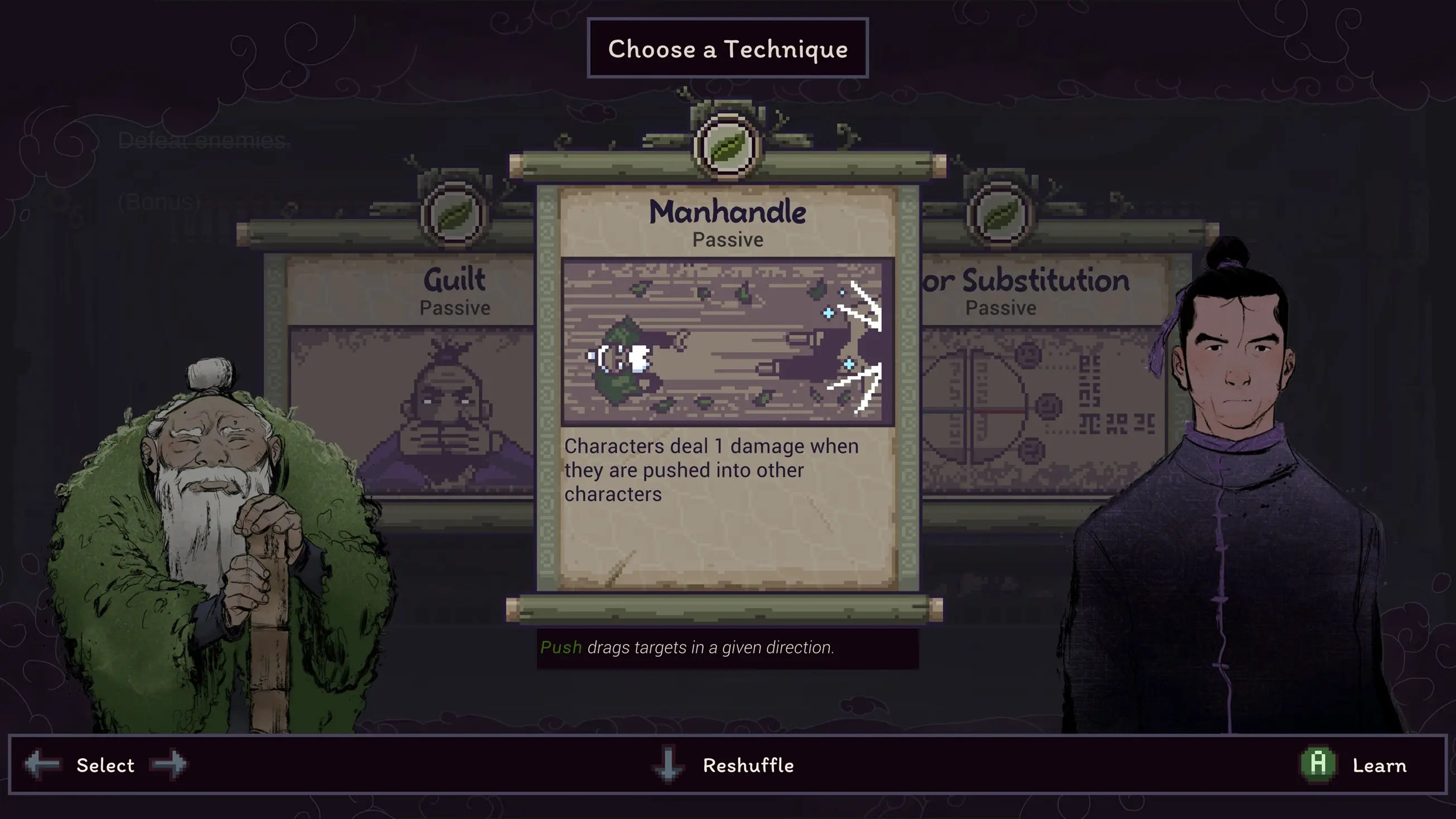
You have a quick combo attack and a slower heavy attack to start with. But even these basics can change with different masters, who mix up the overall play style for each run. However, the most important part of each run is choosing your Techniques. These are new abilities that Yu can use that drastically change up how you approach fights. They can vary from the mundane - more damage, and so on - to game-changing, like teleportation, special moves and life-stealing. There are also resources like Block and Ki which allow you to perform certain types of moves - although uh-oh, the enemies often have these abilities too.
But it’s not just in battle you have to strategise. While on a run, you move from node to node on the map screen, each offering different rewards, like gold and upgrades. The better rewards are locked behind harder challenges; a battle labelled "Win a battle without the Foresight" is probably the most dangerous.
You can look ahead and plan your path to get what rewards you need. None of the techniques you can learn are explicitly required on the journey, though you can imagine how say catching thrown weapons out of the air, negating all damage from those, can be consistently useful. All of that utility though gets thrown out the window when you start the real fight and accidentally kick the first enemy instead of punching them - now your entire plan is off, and you have to scramble together something before you die and go back to the start. I found myself really bad at such improvisation, though thankfully I usually managed to recover, albeit while taking a few blows.
All of this excellent gameplay is held together by a great story, with the main draw initially being to save the Emperor. This is tempered somewhat by the fact that Yu is not actually leaving the Monastery where The Order resides; rather picturing what would happen if he did with his Foresight. This reframes the story as a much more character-focused one, with Yu and each of his masters discussing the philosophies that drive their individual fighting styles as Yu learns under them. It’s good stuff, and I don’t want to spoil it. I will say that the pacing can be a little weird, seeing as story happens based on how far you get in runs, and I usually found myself getting through a new playstyle on the first attempt.
Despite how much I liked this game, there were a couple of minor gripes. If you don’t acquire certain techniques, then the game can feel like it drags far more during the fight prep, as you try to find less obvious ways to get through a fight without taking damage. Certain attacks will just be impossible to avoid (guns are a particular annoyance), and even after you find a path to victory, a single screw-up can spell the end of your run. There was also an occasion or two when the game didn’t seem to register my button presses, often directly after a hit or an effect that shook the camera. For a game about executing precise button presses, this is unacceptable - thankfully it only happened twice.
But overall, Forestrike offers an amazing concept which I feel has been realised to near-perfection. The gameplay and story, as well as the art style and music, all mesh together wonderfully. It’s a very complete package and the eventual path to beating the game without Foresight at all is a tantalising goal which I am still striving towards. I highly recommend this for everyone - though I suggest you be better than I, and follow through on your plans.