
PHOTO
Blood of the Dawnwalker
From: Rebel Wolves
For: PS5, XBox X/S, PC
Rating: ★★★★
I haven’t played vampire games. Plenty where they are the bad guys, but not where I am the creature of the night myself. It’s not that I don’t enjoy drinking blood and ripping throats out (who doesn’t), but I just haven’t got around to them . I think the first and only game I played where you specifically play as a vampire was back in the PS2 days with Darkwatch, an extremely underrated FPS with a moral choice system.. Almost two decades later, here I am on my second, with a game that I had barely heard of before it dropped on my desk.
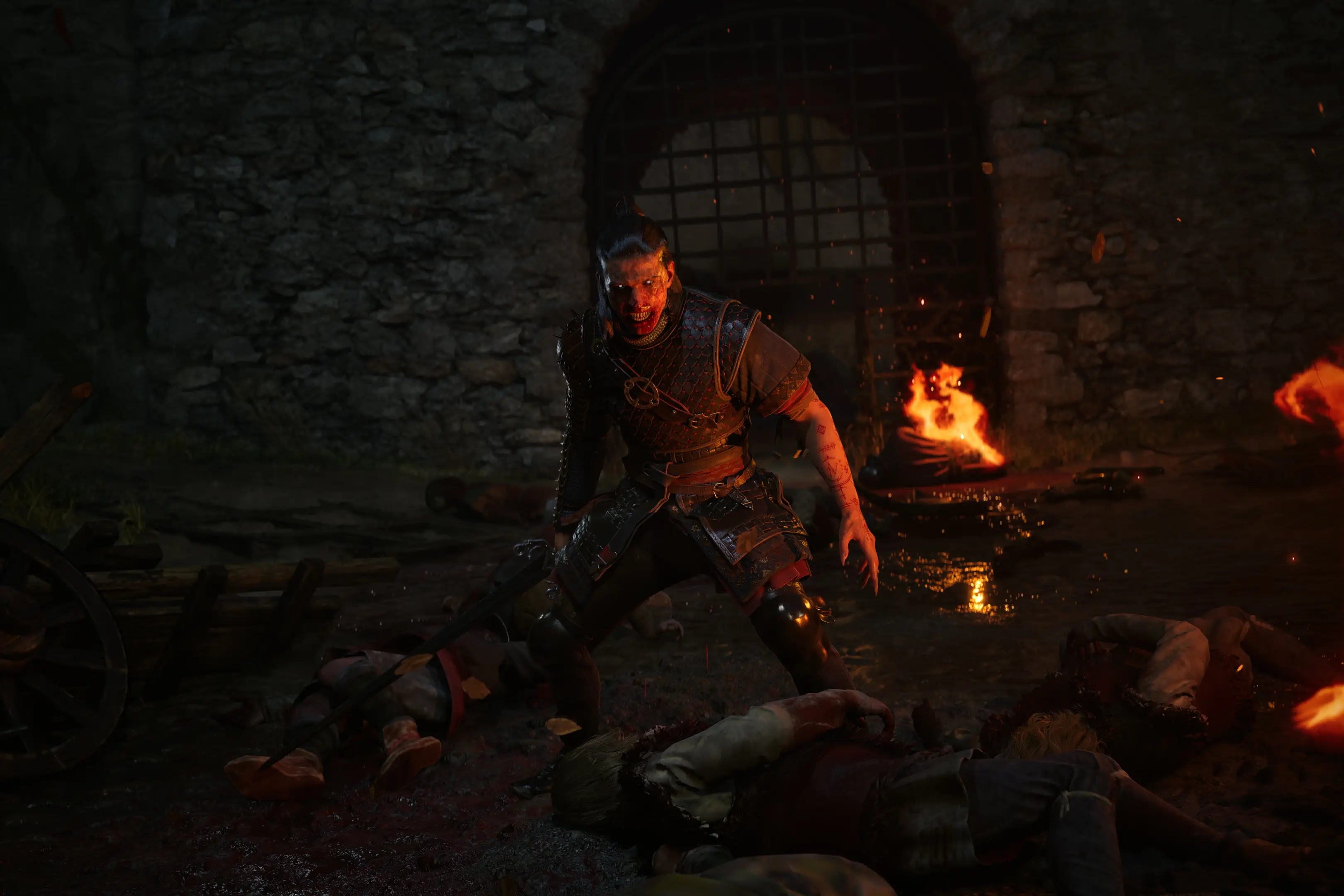
Blood of the Dawnwalker is a non-linear focused action RPG, set in medieval times during the Black Plague. You play as Coen, an everyday peasant surviving day-to-day. His part of the world is spared from the plague as they are ruled over by Count Brencis, a vampire who overthrew the local royalty and whose blood heals physical injuries and disease. In return, Brencis demands blood from the residents and total subservience, along with culling any who are “too weak” to continue giving blood. Sounds bad, but Brencis also abolished taxes, so he gets a pass from me.
After an unfortunate series of events, Coen is turned into a vampire himself; however he is slightly different, a human during the day and a vampire during the night — the titular “Dawnwalker”. Coen, his family and friends are taken by Brencis and using his new powers, Coen has 30 days to stop Brencis’s coronation and save his family.
Blood of the Dawnwalker’s defining feature is the time system. The game takes place Coen’s 30 day countdown, separated into day and night cycles. There are 8 Time Segments in each day and night cycle.. These are used when doing most actions relating to quests or activities, but it do not diminish as time passes in our world, so you are free to explore and pick what you want to do at your leisure. The game will let you know with audio and visual cues when something takes time in game so you aren’t blindsided.
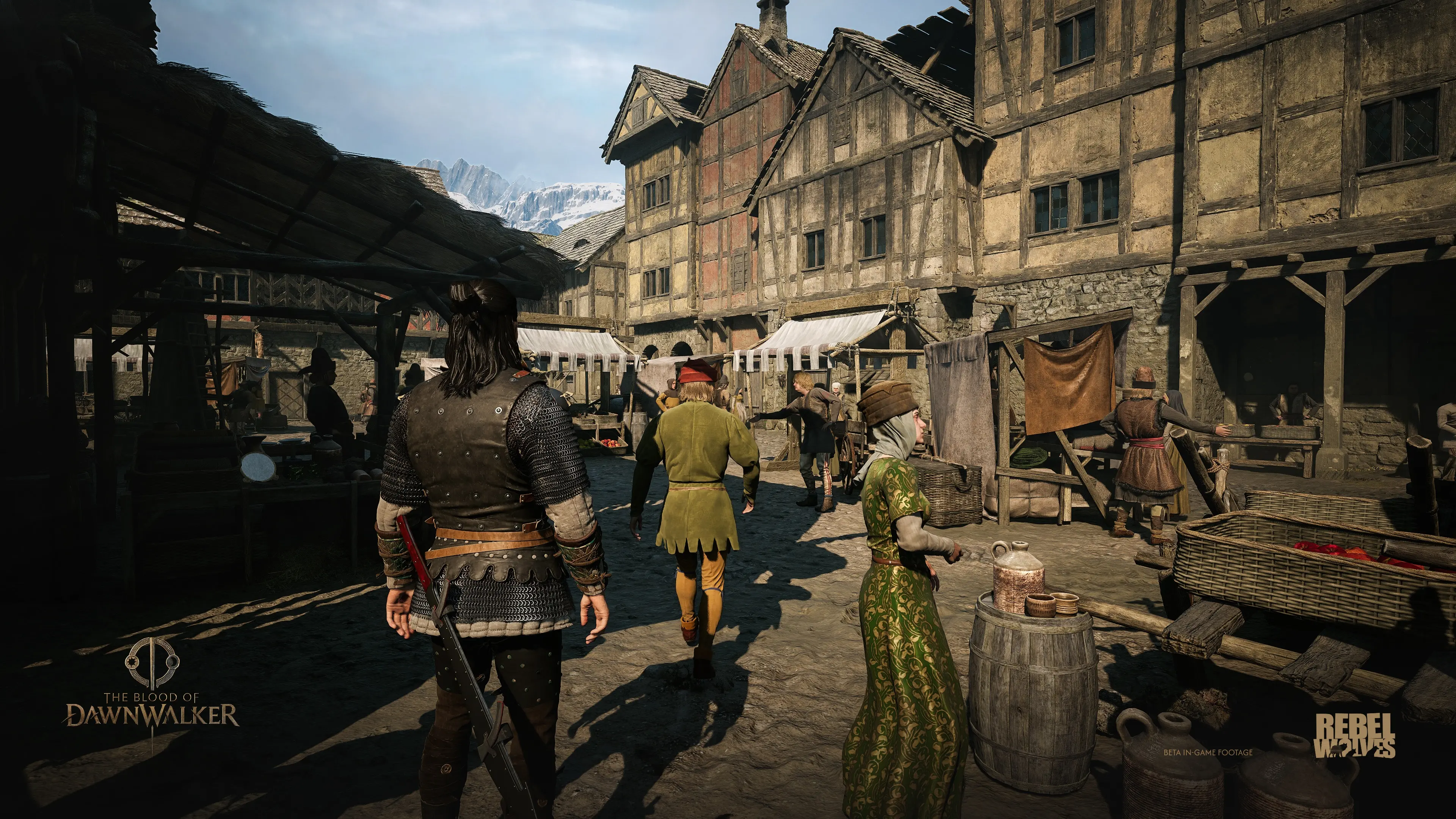
Obviously, some things can only be done at night or during the day, often related to the powers Coen has during both. For example, vampires can teleport, so if you need to get to an inaccessible place high up, you’ll have to come back at night. The game makes good use of this so there is plenty to do at both day and night.
I initially thought that the 30 day timer would be a bit of a rush, but it actually seems lenient. Obviously, it’s still a time limit; the main quest is a constant worry, but I feel like I’m on target to complete it all well before then. It’s very freeing in that way, giving you immense choice over what you do without feeling like one choice will destroy everything.
Due to the non-linear nature of the game, the story is more about the small side quests and activities and how the world reacts to you, rather than a series of main quests. While there is some mystery for the main story, it does feel like a sideline compared to the random stories you come across. Stories range activities that take a couple of minutes to hour-long epics. Coen, clearly a bit of a player surrogate, was a bit boring to me, but I found the side characters and what they are dealing with far more compelling.
A small but inevitable problem to the non-linear nature of the game: some of the build towards story and characters can end up off. Sure, being able to go anywhere and do anything at practically any point is fun, but sometimes it lends itself to some weirdness that I feel like it wasn’t intended. For me, I stumbled across a strong enemy, defeated them in a boss fight and that was; essentially, I had made most of the side content relating to that enemy worthless, a sort of a “Why would I do this? The enemy it would affect is already dead” effect. Neat that I could do it, but I ended up almost undercutting content elsewhere as a result.
You may be gathering that choices are a big thing in this game, not only for the whole hook and loop of the game being around the choices you make to advance time, but the choices you make within those quests. The game helps you out a little here though. In Coen’s conversations, yellow text denotes choices and progressing, and white text usually adds detail but doesn’t progress the conversation. Yellow text can completely split the quest into two different paths and lock you out of taking certain options, or simply change a dialogue option or two.
At the same time, the game doesn’t overly hold your hand, often telling you very important information you’ll use soon in cutscenes; “make sure you do this or something bad will happen”. I’ve missed that in games like this. If you decide to start rocking the boat. Brencis will start handing out decrees that make your life harder.
It wouldn’t be an RPG without skill trees, and this game has three. Skills can be obtained from Shines which also act as fast travel points. At shrines you can rest and pass time or store items for later. However, most of the skills cost Time Segments as well as Skill Points to learn. All skills also can be levelled to a higher tier, but higher tiers are locked behind books you read to unlock the ability to learn them, or by Corruption which is increased by drinking blood in the vampire form.
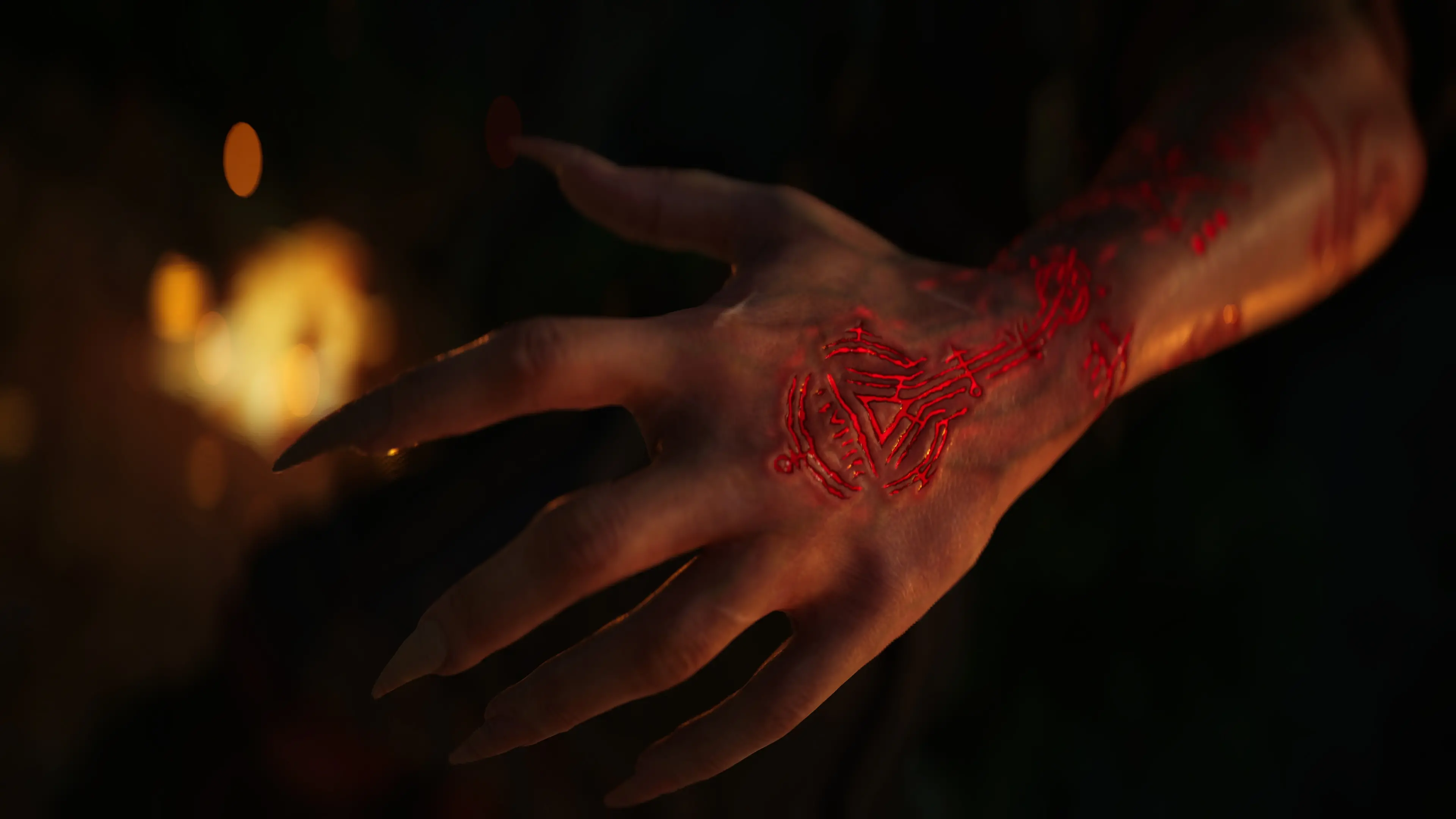
During the day, Coen gains the ability to use magic, called “Witchcraft” in-game. This is stylised as runes carved into Coen’s skin and costs health to cast but hasvery powerful effects During the night, Coen’s vampiric side gets free, and he gains his vampire abilities, but loses Witchcraft as the runes heal up. Vampiric abilities are generally more combat and traversal-based; Coen is able to grow and attack with claws, walk up walls and teleport around, and is more durable as he can heal from drinking blood.
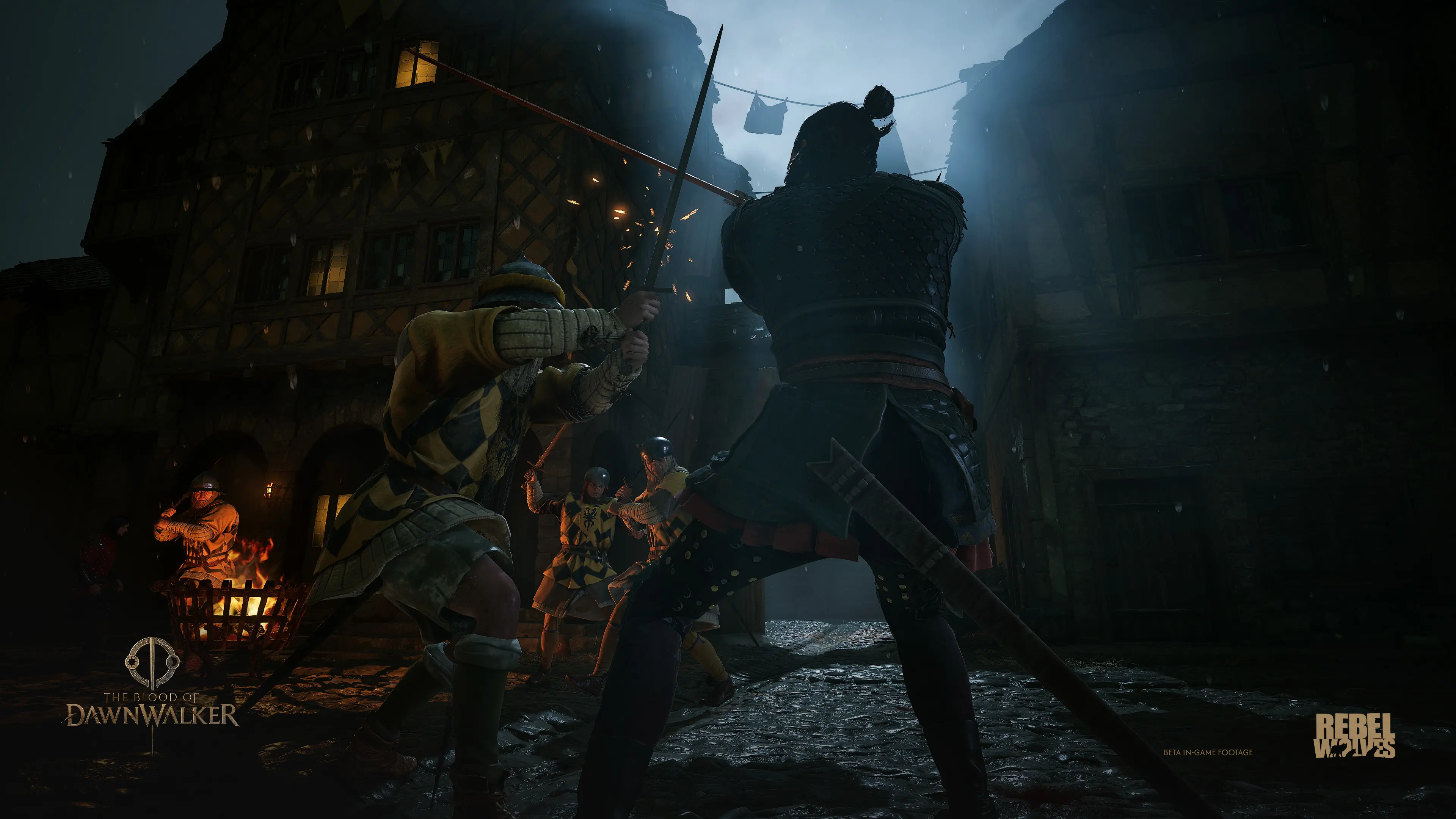
Of course, at all times, Coen has access to his trusty sword with “Swordplay”, the last skill tree, increasing his effectiveness and ability with weapons, containing some of the more useful active abilities and improving the combat overall. Combat itself is fun but rather slow paced. You have directional attacks and blocks. You can attack in different directions to get more attacks in before they block, and directional block at specific times to parry, or use a dodge to get out of the way of unblockable attacks. You can also attack and block without a directional input to do an “Omni” attack or block, which costs stamina. Running out of stamina makes you slower and vulnerable to attack, but parrying restores stamina quickly, so I recommend learning how to do that quickly.
You can also use up to four active abilities which require Activation Charges to use, charged by attacks, blocks, and parries. These abilities generally grant you special effects like bleed, stun, or just outright finishing someone in one hit, without feeling too overpowered and giving you a small chance to breathe as they grant invincibility while they are happening. While combat is great overall, my minor complaints come from enemies sometimes just taking way more hits than required and the lock on system, which needs a lot of work. Active lock on is basically impossible to accurately select who you want to attack, and passive lock on swaps back and forth and can be confusing and counter intuitive — a problem since basically every fight is a group fight.
Gear is basically everywhere in this game as well. Thankfully managing gear is simple and in a nice touch, you have different equipment loadouts for both day and night cycles, useful for the “Vampire Only” or “Human Only” stuff you’ll find in droves. There is no actual side by side gear comparison however, it’s all cluttered into the one box and it’s a little hard to figure out the difference between them at a glance.There is also some limited crafting, letting you craft consumables. I didn’t find myself going to this well too often, but I did like how some buffs and debuffs lasted several Time Segments instead of a per-second timer.
Of course, a big world is a larger playground for bugs and there are quite a few. I ran into an infinite loading screen bug which required I reload an earlier save and oncewas unable to leave or move around the menu. A few times I have been unable to save either, and I believe that was because the game thought I was still in combat.
Most others have been visual or minor in comparison. White text you have pressed doesn’t grey out but other text does, visual bugs in cutscenes cause strange animation and graphical issues, and most annoyingly during combat when enemies just sometimes seem to stop attacking, only for another character to start attacking, which can sometimes really mess with the camera and parry timing.
The devs released a patch to fix over 1500 issues during the review period however, so I have faith that the worst ones will be fixed over time.
Despite the weakness of certain parts of this game, I found myself having a bunch of fun with it. The devs put the time into the most important parts and, in my opinion, nailed it. The combat, exploration, variety of quests, time system, and choices all make Blood of the Dawnwalker a fantastic game. This game also has what I think will be a boon for its staying power: replayability. The way you play the game will be completely unique from someone else, from the side quests you pick, to the path you take through the game. While some things do let the game down in aspects, like overall polish, some story and character beats, and bugs, the core of it is excellent. That second vampire game I’ve played turns out to be a good one.