
PHOTO
Star Wars: Zero Company
From: Bit Reactor
For: PS5, XBOX X/S, PC
★★★★+
When did globally-popular-for-50-years property Star Wars start feeling so ... beleaguered? I personally might point to a spooked Disney making the course in-correction abomination that was Rise of Skywalker, but there have been plenty of missteps since then. So that now, however it was we arrived here, a whole lot of air has escaped the zeppelin. What a timely arrival then by the excellent Star Wars: Zero Company, here to remind us that the setting can still be a lot of fun.
As a game idea, Zero Compan y doesn’t really move too far beyond ‘‘what if (tactical combat classic series) X-COM was Star Wars-flavoured?’’, but it’s exactly that flavour that makes it such a tasty offering.
We kick things off a little before Episode III: Revenge of the Sith. The Clone Wars between the Republic and the Separatists are still raging and in the midst of them all, Bennic, an officer somewhere in the ranks of the Republic intelligence service, is trying to help a displaced Ore-Baroness (so far, so Star Wars-y), Jae, who has had her planet seized by a Separatist-aligned cult, The Coil. But the Republic has a lot on its plate resource-wise, what with the gargantuan intergalactic war, so Bennic and Jae enlist Hawks — that’s you — a disgraced former Republic commander now running the eponymous Zero Company, a rather rag-tag mercenary outfit. Once you’ve got Hawks customised to your satisfaction, you’ll start leading Zero Company through turn-based combat scenarios on a campaign to investigate and stop The Coil, while taking other jobs on the side to try to keep the lights on along the way.
Hawks runs things out of The Den, a parked-up freighter that serves as a home base where you can check in with team members or recruit new ones, gear up, manage skills and select your next mission. During the course of the campaign several ‘‘authored’’ characters with their own backgrounds and stories will join Zero Company, but you can also hire (customisable) randomly generated operators from a rotation to help fill out your roster. Each character has a primary specialisation — such as medic, gunslinger or heavy — that comes with a skillset of combat bonuses and abilities. Sharpshooters have options for sitting back and doing damage from range, for example, while astromech droids are a support class that offer buffs for your team and hindrances for their enemies.
Probably the most important facility in The Den is the holotable. Here Hawks manages the company’s campaign through operations and missions for each time cycle; completing any combat mission moves the cycle along one. Operations are sort of off-camera opportunities for jobs that arise for the company around the galaxy that might pay off in credits or equipment for your operators. Each has an expiry date in cycles and costs a certain amount of your intelligence points (generated from missions and in a few other ways) to attempt, and several will pop up at once, so it’s not possible to do them all. Similarly, missions will not stick around forever, so it’s up to Hawks to mentally plan ahead a cycle or two and work out which challenges the company needs to take on and which to give a miss.
Some further spanners are thrown in the works here by crisis events — in which The Coil will be poised to gain two new in-mission abilities for its units, and you only have time to prevent one — and by personal missions arising out of the stories of your company members coming into play, again with a limited availability window. Time to exercise those leadership skills!
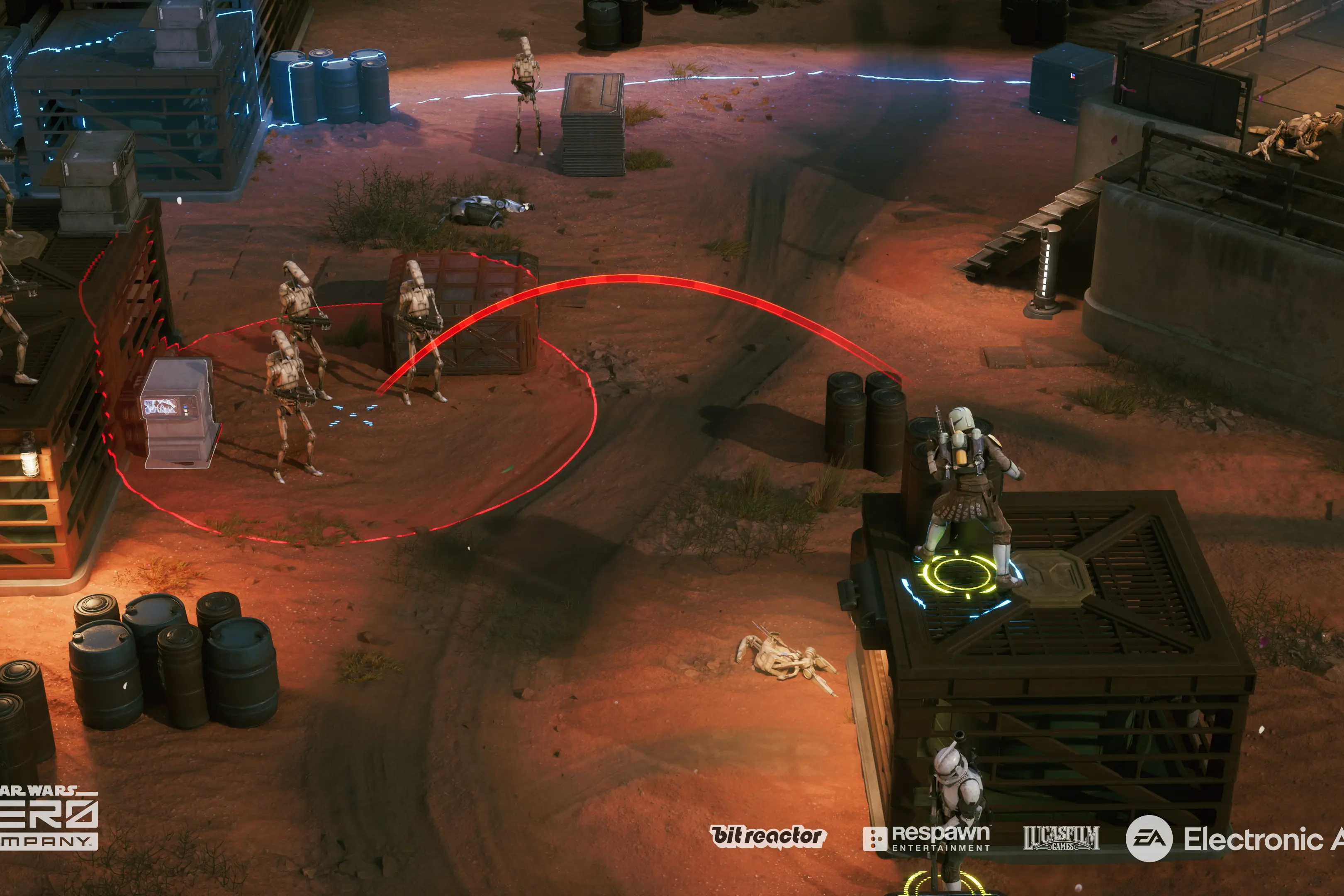
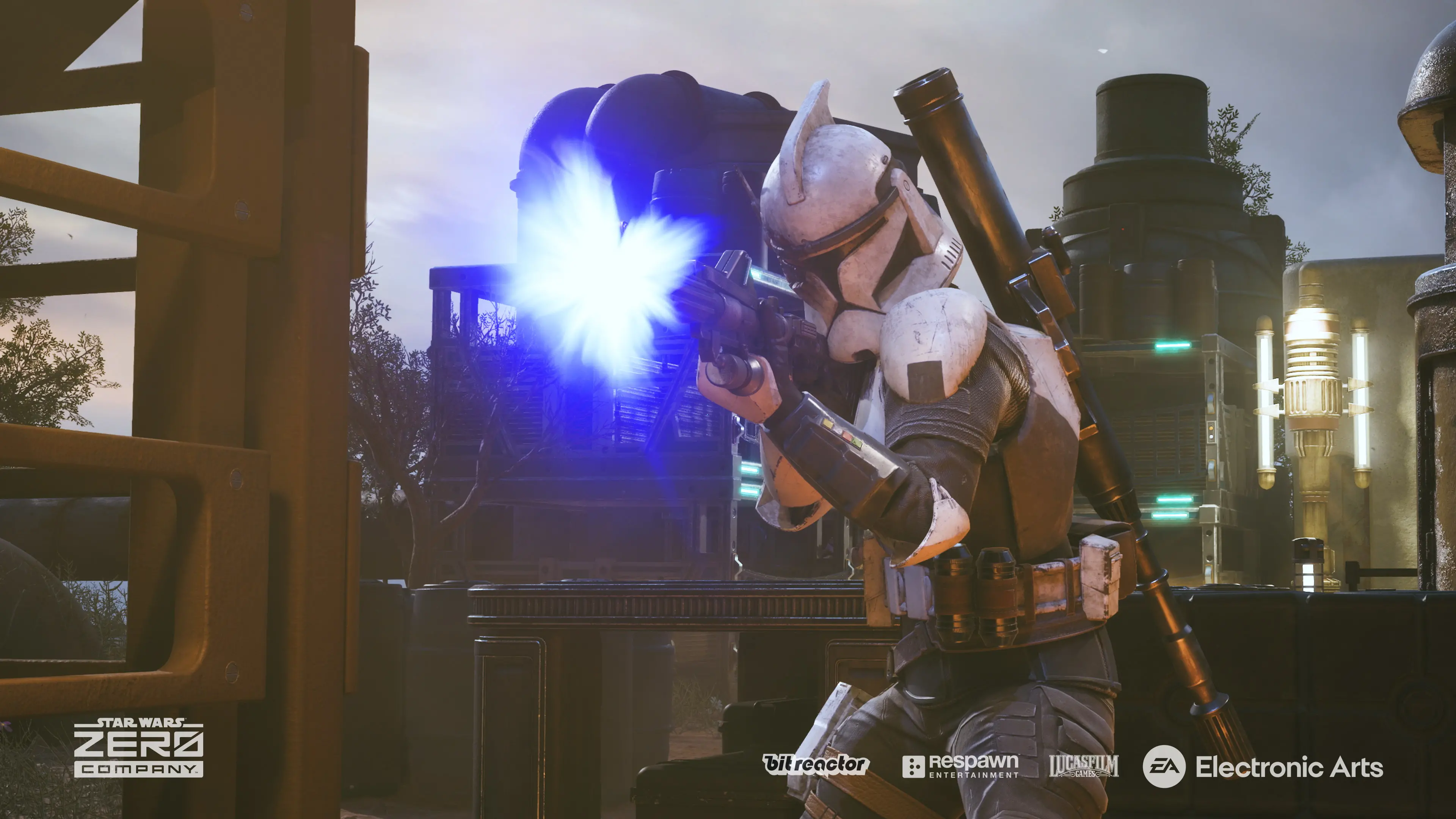
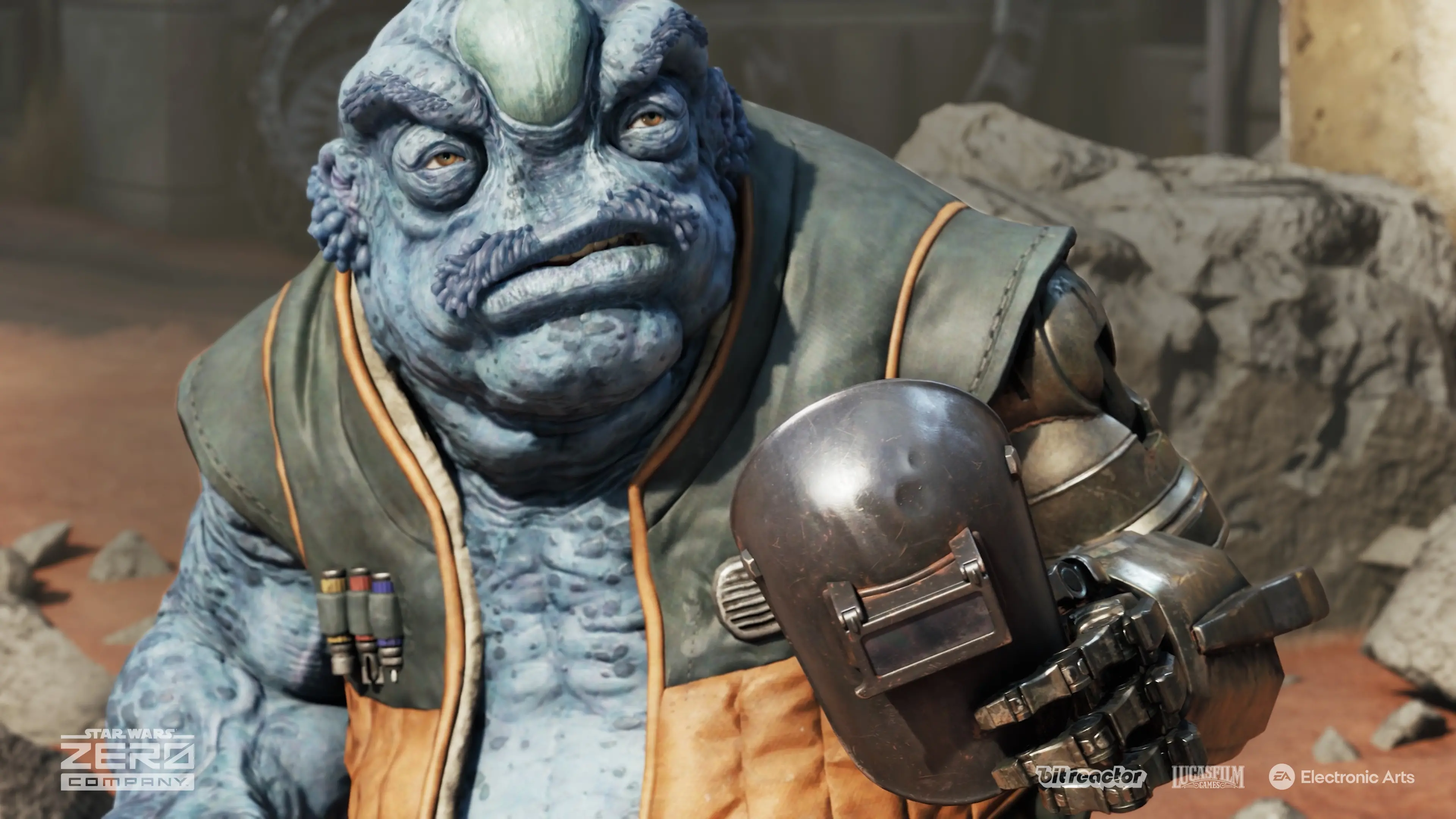
Once you’ve decided where the company’s skills are best put to use, it’s off to battle. Your team of, typically, four operators are dropped into a Star Warsian diorama with a goal — eliminate all enemies, rescue a prisoner, sabotage a generator — and three action points each per turn to get it done. Each has different actions informed by their class and equipment available, which can make for some very different play styles and team combinations. Big blue constantly-rhyming alien Kabb is a dab (robot) hand at just running straight up to enemies and punching them into a pile of barrels, for example, while Cly can use that handy Mandalorian jetpack of hers to go bouncing around the map putting blaster bolts into the back of heads. The mechanics of assisting (allowing one of your operators each turn to have their next attack be joined by a team-mate) and overwatch (selecting an area to guard and shooting anything that moves into it on the enemy turn) in particular are key.
Add various enemy abilities that will be coming at you, cover bonuses, environmental hazards and mission-specific quirks, such as countdowns or area-denying mechanisms to this mix as well, and, yes, the tactical combat ends up being satisfyingly, well, tactical. Making the best use of your points every turn is a satisfying puzzle, often coming down to the order in which you act and the combinations available among whichever four team members you’ve brought with you.
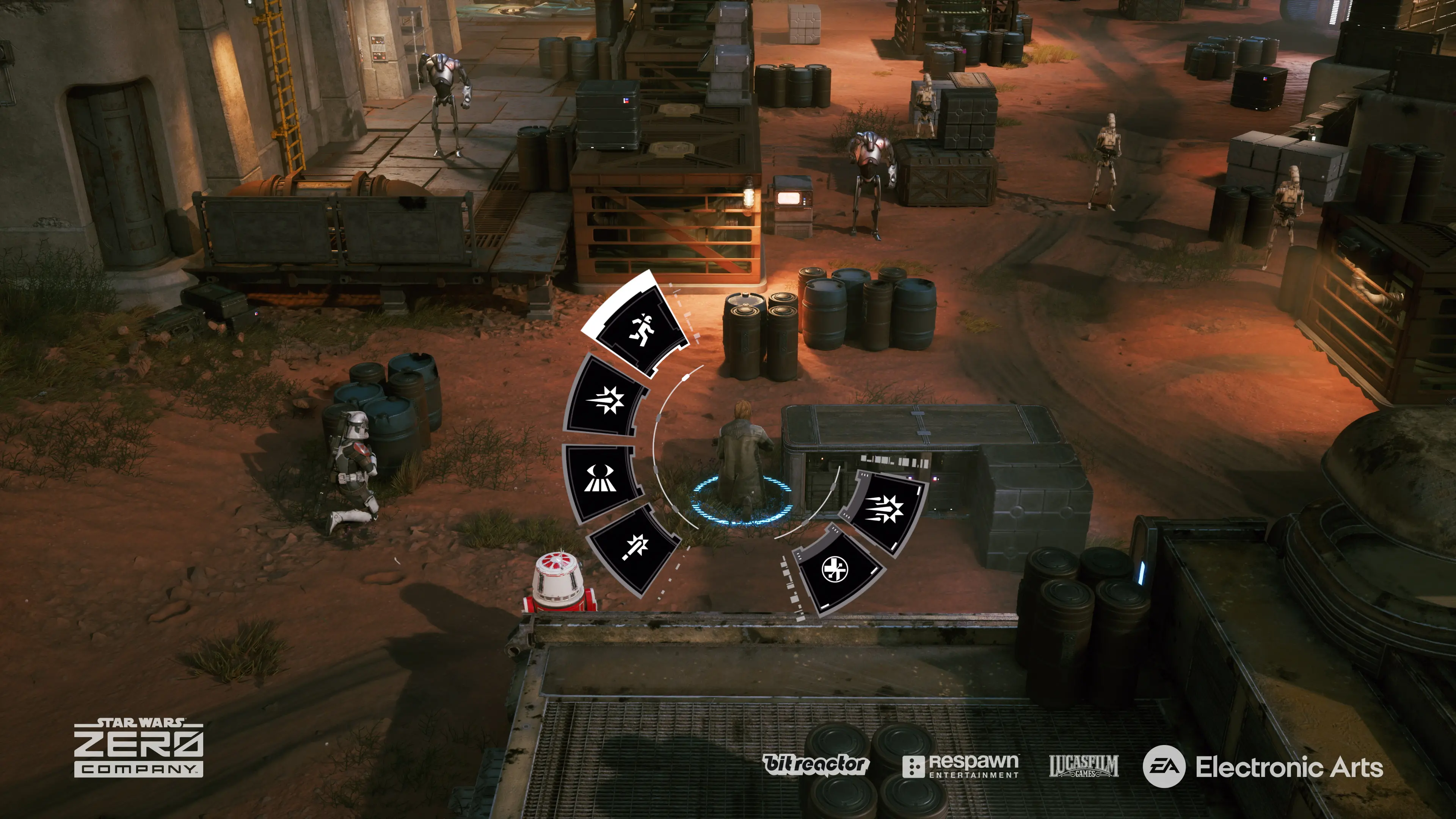
A great sign in a game like this is getting to the end of a turn and thinking ‘‘oh, duh, actually I could have done that better’’, and I ran into that multiple times in my various battles against The Coil. (Sorry, Hawks. I blame my own lack of real-world mercenary experience.) Equally though, it’s a delight to put together the perfect turn that ends up with the last foe on the map Force-yeeted straight through a railing and out into a bottomless abyss (yes, of course you get a Jedi to play with, and, yes, it is great).
So, the game part of the game is good, but the experience also doubles as some pretty good Star Wars, with plenty of memorable characters, sharp writing, and big twists along the path of the decently hefty campaign. There’s a gallery of lovable wisecracking rogues, hardbitten warriors with revenge on their minds, an erudite medical droid and a sharp-tongued cynic, all with their own things going on, and all lovingly brought to life with actual facial expressions and little human (or at least humanoid) gestures and great voice performances. Each of the authored characters also has personal goals you can choose to help them out with through missions, and some of these are bangers.
For fans, events from the bigger Star Wars lore are always bubbling along outside the game’s narrative, or sometimes thrillingly spilling into it. Joining the misfits of Zero Company brings characters from either side of the war together, which is also a handy source of interpersonal drama. It pays to give this some attention, as building rapport between any two members of your roster (including Hawks) through story choices or actions in battle offers gameplay bonuses for each as their relationship improves. The game also promises that if you let your relationships deteriorate too badly there will be story consequences, though on my first playthrough at least, I was clearly too much of a people-pleaser to trigger anything like this.
What’s not to like? Well, my playthrough on PS5 was subject to a few visual glitches, with texture pop-in cropping up pretty much in every loading scene sequence of Hawk’s ship, the Caisson, jetting off to the next mission. More annoying though were instances in which the game camera struggled to succeed in its attempts to highlight important mission moments, zooming dramatically instead into a close-up of a very dramatic, uh, wall, or a random patch of bare ground.
Enemy variety, too, is relatively limited, which does tend missions slightly towards the sameish after a while (although you can always make your own fun there with your team selections — can you overcome an entire squadron of bloodthirsty cultists with just four copies of R2D2?).
But these can all be placed firmly in the ‘‘quibbles’’ category. Zero Company is an easy recommendation for any fan of tactical combat games, any weary fan of the Star Wars franchise or anyone who just likes to blow up a bunch of robots. The movies may be in the doldrums a little right now, but on this evidence, there’s life in the old Wookiee yet.