
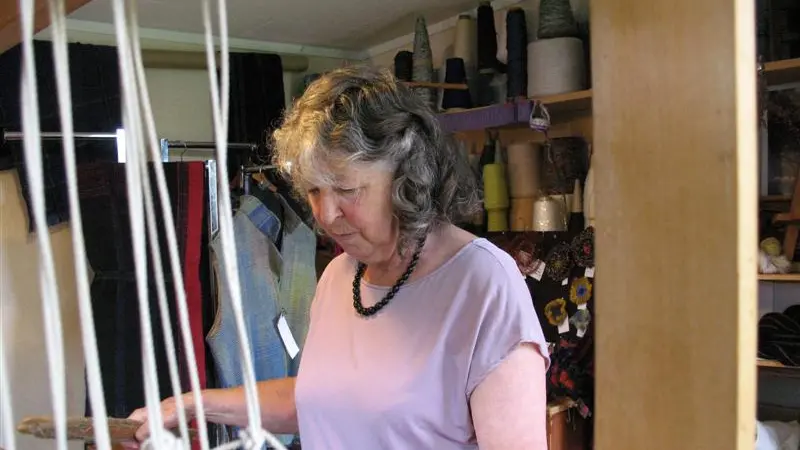
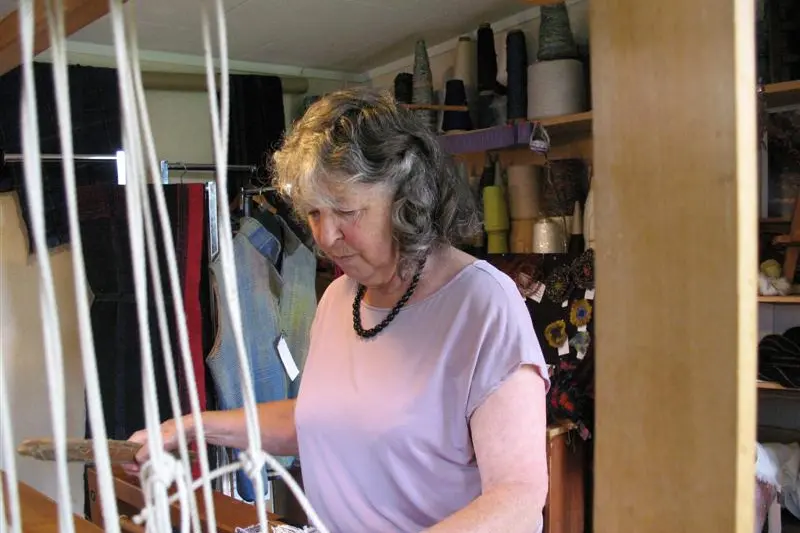
Weaver Marion Day spins a good yarn. Charlotte Hilling reports.
The art of weaving conjures images of quiet leisure hours. But award-winning weaver Marion Day says operating a large weaving loom is both mentally and physically demanding.
"You're using your left hand, left foot, right hand, right foot. So you're using both sides of your brain. And then you've got all the arithmetic as well."
Since embracing weaving 35 years ago Mrs Day, now retired, has had her work displayed in national exhibitions including those of the World of Wearable Art and the Professional Weavers Organisation.
In September she won the complex weavers award at the annual Creative Fibre Festival - a national competition held in a different part of New Zealand every year.
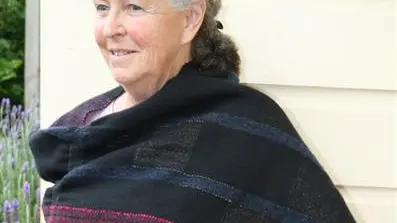
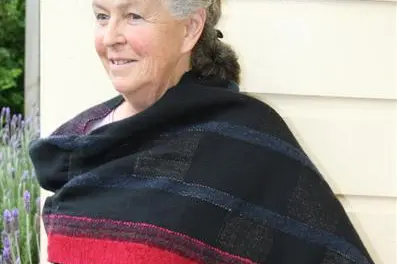
Her winning entry, In the Red Again, is a merino shawl which combines striking red edges, copper wire, silk fibres and subtle elastic on the shoulders to prevent the garment slipping.
"Being selected for a national festival is quite an honour, the standard is always very high," she says.
Mrs Day did not begin weaving until she was 32, but says she has always been fascinated by textiles and it was inevitable she became a weaver.
"It was a natural progression because I always liked handling wool. And I'd always known about weaving because my grandfather was a weaver for the Kaiapoi Woollen Mills."
Her first loom was a small table loom and with it she made her first item, a small table runner spun with the wool from her own sheep.
Throughout her life she has juggled running a craft shop, raising three children and organising a household, with her passion for weaving.
Operating out of a compact studio beside her house, Mrs Day has experimented with a range of different materials.
Merino wool spun in Milton - which she says is one of the last places to produce wool which has not been treated by machine washes - is usually the wool of choice for Mrs Day.
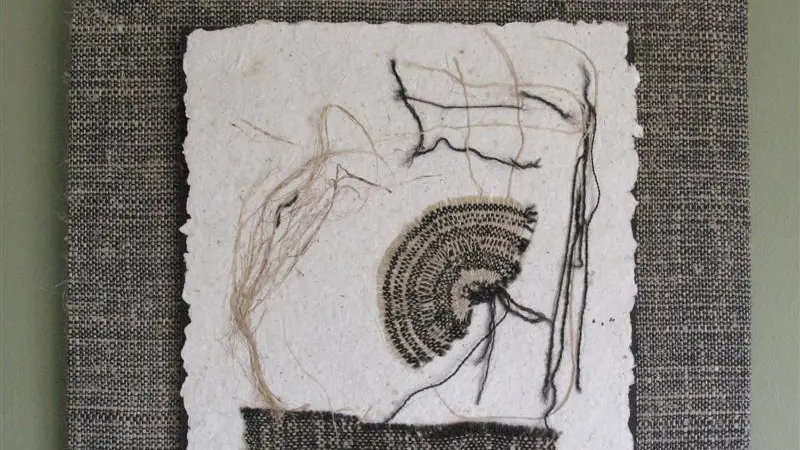
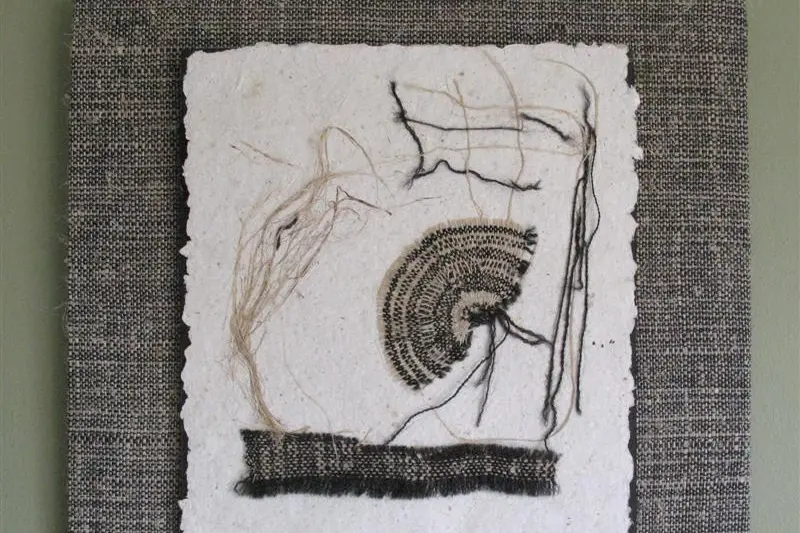
However, she incorporates many other materials within her designs, including video tape, flax, hand-spun paper, silk, and copper.
"You can spin most materials, as long as they're fibrous."
Japanese sumi paper is her preferred paper for spinning. In order to spin the paper it must first be torn into strips, softened by being rolled on carpet, and spun while slightly damp.
Video or audio tape is pulled out and wound around a bobbin.
Simple Japanese designs and the shapes and colours of the natural world are her biggest influences.
She says the curvy corners of seaweed are the inspiration behind one of her latest designs, a scarf with multiple layers and soft flowing edges.
Mrs Day has made a variety of items on her loom, from large coats to wall hangings and bags.
She maintains the craft is just a hobby as there is not enough demand to make a living from weaving. Despite this, she has completed several commissions for clients as far away as Auckland and Australia.
She says a large coat costs from $600 to $800, "a bargain" considering the amount of time it takes to make one.
Her prize winning shawl In the Red Again took about three months to complete.
A strong weaving community exists, not just in Waikouaiti, but all over the country she says, and they are usually members of the national weaving organisation Creative Fibre.
The Waikouaiti club meets once a month and about 15 spinners, weavers, and felters from as far away as Oamaru come together to pass on tips.
"It's great. We seem to be getting new people all the time. It's a lovely group."
While national weaving numbers are not in dire straits, Mrs Day would like to see more young people joining in.
"The numbers aren't what they used to be because people aren't spending the time to learn a craft.
"But it's very important that we keep the traditions going. We would like more young people to take it up."
She says weaving appeals to a wide range of people, from those who were mathematically-minded to those who have a creative inclination.
"It's a wonderful creative process, and very hard to let go of once you've started. I hope I can keep doing it for a long time."
-Charlotte Hilling is a Whitireia Journalism School student.