
PHOTO
Worried about money, the chef covered bins at his restaurant so nothing could be scrapped without careful consideration. That mad move became his method.
Chef Josh Niland came up with fish eye icecream. Then he added fish-derived sausages, salamis, mortadella and fish fat-enriched chocolate to the menu at Saint Peter.
The concept of using every part of the fish, from ‘scale-to-tail’, came on the back of money woes. Now Niland’s Sydney restaurant is considered one of the best in the world.
When Niland signed the lease for an ex-sushi train site in Paddington, central Sydney, he was literally sick with anxiety. He and his wife decided to go into business solo in 2016, without their business partner for the first time.
“I forgot to bring a pen to sign the lease and she [our lawyer] ran off to grab a pen for me and I ended up throwing up in her bin in her office because the overwhelming sense of I suppose intensity had become very real at that point, seeing my name written all over this lease rather than the partner.”
Eight months into the new venture, Niland realised the business had a problem.
“We couldn’t make the wages work, we couldn’t make the food cost work and we needed a solution to that problem,” Niland told RNZ.
“So, I put trays on top of all of the garbage bins around the kitchen, and I wouldn’t actually allow anybody, myself included, to throw anything away until I’d had a look at it.”
From that came his ‘“scale-to-tail” concept that has catapulted the restaurant onto the global culinary stage and made him a regular showing off his skills on MasterChef Australia.
The restaurant has gone on to win numerous awards; in 2025 it made World’s 50 Best Restaurants longlist, it was awarded three Chefs Hats from the Australian Good Food Guide in 2024. This year Food & Wine named it one the ten best restaurants in the world.
Niland’s career has been on the rise since he left school at 15 to take up an apprenticeship. He went on to work in famous Sydney seafood restaurants Doyles and Fish Face.
“I found myself working for Stephen Hodges at Fish Face and he showed me the very black and white basics of handling a fish, processing.
“I wouldn’t say to the extremes of what we’ve taken it to with regards to the butchery and ageing and charcuterie. However, when anybody pours that amount of basic information into you, it’s then yours to do something creative with and yours to advance further.”
The technique of dry fish butchery is central to how Niland runs his kitchen pushing against perceptions that fish is “bony, smelly, wet”.
“The work that we do at fish butchery is to do everything dry. No water gets processed on the fish at all, we keep it separate from ice, but we keep it cold with ice packs.”
As an apprentice, Niland studied meat butchery and brought the idea of using the whole beast to fish.
“When you think about it, a meat butcher that’s all they’ve ever done for centuries, they’ve taken an animal they’ve organised it into primary and secondary cuts.
“And that’s why we enjoy beef cheeks in our pie and then sirloin grilled and sliced with some fries on the side, there’s different methods for different parts of the animal.”
Using the whole fish is financially as well as environmentally sustainable, says 38-year-old Niland, who shares more of his fancy fish work in the new book, Saint Peter: Chapter and Verse.
“We’re just trying to approach fish as a butcher would approach meat, so that we get the full value back from one single fish.” — RNZ
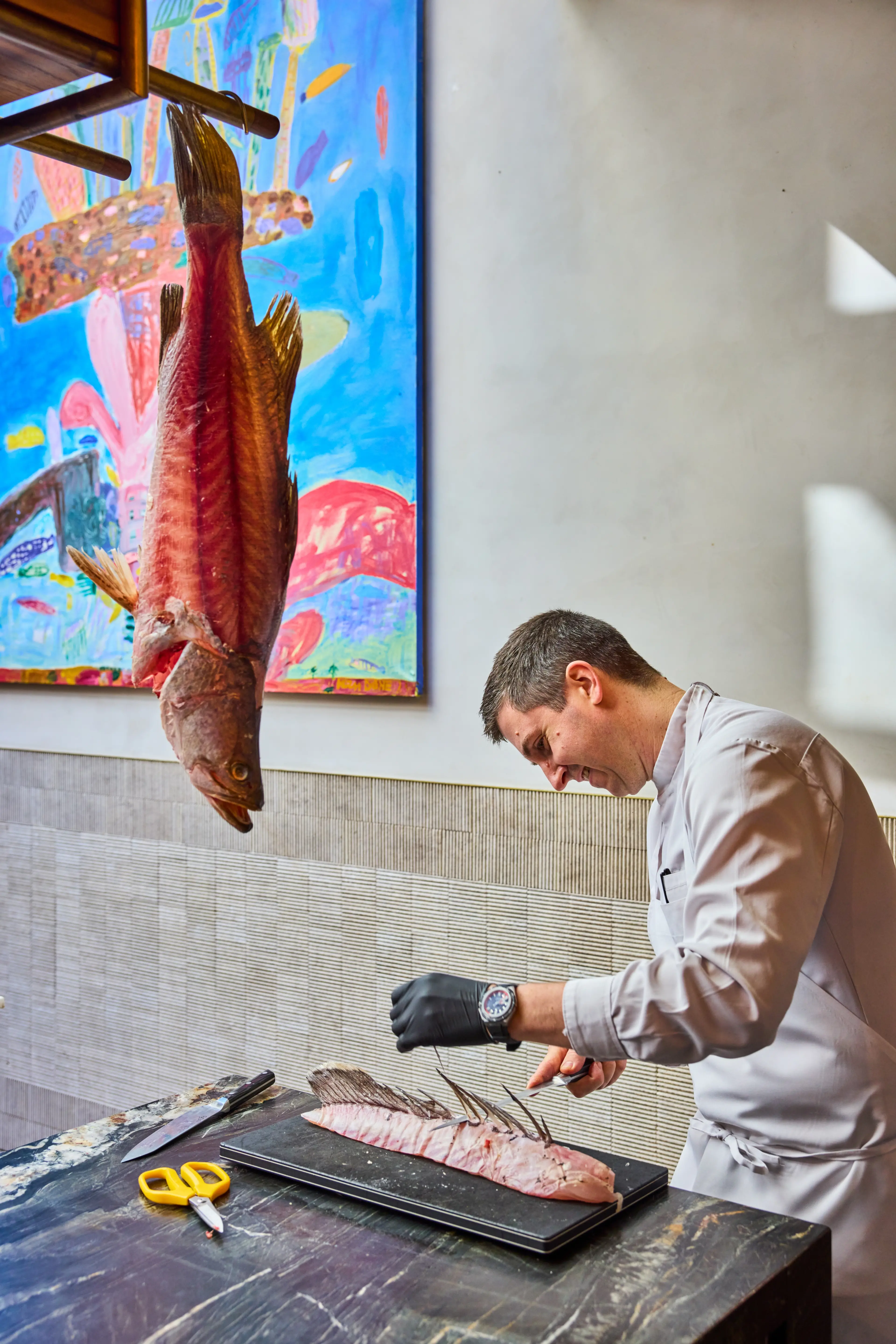
Rack of flounder, charcoal snow peas and sea lettuce tapenade
Like so many dishes on the menu, this was the culmination of a few very particular ingredients coming together in one place on the same day, from Dylan Abdoo’s giant flowering snow peas to a few Coorong greenback flounders that had escaped the local seals only to be caught and sent to Saint Peter. More garnish, sauce and embellishment could have been added to this dish, but the beauty of the ingredients and the aesthetic should always take centre stage.
Serves 2
16 snow peas (mangetout), strung and trimmed
120ml extra-virgin olive oil, plus extra to serve
2 x 500g wholeback green flounders, gutted and scaled, bellies filleted and bones frenched
½ lemon
Seaweed Tapenade
250g gordal olives, pitted
1 garlic clove, very finely grated
3 salted anchovies, chopped
Zest of ¼ lemon
50ml extra-virgin olive oil
40g sea lettuce powder
Method
• To make the tapenade, add the olives to a Thermomix and pulse to create a coarse but even texture. Add the remaining ingredients and pulse briefly to achieve a coarse, even texture. Adjust with a little more olive oil if it is slightly too firm. Keep covered in the refrigerator for up to a week.
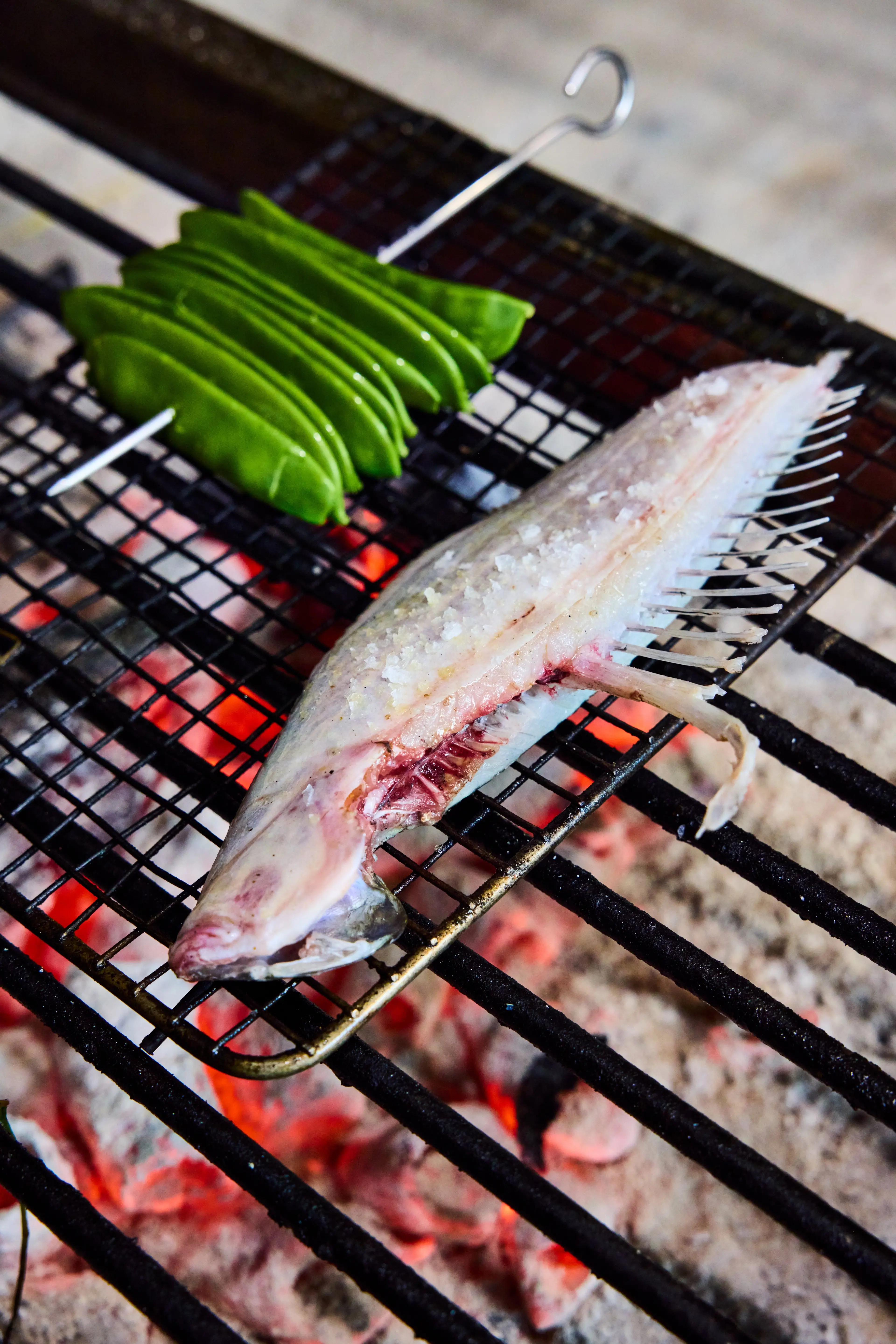
Thread the snow peas onto two skewers, 8 on each, all going in the same direction. Brush with oil and season with sea salt flakes. Brush the flounder skin with a little oil and season well with sea salt flakes.
Prepare a charcoal grill, levelling out the hot embers so the heat is even.
Place the black presentation side of the flounders down on a wire rack and grill for about 4 minutes. Turn to the other side, brush the cooked side well with more olive oil and cook for another 4 minutes or until the internal temperature on the bone of the flounder reaches 5.2°C-5.5°C. Remove from the grill to a warm tray and rest for 2 minutes.
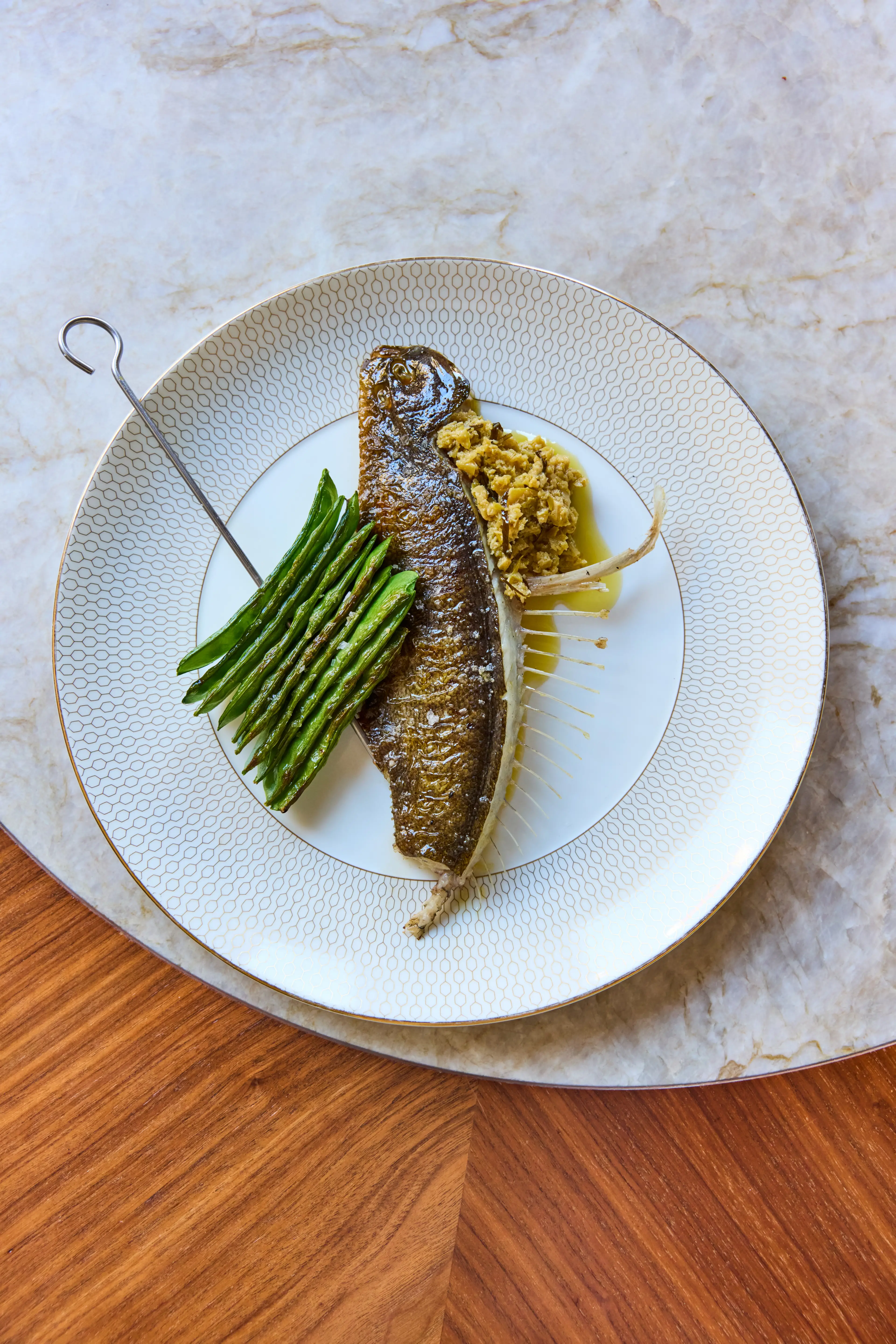
Grill the snow pea skewers over the hottest part of the grill, brushing with a little oil as they cook to ensure they are smoky, tender and lightly blistered, about 2 minutes. Remove and position on flat serving plates.
Spoon the seaweed tapenade next to the snow peas and place the flounder, presentation side up, on top. Drizzle a little olive oil over the fish along with a little more sea salt flakes. Squeeze the lemon juice over the snow peas before serving.
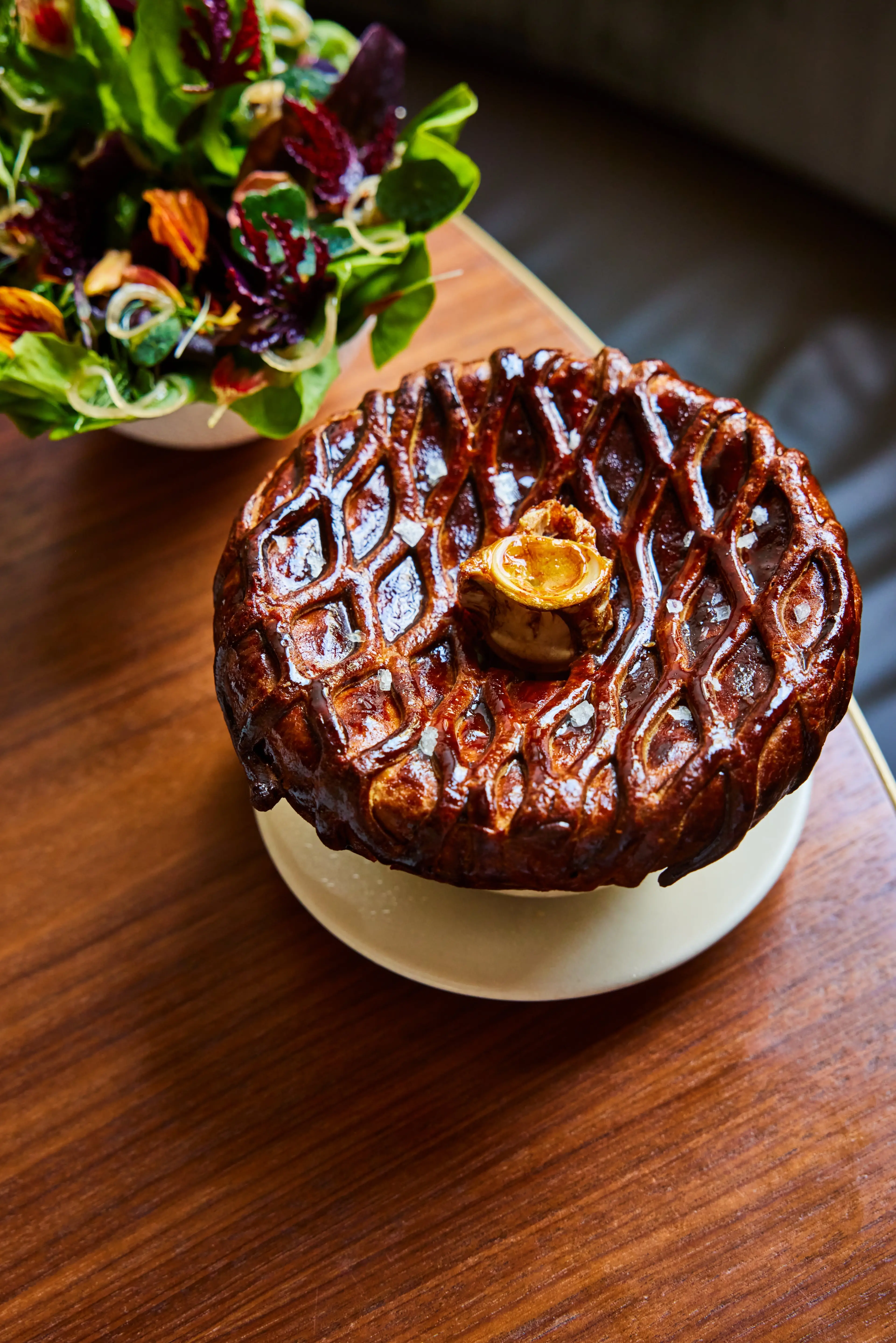
Curried Fish Pie
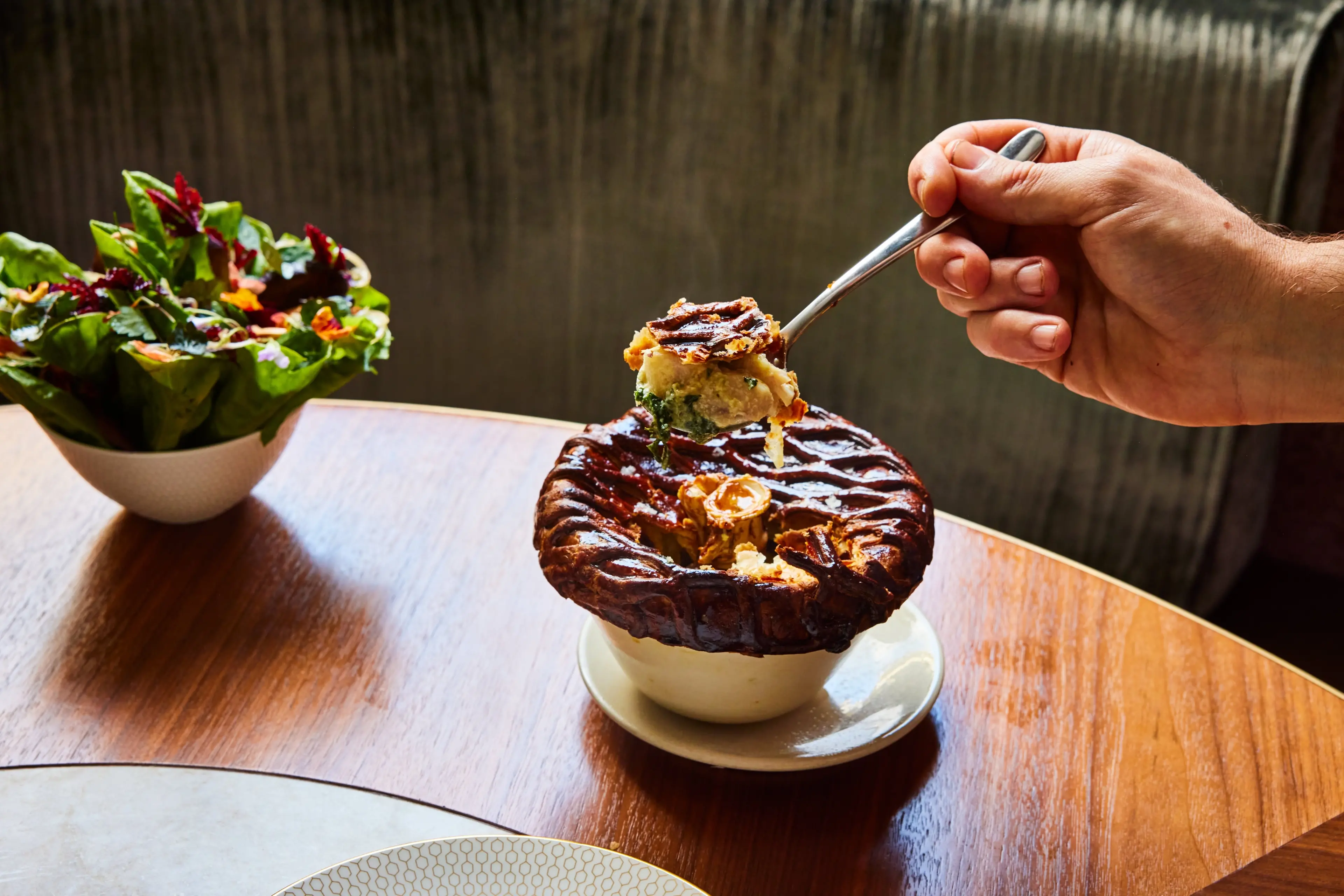
Mr Niland at Home is a company that Julie and I formed one week before we were forced to close the doors to Saint Peter due to Covid. The mission was to keep our team employed, maintain engagement with our guests, neighbours and locals, and somehow remain creatively and mentally stimulated. The menu we wrote for “Mr Niland at Home” was a five-day menu that included yellowfin tuna lasagne, Murray cod ramen and coral trout laksa. By far and away the most popular item we sold was the curried fish pie on the Friday menu. Every week during our forced closure, we made sure that Friday was pie day, ranging through a long list of flavours, from smoked fish pies to tuna cottage pies.
Once we landed in our new home at the Grand National, we had to write a bar menu for the first time. It needed to embody the DNA of Saint Peter and perhaps even carry some of the fun dishes from the Charcoal Fish, Fish Butchery and Petermen menus. The other service it needed to provide to the kitchen was an ability to utilise some of the secondary cuts from the Saint Peter dining room menu.
This pie brings it home, versatile enough to use a wide range of different fish species with the additional ability of carrying seasonal vegetables.
Note: For this recipe you will need four pie dishes measuring 13cm in diameter and 9cm in depth.
Makes 4
500g skinless, boneless white fish trim (any white, flaky and mild variety works well)
1 litre milk
100g unsalted butter, diced into 2cm cubes
25g Keen’s curry powder
100g plain (all-purpose) flour
Pinch of freshly grated nutmeg
Healthy Boy brand mushroom soy to taste
Freshly cracked black pepper
125g fresh corncobs, husks on
250g mixed green leaves, cut into bite-sized pieces (e.g. cime di rapa, wild garlic, kale, cavolo nero)
1kg sour cream pastry, rolled to 4mm thickness and chilled
4 egg yolks, beaten, for egg wash
Method
• Cut the fish trim into 1.5 cm bite-sized pieces and place on a tray in a single layer, cover and refrigerate.
Put the milk in a pot over a low heat until it just comes to the boil. Take care not to let the milk boil for longer as it will begin to reduce and the filling will end up too thick. Meanwhile, place the butter and curry powder in a saucepan set over a medium heat. Once the butter has fully melted, add the flour and combine into a roux, stirring for 2-3 minutes or until the rawness of the flour is cooked out. Remove from the heat momentarily until the milk has just come to the boil, then place the roux back on the heat and begin ladling in the hot milk, whisking after each to incorporate evenly and create a smooth finish.
Once the last of the milk is added, continue to whisk until the sauce begins to bubble. Keep whisking while you allow it to cook out for a further 5 minutes to avoid scorching the bottom. Mix in the nutmeg and season with salt, the mushroom soy and cracked black pepper to taste. Transfer your finished sauce into a deep container or tray, cover with plastic wrap and place in the refrigerator to cool.
Bring a pot of salted water to the boil and blanch the whole, unpeeled ears of corn for 4 minutes. Strain the corn from the water and remove the husk, then strip the kernels from the cob using a sharp knife. Refrigerate until required.
To make the filling, combine the corn kernels and raw mixed greens with the chilled sauce, then taste and season with further mushroom soy, salt and cracked black pepper if needed. Set aside.
Lay out the pastry on a clean and cold work surface. Cut a circle of pastry larger than your pie dishes and allow a further 3cm of overhang to assist in sealing the pie.
Spoon 250g of filling into the pie dishes and top with 125g of diced raw fish. By adding the fish per pie, you ensure each gets an equal amount. Place the round of pastry directly over the top of the dish and crimp the overhanging pastry to its sides. Repeat to produce a further three pies. With a pastry brush, paint the tops with the egg yolks, ensuring an even layer.
Place in the refrigerator for 30 minutes to dry the egg glaze. Add another coat of egg wash to the pastry before baking to create a bronzed finish. Bake in a 185 °C oven for 25-30 minutes.
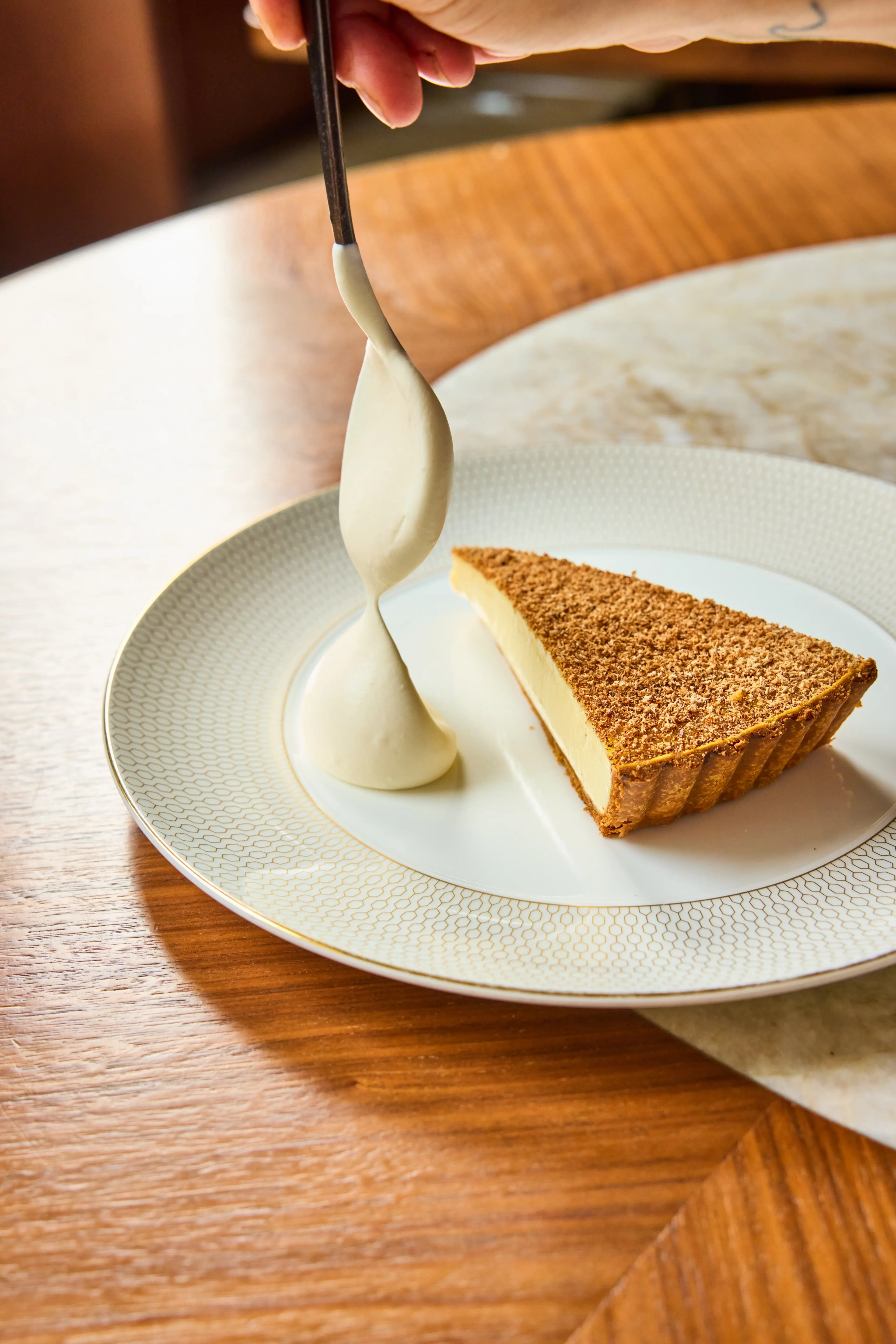
Custard Tart
My obsession with custard tarts started with my mum. She would take me grocery shopping and afterwards, if I had been good (and even if I hadn’t), we would go to a coffee shop where she would spoon off the cocoa-dusted foam from her cappuccino for me and share a warm, nutmeg-coated custard tart. There is something about the warmth of the custard paired with the nutmeg and vanilla aroma that has somehow burnt itself into my memory.
I was once dining at Fish Face with Julie, prior to working there. We finished our main course and it was nearing the time for the next sitting to arrive, so we said we would order the custard tart and then head off. The waiter returned to say that it wasn’t quite ready yet, but if we wanted to wait for it, we could. We said we’d leave it till next time and got the bill, but as we were leaving, chef Stephen Hodges ran over and handed us a box, wished us a good night then ran back to the service.
Julie and I opened the box as we walked through the streets of Darlinghurst. Inside was a slice of the hottest custard tart I have ever tasted. There was literally steam coming off the top. For anyone who knows their way around a custard tart, this is quite a feat to achieve, requiring so many small details to come together in a small window of time. We stood there on the street in awe, eating the tart and thinking, “We need this recipe!”. Since that epiphany, the tart has caused many people, myself included, a lot of tears and grief. But that needs to be balanced against the huge amount of joy it also brings. If you can truly master this tart, it is a generational gift to continue sharing with others. Nothing beats it in my eyes, and I have enjoyed a long list of incredible desserts all around the world. Nostalgia is a powerful ingredient that can’t be written into the recipe.
Serves 12
Pastry
250g plain (all-purpose) flour, frozen
200g unsalted butter, chilled and diced
½ tsp fine salt
55ml chilled water
1 egg yolk, lightly beaten
Custard filling
360g caster (superfine) sugar
3 vanilla beans, split and seeds scraped
4 egg yolks
7 whole eggs
1.125 litres full-cream (whole) milk
375ml pouring (single/light) cream
To Serve
Whole nutmeg
Softly whipped cream (optional)
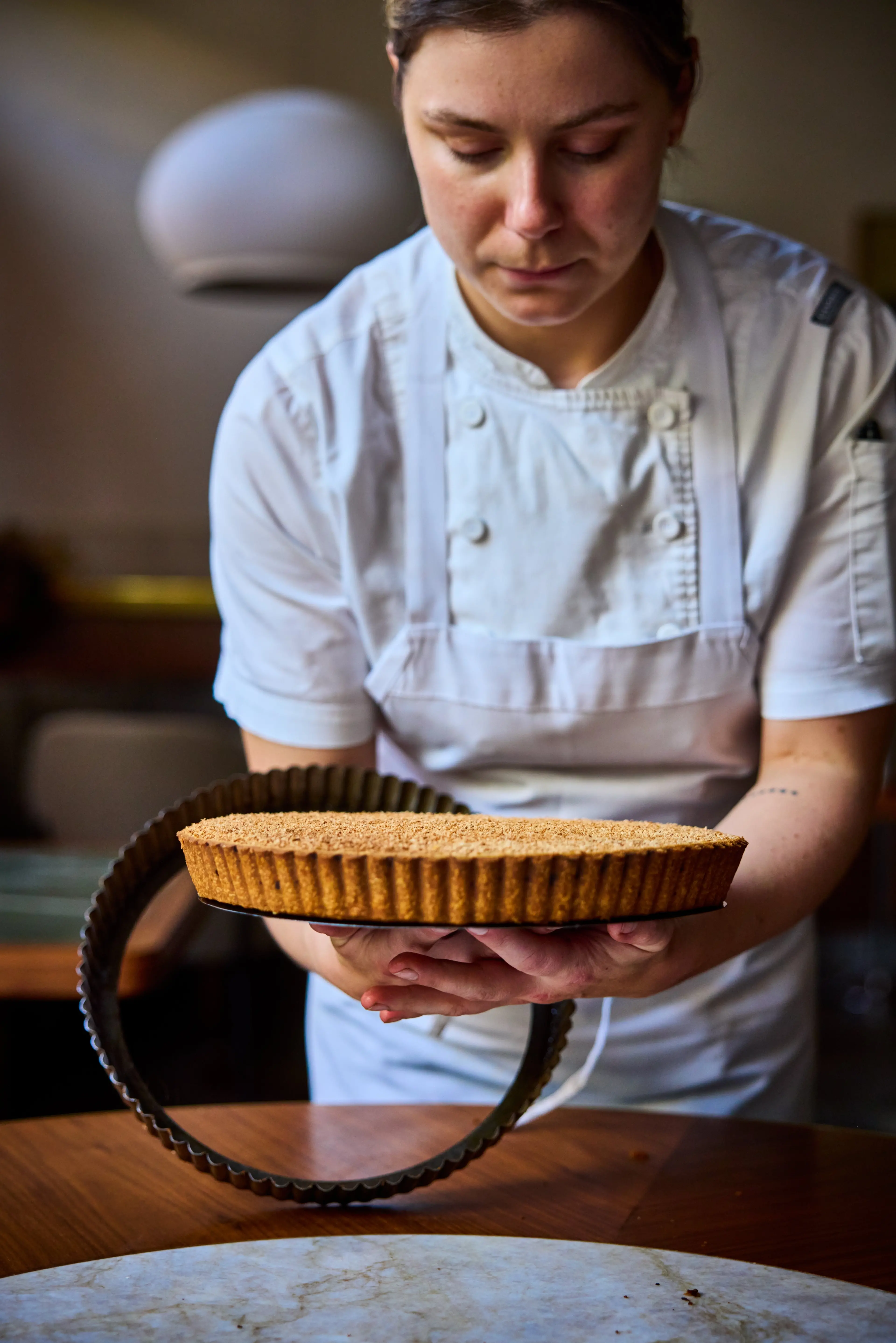
• To make the pastry, pulse the flour and butter in a food processor to create very fine crumbs. Dissolve the salt in the water and add to the crumb, pulsing to combine, then turn out the dough onto a chilled surface and work it with the palm of your hands for 3-4 minutes to form a very firm dough. Wrap in plastic wrap and chill for a minimum of 3-4 hours or overnight. Preheat the oven to 190°C.
Roll out the pastry to a 2mm thickness, then lay it in a 28cm tart tin with a removable base. Line the pastry with baking paper and fill with baking beads or dried beans. Blind bake for 30 minutes, then remove the paper and weights and cook for a further 10 minutes until cooked through, golden brown and dry. Brush the inside of the tart shell with the beaten egg yolk to seal the pastry while still warm, then return to the oven for 1 minute to cook the egg.
While the pastry is baking, make the custard filling. To do this you can either use a Thermomix or food processor. Blend the sugar and vanilla seeds in a Thermomix. Add the remaining ingredients, then reduce to speed 3 so that no air is incorporated into the filling. Set the timer to full and temperature to 60°C and cook the custard until a probe thermometer reaches 63°C.
If using a food processor, blend the sugar and vanilla together, then tip into a large heatproof bowl. Add the egg yolks and eggs to the bowl and whisk for 3 minutes or until pale. Combine the milk and cream in a saucepan over a medium heat and heat to just under boiling point. Slowly pour into the egg mixture and whisk until silky and well incorporated. Half-fill a large saucepan with water and bring to the boil over a medium heat. Reduce to a very gentle simmer, then place the bowl over the pan and, using a rubber spatula, stir constantly until the custard reaches a temperature of 65°C. Remove from the heat and pass the custard through a fine sieve.
The idea is to have the custard ready at the same time as the pastry shell. For the best results, they both need to be warm.
Reduce the oven temperature to 130°C.
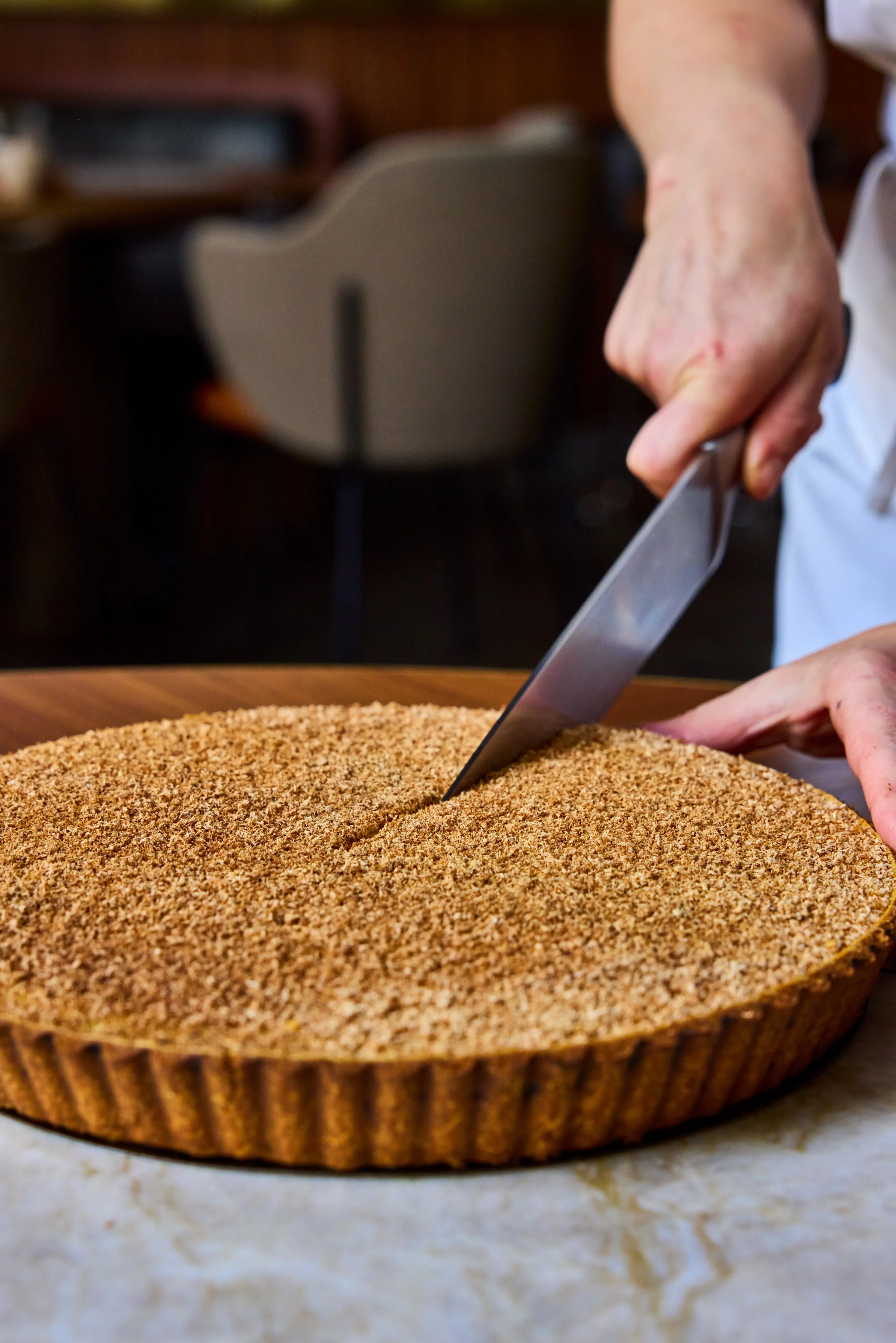
Carefully pour the custard into the warm tart shell and bake for 45 minutes or until the centre just reaches 83°C for a wobbly set. As soon as the tart is removed from the oven, grate fresh nutmeg liberally over the entire tart until covered. Allow the tart to stand at room temperature for at least an hour before serving (don’t refrigerate it or you will lose the wobble).
To serve, use a very hot, sharp knife to carefully portion the tart. Serve with a dollop of softly whipped cream if you like.
SUPPLEMENTARY RECIPE
Sour cream Pastry
400g plain (all-purpose) flour
10g fine salt
280g cold butter
200g sour cream
20ml ice-cold water
To make the sour cream pastry, pulse the flour, salt and butter together in a food processor; do not blend too far as coarse pieces of butter through this pastry are important for its final texture. Add the sour cream and chilled water to the food processor and pulse again. The mix should still be crumbly but come together in your hand. Work with the palm of your hand on the bench until the dough just begins to come together, no more. You should be able to see the pieces of butter and ripples of sour cream. Refrigerate for at least 15 minutes.
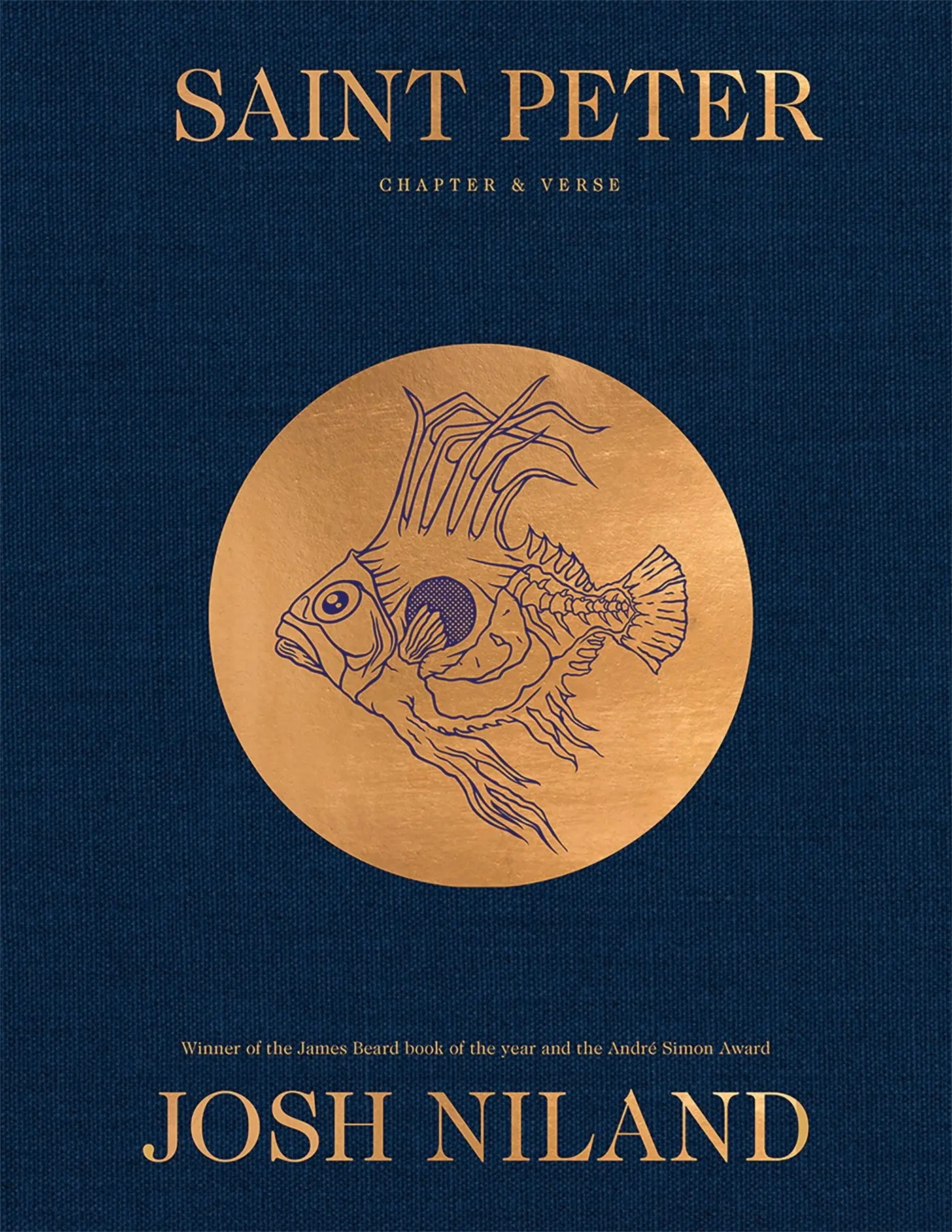
The book: Saint Peter by Josh Niland, published by Hardie Grant Books. Photography by David Loftus.