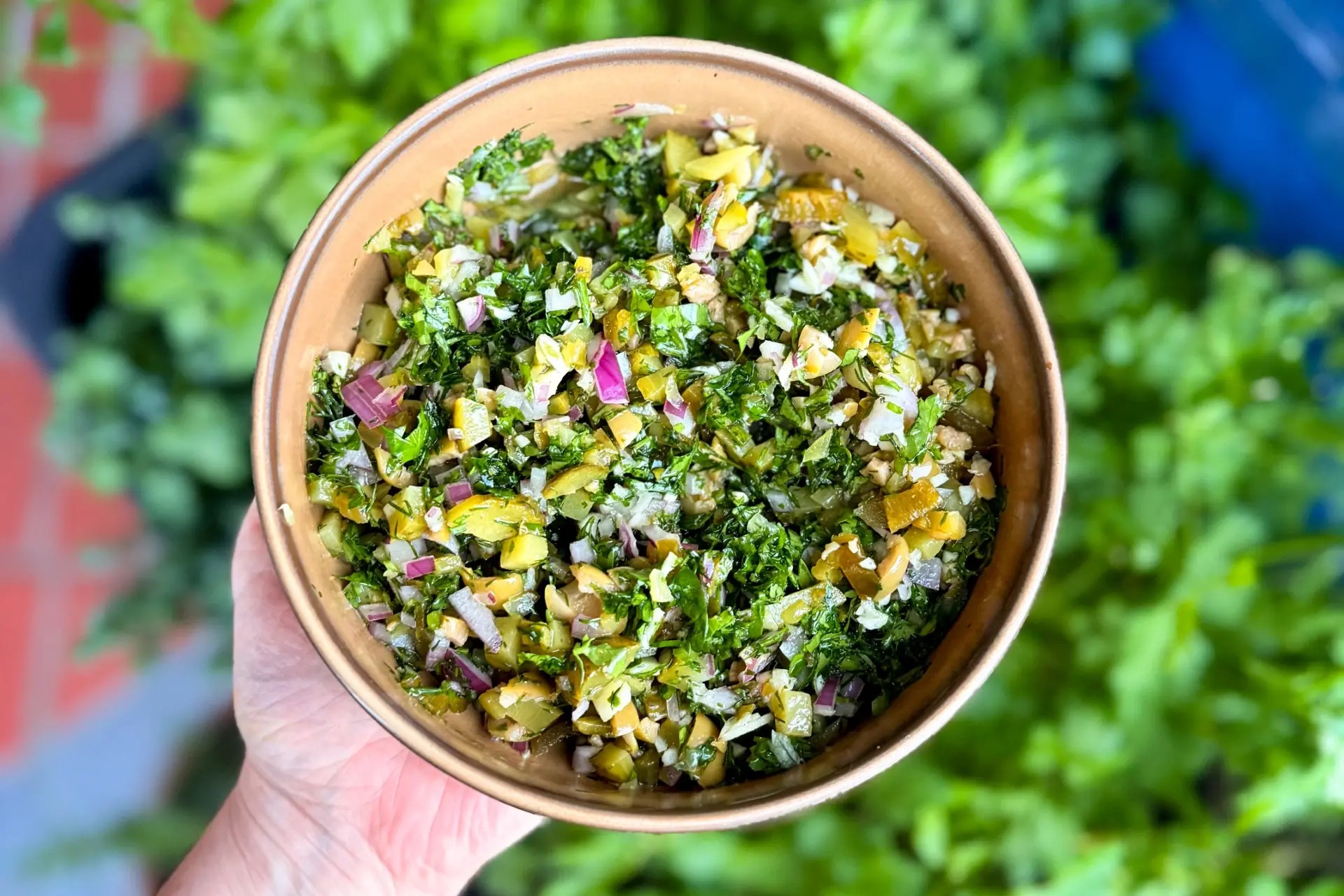
As cozy as winter can be, I do tend to struggle with the shortness of the days, especially when it comes to enthusiasm for cooking. The mornings are darker, the evenings arrive earlier and, if you’re anything like me, you’ll probably find yourself sleeping a little longer too. Once work is finished, it can feel like there’s barely enough time to throw dinner together before it’s almost bedtime again. I’ve found an acceptable solution isn’t spending hours cooking every evening, it’s spending a couple of hours on a Sunday preparing a few flavour-packed condiments and sides. Suddenly, even the simplest meals feel fresh and exciting, and it’s much easier to resist falling back on the same old spaghetti bolognese every week. Fresh herbs are one of the easiest ways to transform everyday meals, and parsley is one of the most affordable and abundant herbs throughout winter. Often dismissed as a garnish to be left on the side of the plate, parsley deserves far more respect. It’s delicious, incredibly versatile and one of the most nutrient-dense culinary herbs we can grow or buy (especially in the darker months). I encourage you to think of parsley less as a garnish and more like a leafy green vegetable and eat it generously throughout winter. Parsley is naturally rich in vitamin C to support immune health, vitamin K for healthy bones, folate, iron and potassium. Its deep green colour also reflects its abundance of chlorophyll and antioxidant compounds, including flavonoids such as apigenin and luteolin. Traditionally, Western herbal medicine has used parsley as a gentle digestive tonic and mild diuretic, supporting healthy kidney and urinary tract function while encouraging the body to eliminate excess fluid. Combined with fats such as olive oil and a squeeze of lemon, parsley becomes both incredibly delicious and wonderfully nourishing. One of parsley’s lesser-known superpowers is that it’s one of the richest dietary sources of apigenin, a naturally occurring plant flavonoid that has attracted growing interest from researchers. Apigenin has been studied for its antioxidant and anti-inflammatory properties, along with its potential to support healthy brain function, the nervous system and hormonal health and healthy ageing. While research is ongoing, it’s another wonderful reminder that everyday culinary herbs can contribute far more than simply flavour. Parsley, olive & lemon salsa This vibrant salsa is worth making once or twice a week to keep in the fridge. It brings brightness and freshness to the rich, comforting meals we naturally gravitate towards during winter. Spoon it over soups, casseroles and stews, stir it through roasted vegetables or pasta, dollop it on to hummus or Greek yoghurt for an easy dip, or use it in the recipes below. Ingredients • 3 cups curly or Italian parsley (or a mixture), finely sliced • 1 small red onion, very finely diced • 1 cup pitted green olives, finely diced • 2 cloves garlic, finely sliced • Zest and juice of 2 lemons • ¼ cup pickled jalapeños, finely diced (optional) • ¼ cup extra virgin olive oil • ½ tsp sugar • Sea salt and freshly ground black pepper Method Combine all ingredients in a bowl and mix thoroughly. Add a little extra olive oil if needed to create a loose salsa consistency. Season generously with salt and pepper. Parsley marinated mushrooms These mushrooms are one of my favourite meal-prep staples. Keep them in the fridge and add them to cheese boards, salads, grain bowls, pasta, pizza, toasted sandwiches or alongside roast vegetables and grilled meats. They’ll keep, covered in the refrigerator, for up to four days and are delicious served warm or cold. [Missing Credit][object Object] Ingredients • 500g button mushrooms, sliced • 2 Tbsp olive oil • 1 cup Parsley, olive & lemon salsa Method Heat a large frying pan over medium-high heat. Cook the mushrooms in the olive oil until well browned (you may need to cook them in two batches). Season lightly with salt and pepper before stirring through the parsley salsa. Allow to cool before storing in the fridge. Winter roasted carrot salad with whipped feta, crispy lentils and parsley olive salsa This is one of those salads that feels substantial enough for dinner but beautiful enough to serve when friends come over. If you’ve already prepared the salsa, whipped feta and crispy lentils, dinner comes together in minutes. Serve with crusty bread and a simple green salad, or alongside roast chicken or grilled meat. [Missing Credit][object Object] Roast carrots Ingredients • 8 large carrots, quartered lengthways • 1 Tbsp olive oil • 1 Tbsp honey • Sea salt and freshly ground black pepper Method Preheat the oven to 180°C. Arrange the carrots on a lined baking tray. Drizzle with olive oil and honey and season well. Roast for 20-30 minutes until tender with caramelised edges. Parsley whipped feta Ingredients • 200g feta • 1 cup Greek yoghurt • 1 tsp garlic powder • 1 tsp onion powder • ½ cup finely chopped parsley • Zest of 1 lemon Method Place all ingredients into a bowl and beat with an electric mixer until smooth, light and fluffy. Taste and season if needed. Crispy lentils Ingredients • 2x400g tins brown lentils, drained, rinsed and thoroughly dried • 1 Tbsp olive oil • Sea salt and freshly ground black pepper Method Preheat the oven to 180°C. Spread the lentils over a lined baking tray. Drizzle with olive oil, season well and roast for around 30 minutes, stirring every 10 minutes, until golden and crisp. To assemble Spread the whipped feta over a serving platter. Arrange the warm roasted carrots over the top, then scatter generously with the crispy lentils. Spoon over plenty of the parsley, olive and lemon salsa and finish with an extra handful of fresh Italian parsley leaves. Serve immediately with warm crusty bread and enjoy. Herbalist’s note As herbalists, we often say that food and medicine exist on the same spectrum, and parsley is a perfect example. Beyond adding colour and flavour to a meal, it’s packed with vitamins, minerals and beneficial plant compounds that work to support our health every day. While we often look to exotic “superfoods”, some of the most nourishing ingredients have been growing in our gardens or sitting in the vegetable drawer all along.