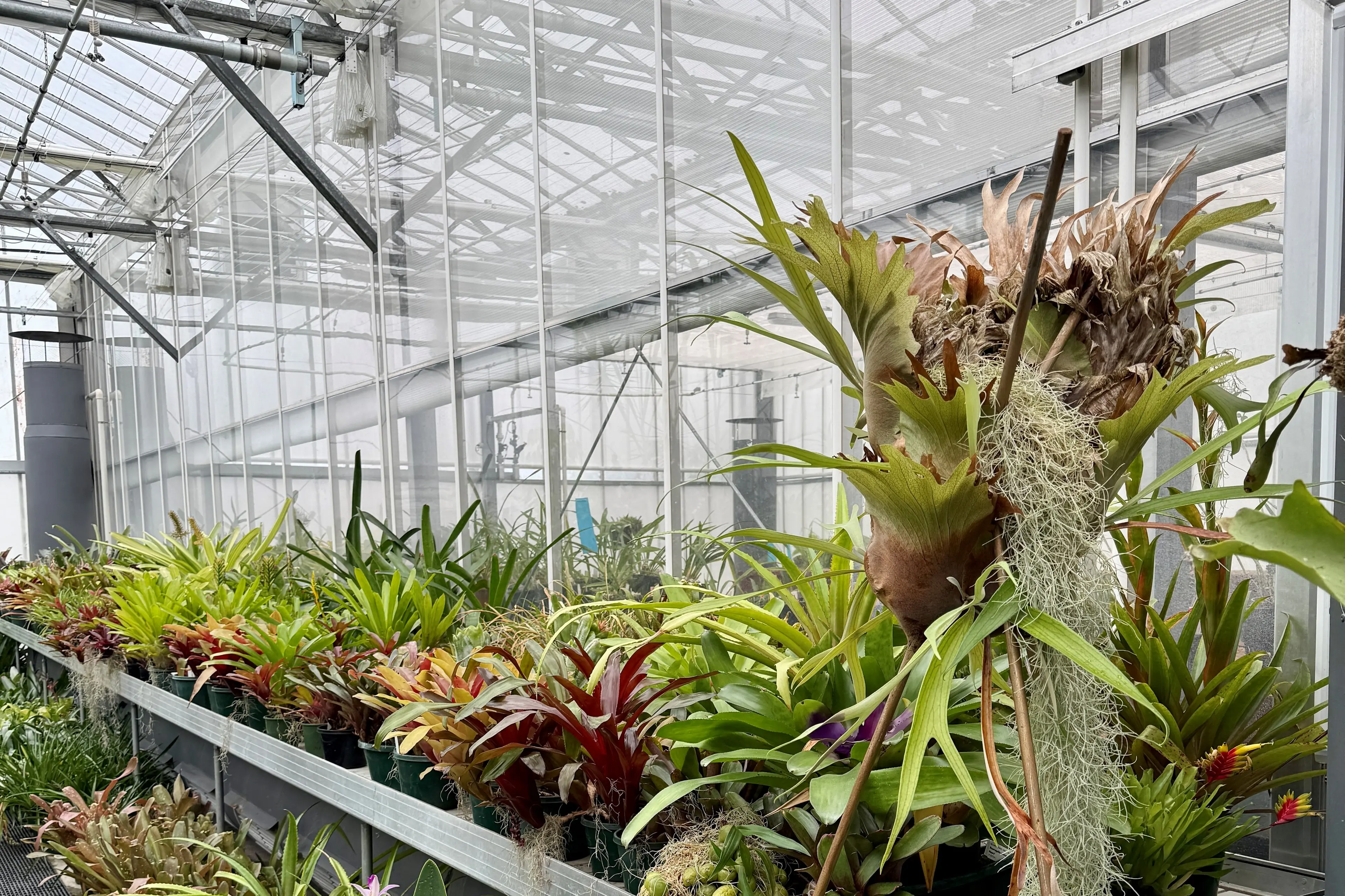
Bromeliads are a group of plants that many people may never have heard of before. I certainly hadn’t until I began my apprenticeship at the Dunedin Botanic Garden. Since then, I’ve become completely captivated by these otherworldly plants, and they’ve quickly become one of my favourite groups of plants. The Bromeliaceae family contains more than 3,700 species across approximately 80 genera. Some of the genera we have in our collections and propagation facility at the Botanic Garden include Aechmea, Puya, Billbergia, Dyckia, Fosterella, Neoregelia, Nidularium, Vriesea, Ananas (which includes the pineapple, Ananas comosus), and Tillandsia, commonly known as air plants. The majority of bromeliads are epiphytes and their roots have evolved primarily for anchorage, allowing them to attach themselves to trees. However, be aware that not all bromeliads are epiphytic. Some are terrestrial and grow in soil, while others are lithophytes, and grow on rocks. For epiphytic bromeliads, an open, free-draining growing medium such as orchid or pine bark is best used when grown in a pot. They can also be mounted on to a uniquely formed piece of dry wood, or a fern pole, using sphagnum moss and clear fishing line to create a beautiful and naturalistic, living display, or try incorporating orchids, stag-horn ferns and other epiphytic plants to add texture, depth and interest year-round. One thing that surprised me most about bromeliads is just how low maintenance they can be. Care requirements are generally minimal, with tasks including regular watering, fertilising during the growing season, repotting when plants outgrow their containers, and removing old leaves. Offsets, or “pups”, are easily propagated to create new plants, avoid doing this in winter as growth is too slow and conditions make them more prone to rot.