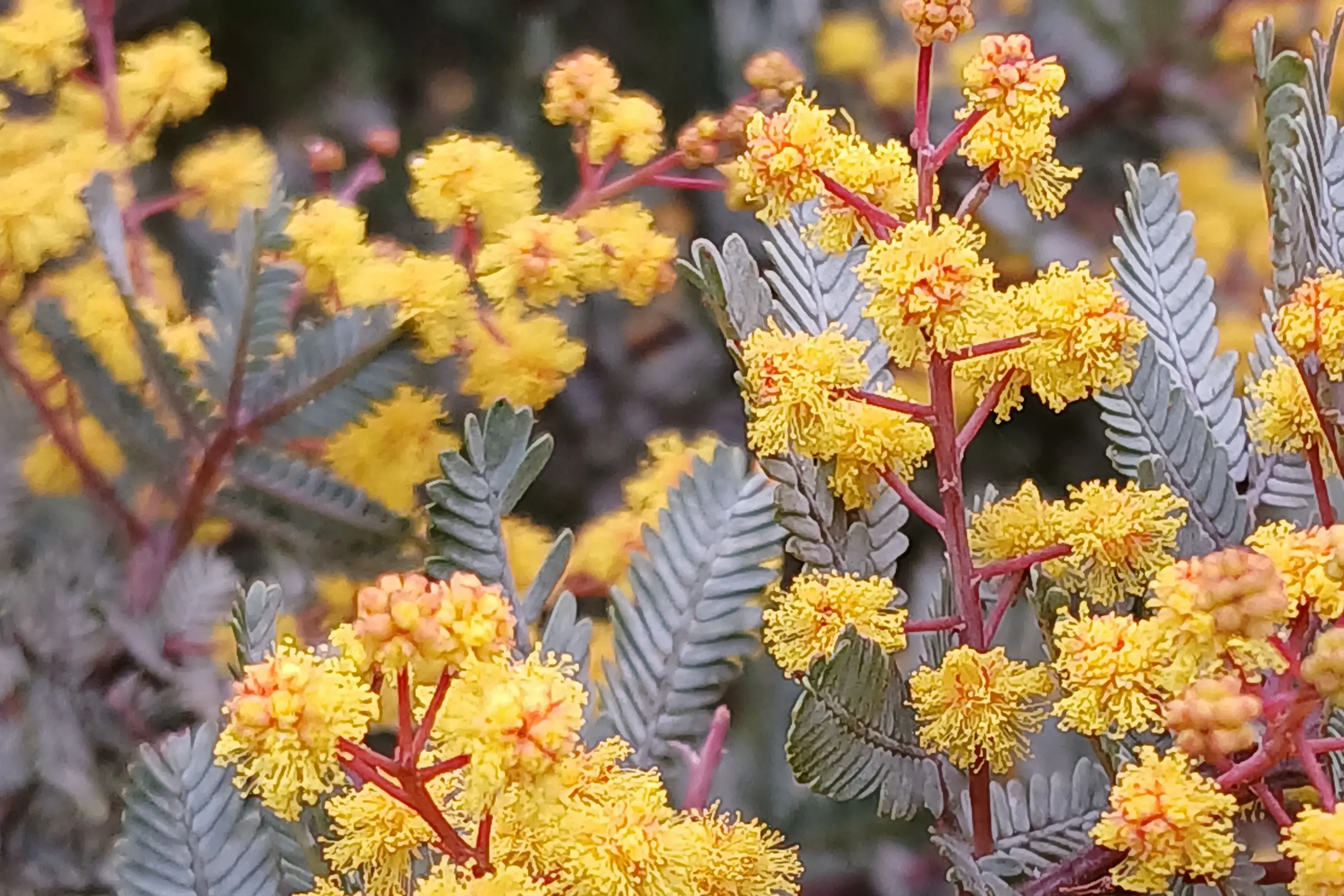
Throughout the Australian Collection, you can find a diverse range of acacias. One of the standout specimens is Acacia baileyana ‘Purpurea’, a striking cultivar that provides year-round interest with its soft blue-purple foliage. From June through August, this feature is enhanced by masses of golden-yellow flowers, creating a spectacular seasonal display. Its combination of colour, form and flowering makes it a highlight of our wattle collection. While the species can become weedy in warmer climates, the cultivar ‘Purpurea’ rarely produces viable seed in Dunedin, making it an attractive and well-suited choice for our local conditions. Our cultivar section also features Acacia cognata ‘Limelight’, a dwarf wattle prized for its bright lime-green foliage and graceful weeping form. The wider collection showcases the incredible diversity found within Acacia, including Acacia melanoxylon (Australian blackwood), a large tree valued for its rich, dark timber and fine grain, which has been widely used in furniture and woodcraft. Other notable species include Acacia bidentata and Acacia pravissima, which are endemic to south Western Australia and south-eastern Australia respectively. These species represent just a small sample of the 48 acacia species growing at the Dunedin Botanic Garden. With such diversity within the genus, acacias can be challenging to identify. Their small yellow flower heads are often the most recognisable feature, but when flowers are absent, many species can also be distinguished by seed pods and leaf-like phyllodes. Some give distinctive earthy aromas when their roots are disturbed or if the wood is cut. This is just a glimpse into the diversity of Acacia. With more than 1000 recognised species, Acacia is the largest genus of vascular plants in Australia and forms an important part of the country’s native flora.