

PHOTO
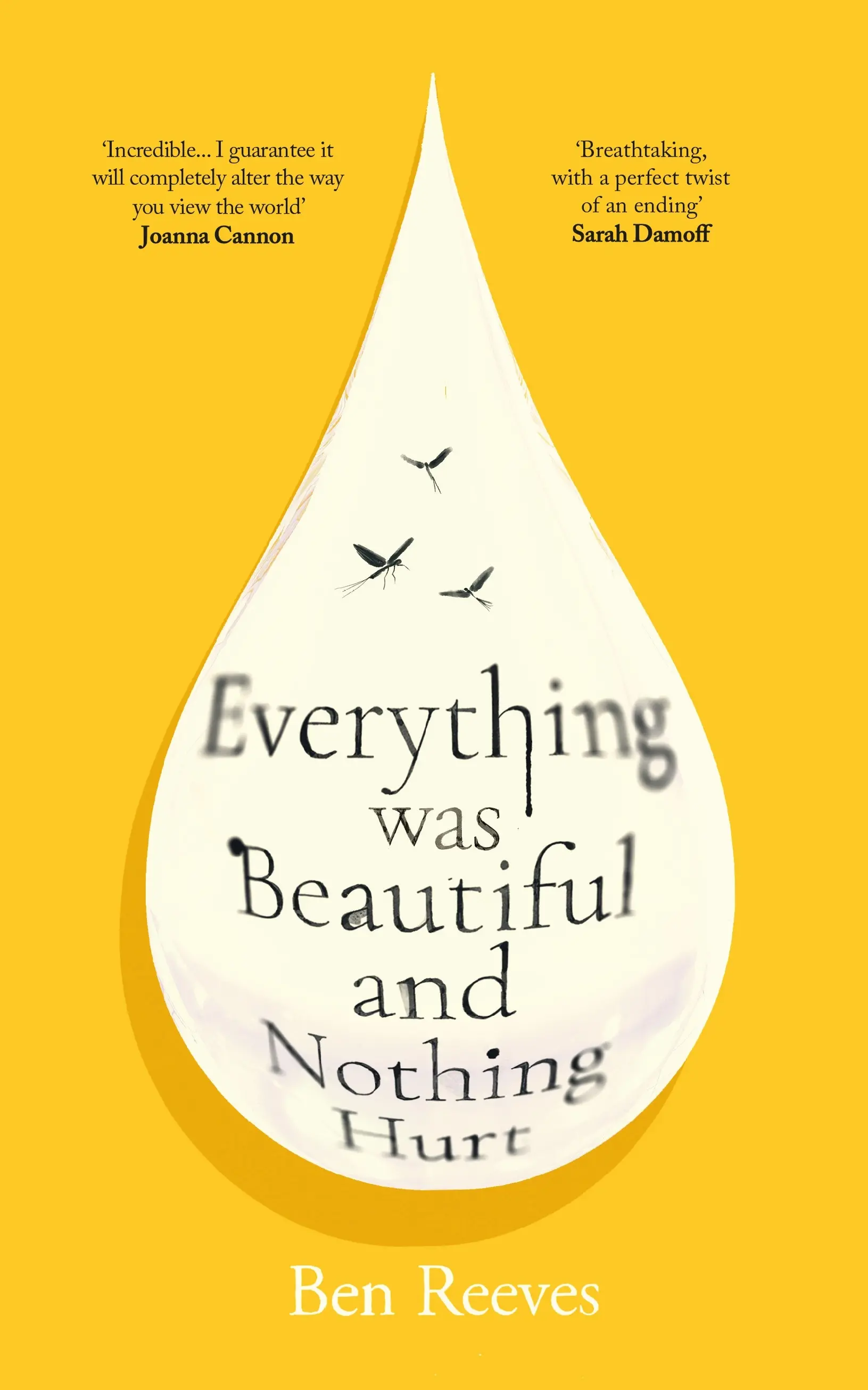
Everything was Beautiful and Nothing Hurt
By Ben Reeves
Atlantic
Reviewed by Cushla McKinney
As a reviewer, I try to approach every book with an open mind.
But there is something about being informed that what I am about to read will be life-altering that raises my hackles.
British author Ben Reeve’s debut novel — “a story about life, narrated by Death” — is a case in point.
Likened to Matt Haig’s The Midnight Train and hitting the New York Times bestseller list within a week of publication, it takes the form of a memoir written by Travis, a quiet and retiring man who divides his time between restoring old photographs and shepherding people through their final moments of life.
It is a calling that brings him quiet satisfaction, albeit one that necessitates an emotional detachment that occasionally threatens to collapse in on its own emptiness.
So it is against his better judgement that he becomes drawn into the life of the solo mother who lives in the flat across the hall.
There is something about Dalia and her daughters, toddler Neda and 8-year-old Layla, that Travis cannot resist.
He is slowly drawn into their orbit, progressing from babysitting and trips to the park to shared meals and other domestic intimacies that he finds profoundly comforting.
But as with all those whose lives intersect his own, Travis is there for a reason.
Unlike his other assignments, however, rather than walk away from the aftermath, he finds himself compelled to share the experiences of those left behind first-hand.
Accounts of Dalia and her family are interspersed with descriptions of Travis’s other assignments, which involve extinguishing everything from mayflies to galaxies.
For some people he is a regular visitor — a source of companionship and assistance.
For others, the first encounter is the last.
And, in a few, Travis’ presence can only be inferred in his recounting of events.
Some passings are formally recorded, their chapters ending in an epitaph detailing name and age at time of death, others go uncommemorated.
This was an apparent randomness intended, I assume, to highlight the arbitrary nature of death, that I found contrived and distracting.
The point of view is similarly fractured.
As a narrator, Travis adopts every register from first to intimate third.
He even slips into the second person at moments of extreme grief, as if to draw the reader into a universal experience.
Intellectually, I can see why Reeves has chosen this approach to a novel that deals, as we are informed on the back cover, with our collective ephemerality, but it felt manipulative rather than emotionally engaging.
Although Everything was Beautiful and Nothing Hurt addresses profound and difficult matters, its construction and marketing make it nigh-on impossible to criticise without appearing heartless or churlish.
It is therefore unsurprising that it has been touted as one of the best books of the year by both Goodreads and Good Housekeeping.
Sadly, it lost me at “hullo”.
Cushla McKinney is a Dunedin scientist.