
PHOTO
As an astronomer, I like to imagine I know what the sky is doing. The sky, however, regularly produces evidence to the contrary.
A little after midnight last Sunday, Middlemarch lay under a bright nearly full moon, some untidy cloud and hills still carrying their August snow. I was performing one of astronomy's oldest and least celebrated techniques: sleeping.
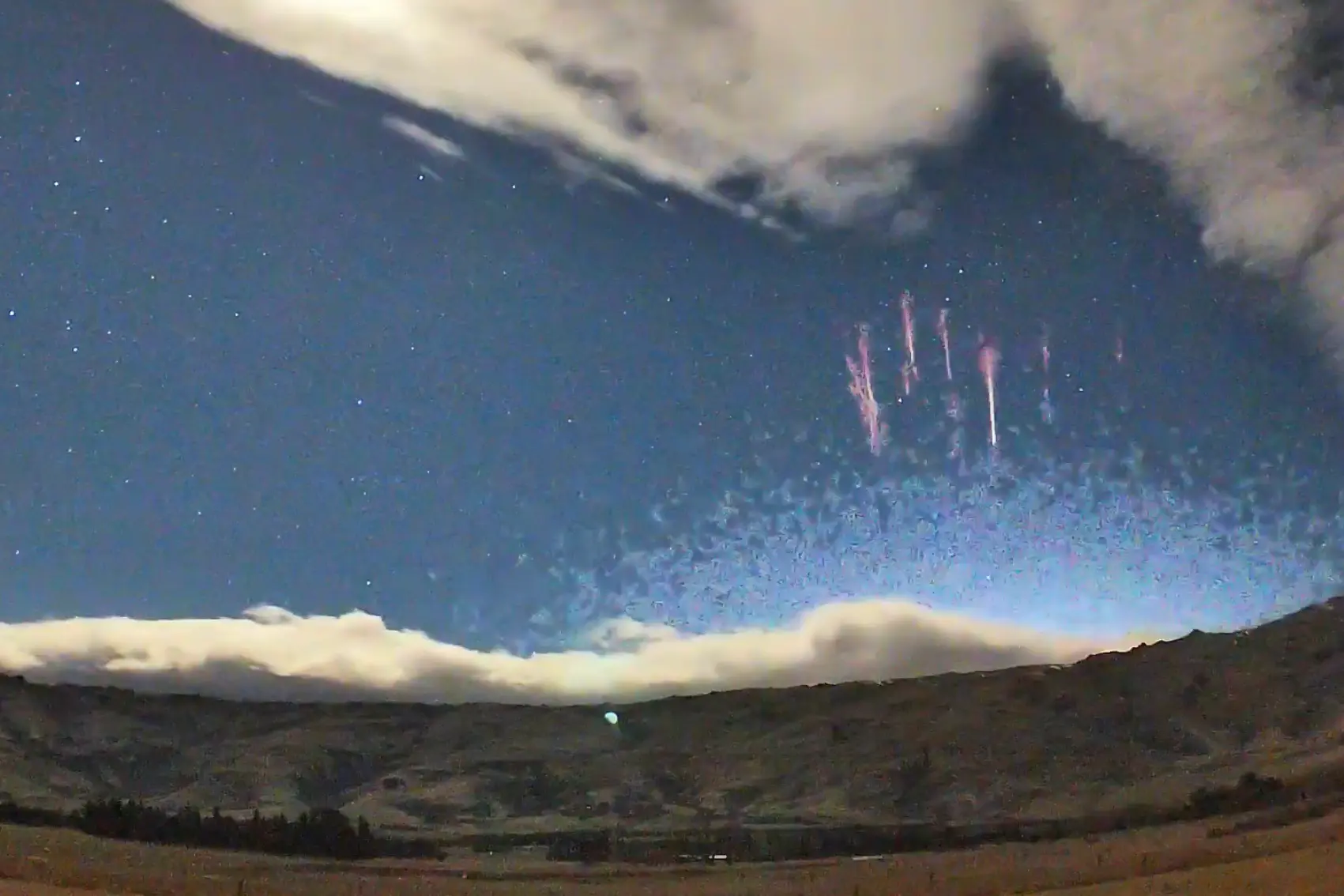
Fortunately, my cameras have a better work ethic. A meteor camera and an all-sky webcam watched westward across the Strath Taieri while I contributed nothing. When I checked the recordings next morning, strange red shapes were dangling above the horizon. They looked like jellyfish, or the roots of an upside-down tree briefly illuminated in the dark.
They were sprites: enormous electrical flashes high above distant thunderstorms. A powerful lightning strike below can disturb the electric field far overhead, making nitrogen in the thin upper atmosphere glow red.
Sprites often appear around 80km up, on the doorstep of space. They may stretch tens of kilometres, yet last only a few milliseconds.
For many years, pilots reported brief ghostly flashes above storms, but atmospheric researchers doubted they were real. In 1989, researchers testing a low-light camera accidentally recorded two bright columns above a distant thunderstorm. The pilots were vindicated and a new branch of meteorology began.
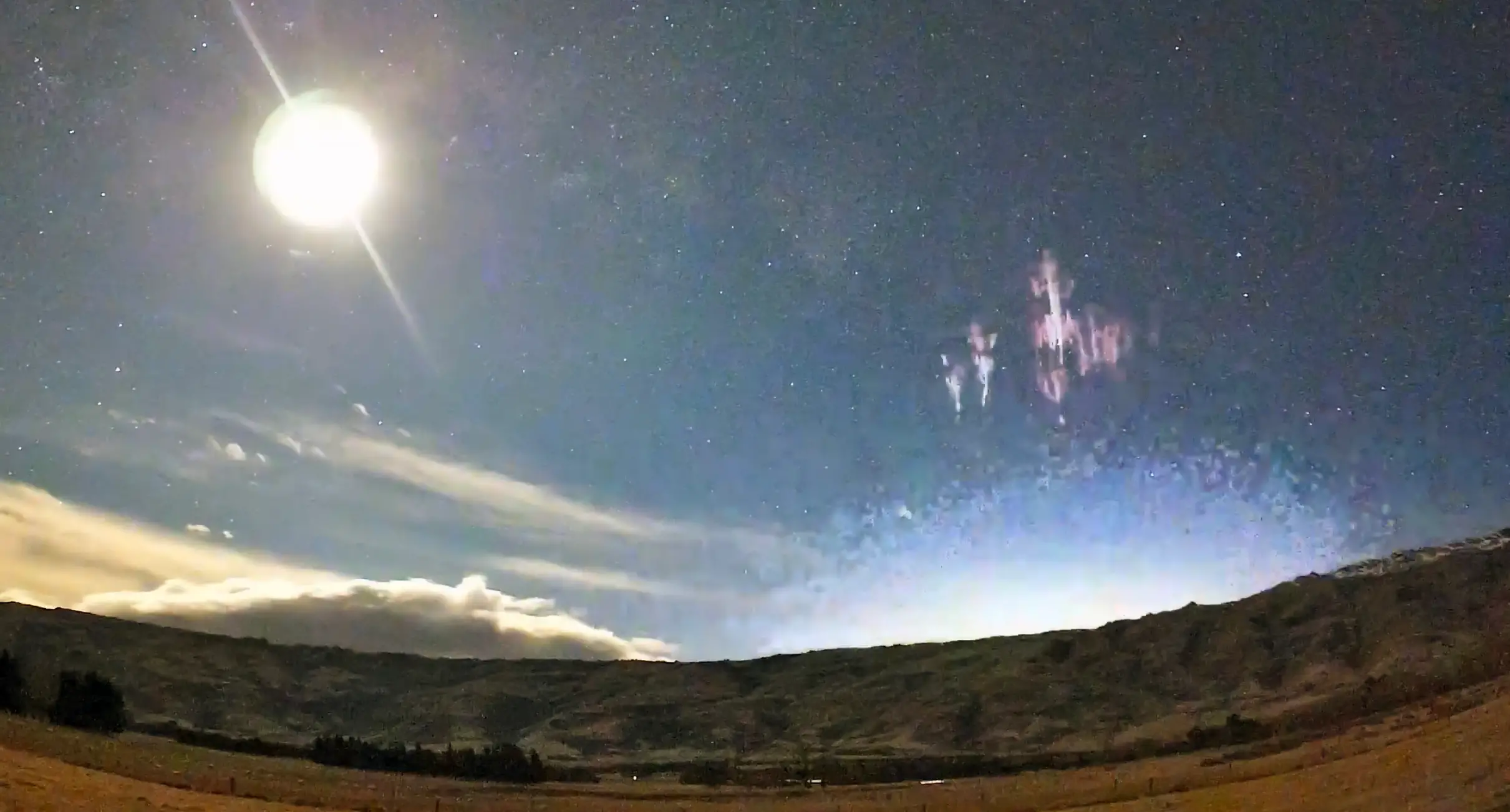
My Middlemarch cameras caught several groups that night. In the brightest images, pink-red tendrils stand against the stars as moonlit cloud drifts overhead. Somewhere over the hills, lightning was striking. High above it, the atmosphere answered with a silent flash not a single human eye in the Strath Taieri saw.
I want to claim patient planning, technical genius and heroic resistance to the cold. In truth, I pointed some cameras upwards, went indoors and fell asleep.
Still, astronomy has always rewarded those who keep looking. Apparently it now also rewards those who go to bed.