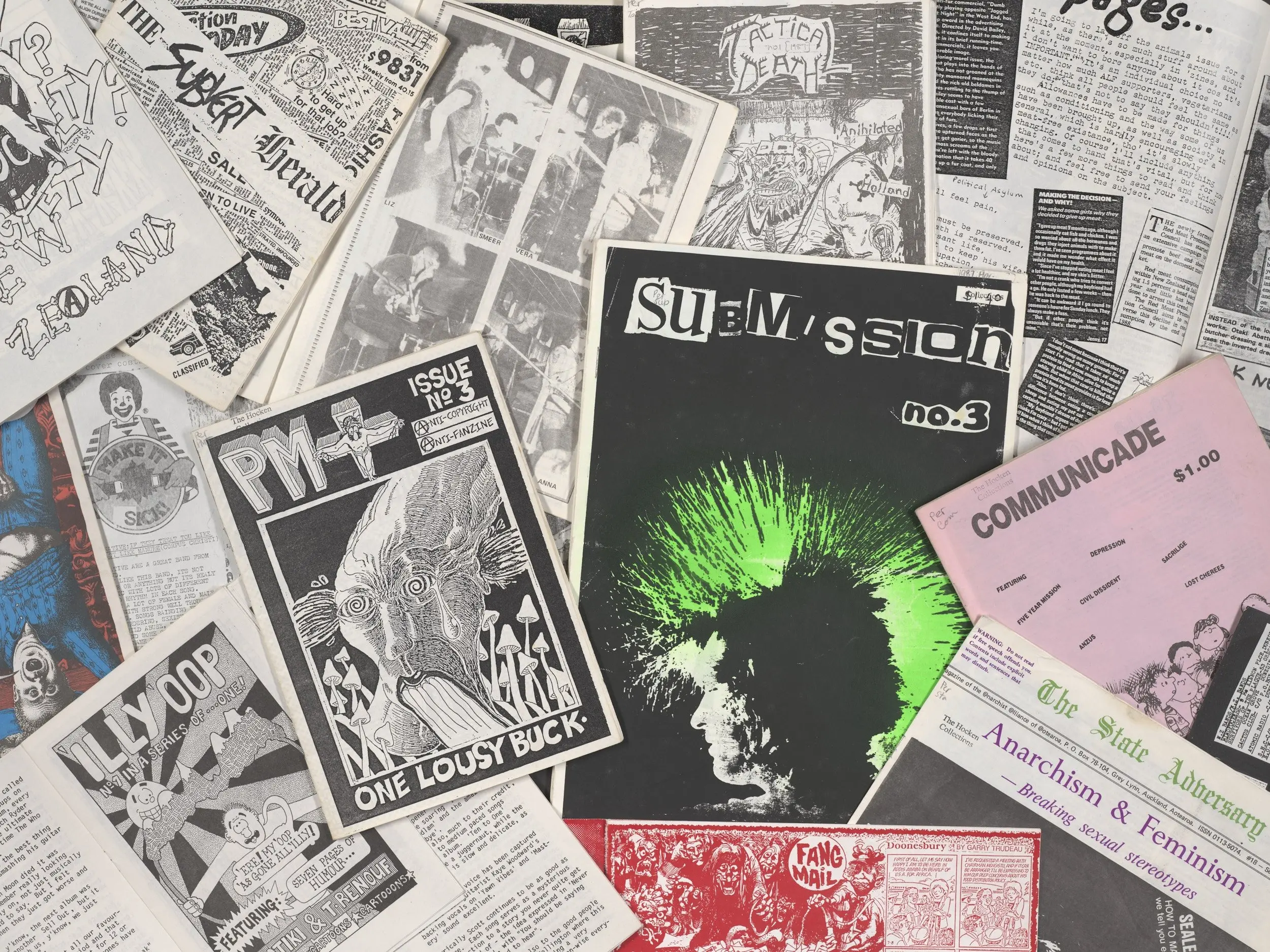
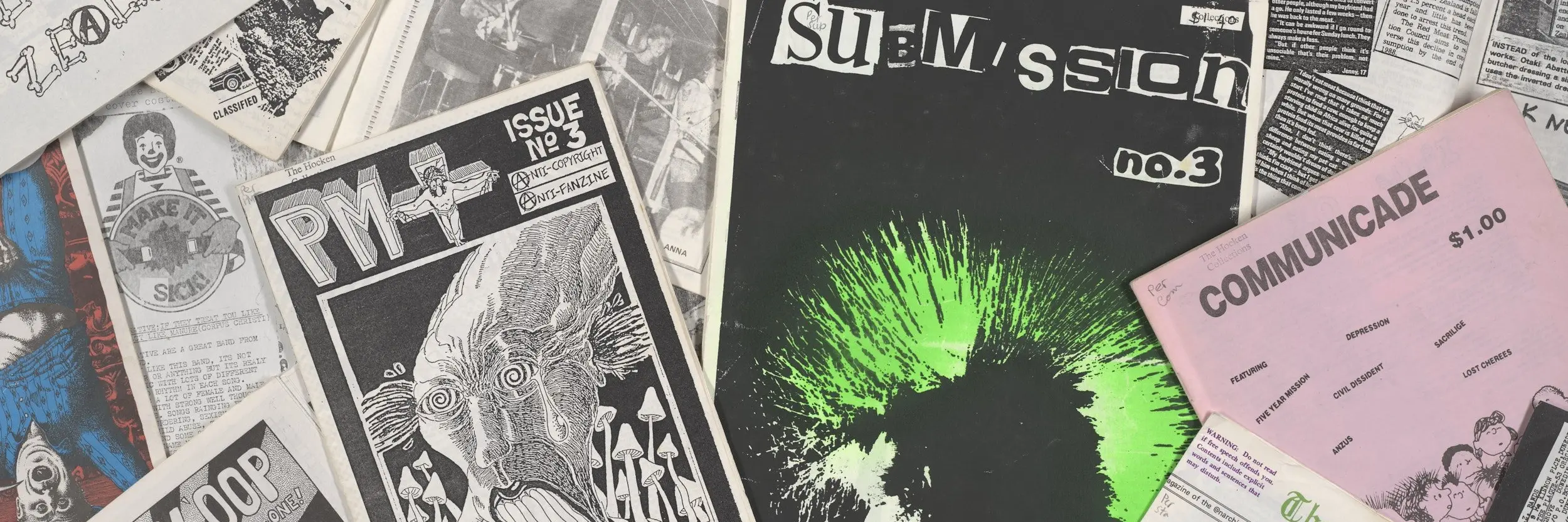
Anarchy! Punk! These subcultures were an undercurrent of the 1980s in Aotearoa. Given their opposition to the mainstream, they can be hard to learn about now, but at Hocken Collections, we have just the thing. Within our periodicals collection we hold an ever-growing collection of zines (650+ titles), dating back to the 1970s. These self-published handmade issues contain a wealth of information about the punk scene. We hold titles created across the motu, but due to the small-run nature of self-publishing our holdings are often incomplete. Despite this, these zines are still an incredible resource to learn about punk and anarchist culture, and they solidify the importance of the punk scene in establishing a DIY self-publishing culture and kick-starting the zine scene in Aotearoa. Originally called fanzines after sci-fi fan magazines in America, many NZ punk zines refused to be labelled. Dunedin zine PMt stated it was “anti-fanzine” on the cover of every issue. Punks aren’t fans — bands and audiences are on the same level, sometimes quite literally at shows without a stage. This attitude is reflected across our zines, with collaboration at the forefront: between creators, with readers and with the other publications they dissect and destroy for collage content. These zines include interviews with local and international musicians, album recommendations, letters from readers (sometimes to other readers), comics, vegetarian recipes, political commentaries, poetry and more. It provides insights into the issues these creators felt were important: animal rights, anti-establishment politics, feminism and building community were as important as the music they reviewed and shared. Many zines listed addresses you could write to for other zines or music, and advertised anarchist shops, protests and events. Zines helped organise and brought people together. In terms of the physical items themselves, these zines were constructed in a pre-computer era when components were glued to master pages for copying. The crunchy, photocopier DIY aesthetic that defines this era of zine-making is one that many zines still aspire to today. Collage, comics, illustration, hand-written and typed text were all used across zines and indeed across pages of the same zine. Because of their self-published nature, zines are an amazing resource for researching subcultures and minority communities — though I’m sure many creators would have been shocked to think their zines would end up somewhere like the Hocken. To view our zine collection, visit the Hocken Tuesday-Saturday, 10am-5pm. Free public tours Thursdays at 11am. Gini Jory is a collections assistant publications and special collections at the Hocken Collections Te Uare Taoka o Hākena.