
PHOTO
A hopeful spring is sprouting at Orokonui Ecosanctuary. While threats of an incoming El Nino climate event hang over the valley, so too does a gentle blanket of mist nourishing the cloud forest. From Waitati’s coast, rolling clouds settle between the mountainous bodies of Māpounui and Mihiwaka.
Fruiting, flowering and seeding cycles proceed with renewed force, and native species begin gathering resources for their young. This process has fed Otago’s ecologies for thousands of years.
Since the building of a predator exclusion fence in 2007, the valley receives extra support from ecosanctuary staff, volunteers and visitors. Day to day, this seems humble compared to the vast scales of ancient ecosystems. Of course, with time, even the smallest seeds grow into mighty forests.
With this being Orokonui’s last contribution to The Mix for 2026, it seems appropriate to finish on an uplifting note — acknowledging some of this year’s positive sanctuary and community outcomes.
New restoration milestones gave us hope for taoka species. For the first time since the establishment of a small sanctuary population in 2011, wild Haast tokoeka were translocated from Orokonui back to Makaawhio whenua.
Fifteen years ago, this vulnerable subspecies of South Island Brown Kiwi totalled about 350 individuals. The development of a kōhanga population at Orokonui is now paying off, with 17 tokoeka transferred to the West Coast in partnership with Makaawhio Rūnaka and the Department of Conservation. Today, the Haast tokoeka population sits at about 550 birds.
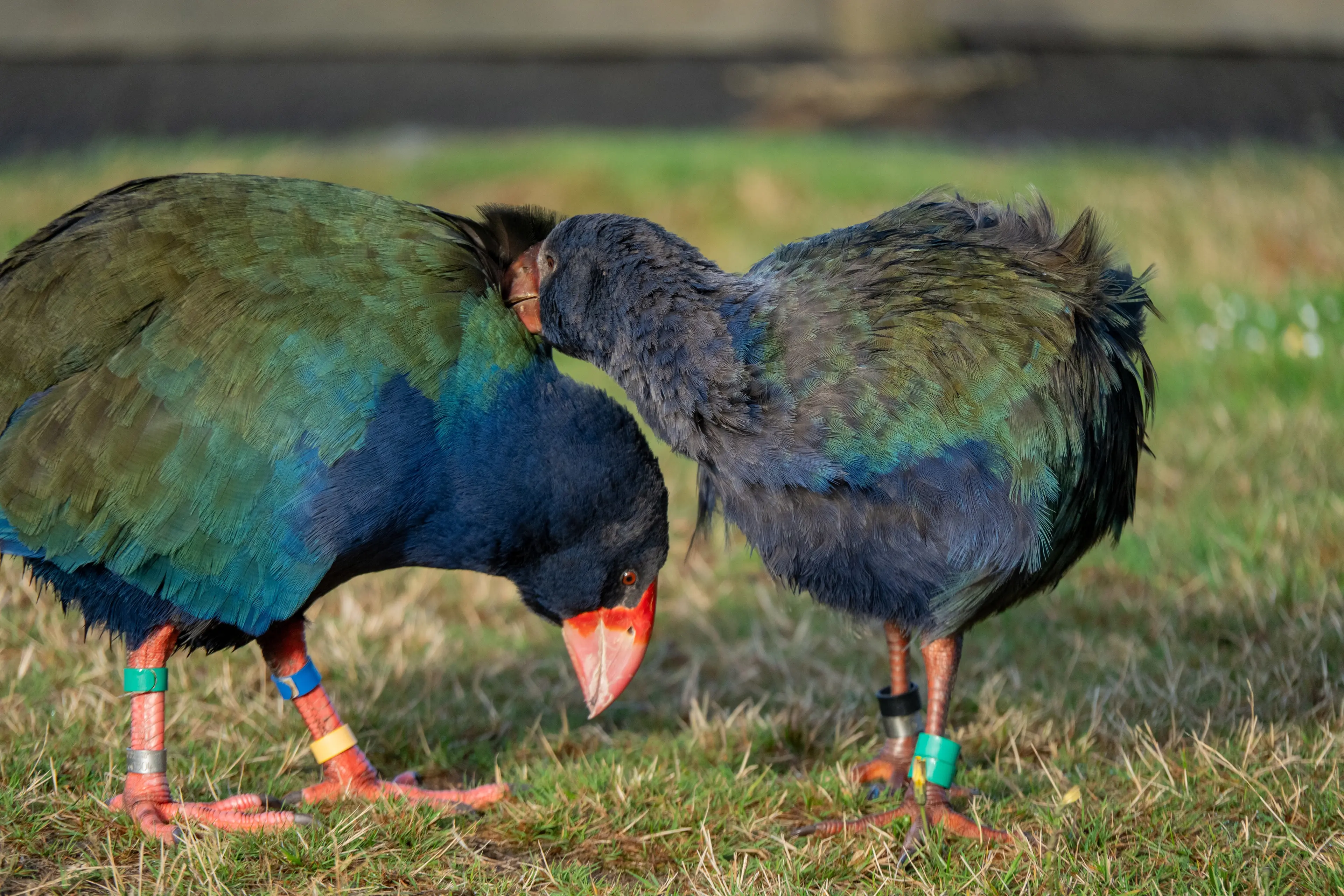
Both breeding pairs of takahē hatched healthy chicks. In the upper grasslands, Waimarie and Bennett raised Maraekura and Maukoroa. In the lower valley, Jessie and Bounty welcomed their first chick, Omimi. All three youngsters were gifted names referencing their east coast home by mana whenua partners Kāti Huirapa Rūnaka ki Puketeraki. Last year’s juvenile takahē were translocated to wild populations in Central Otago.
In monitoring news, we completed our 14th season of monitoring wild tuatara in partnership with Ngāti Koata and Otago Regional Council, and recorded a five-year high for lizard observations. South Island kākā continue to thrive in and out of the fence line.
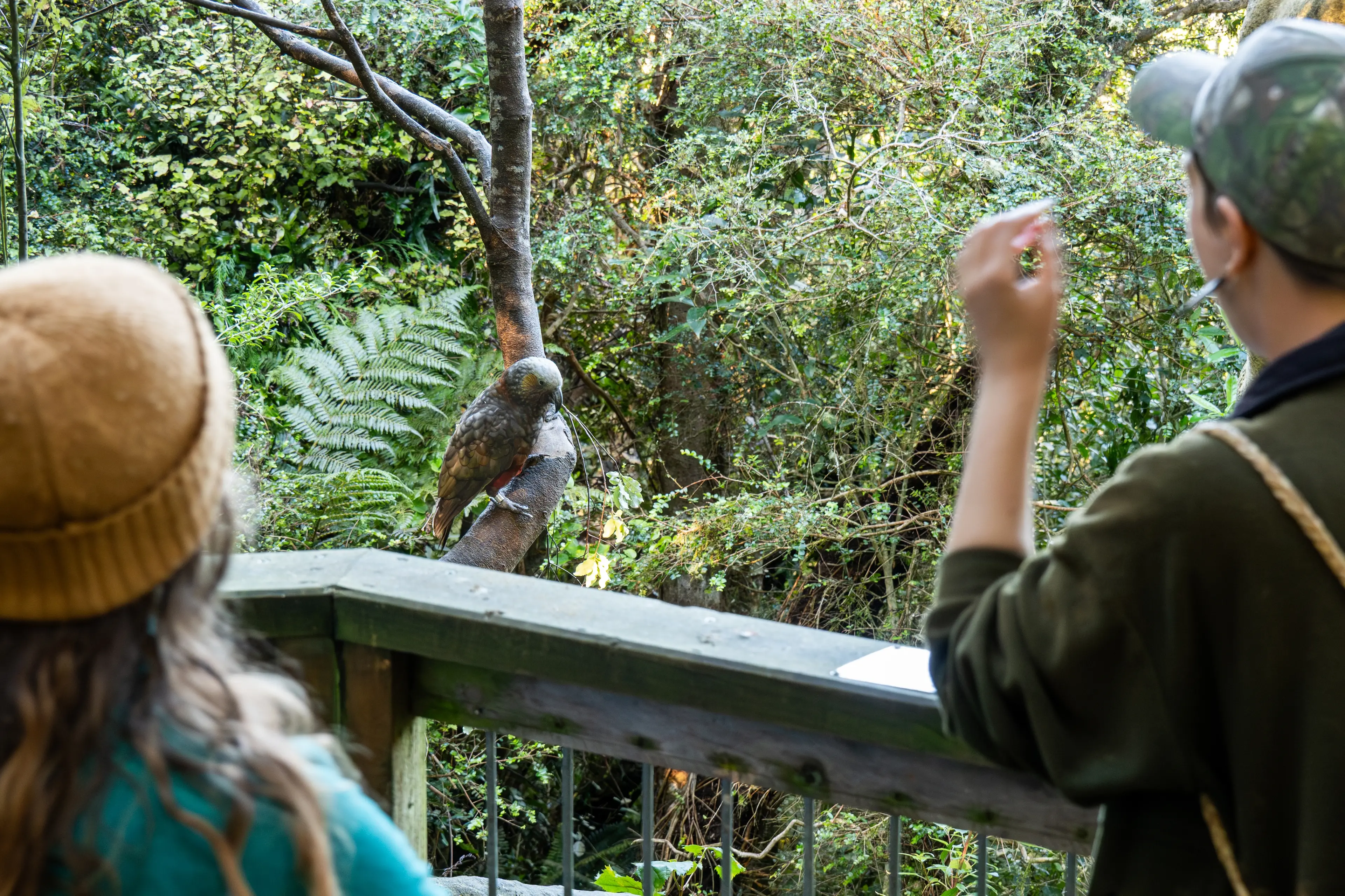
The 2025/26 nesting season resulted in the banding of 22 wild-born kākā. This brought us up to 37 kākā banded in the past two years alone, compared to 100 total banded between 2008 and 2024. In this year’s surveys, 65 individual kākā were identified residing in the sanctuary. The total population, including those living beyond Orokonui, is likely much higher. Community reported sightings have increased across Waitati, Pūrākaunui, Osborne, Brighton, Waverley, North and central Dunedin.
Reinforcements and monitoring of the fenceline kept our taoka species safe. A total of 288 predators were trapped outside the fence, and biosecurity was bolstered by the deployment of new box traps around the perimeter. New plantings, alongside enhancements to grassland, reptile and historic macrocarpa habitats improved biodiversity, education and advocacy opportunities.
Volunteer contributions were a force for good, with dedicated locals donating more than 3000 hours of time to help wildlife thrive. This included more than 1500 hours of bird-feeding duties, more than 600 hours of gorse removal work, and about 500 hours of operational mahi across fence checks, trap lines, track maintenance and bait stations.
Ōtepoti locals also kept their conservation connections alive and well. More than 2000 students visited Orokonui’s cloud forest classroom through education programmes, engaging with nature at all levels from early childhood to tertiary academia. Even teachers upskilled their knowledge in the sanctuary this year, with educator development days taking place through the likes of ImpactEd and the University of Otago’s Science Academy.
The fundraising power of a good morning tea was a highlight of this year’s community support, with the proceeds of more than 3000 savoury scones and nearly 5000 flat whites from Horopito Cafe contributing directly towards sanctuary operations.
Partnered events, such as Tīramarama with Dunedin Midwinter Carnival and Wild Dunedin, provided magical and memorable celebrations of nature. A total of 235 participants explored the sanctuary at night to discover lanterns, music and performances, raising $11,856 for the sanctuary and the carnival.
Pulling these efforts (and achievements) together, the life of the sanctuary as a project begins to feel like a worthy partner to the mighty waters and mountains that first nourished this small forest-laden corner of coastline. With Orokonui quickly nearing 20 years since fence line completion and seasonal changes imminent, it feels appropriate to reflect with a whakataukī:
"Manaaki whenua, manaaki tākata, haere whakamua.
"Care for the land, care for the people, go forward.”
Madison Kelly is lead kaiārahi/guide at Orokonui Ecosanctuary.