
PHOTO
On October 12, 1769, the Māori living south of Poverty Bay sighted a large vessel that must have given them quite a shock. It was HMS Endeavour, under the command of James Cook. We have an account of what happened from the diary of William Monkhouse, who wrote that they “very soon enter’d into a traffick with our people for [Tahitian] cloth . . . giving in exchange their paddles (having little else to dispose of) and hardly left themselves sufficient number to paddle a shore.”
Cook had brought Tupaia with him from Tahiti, a priest, navigator and vital translator and it is thought that the paddles were given to him. However, he was destined to die of typhus en route for England.
So what happened to the paddles? They were donated by Lord Sandwich to Trinity College, Cambridge, where they were exhibited in the college library until being passed on to the University Museum of Archaeology in 1914.
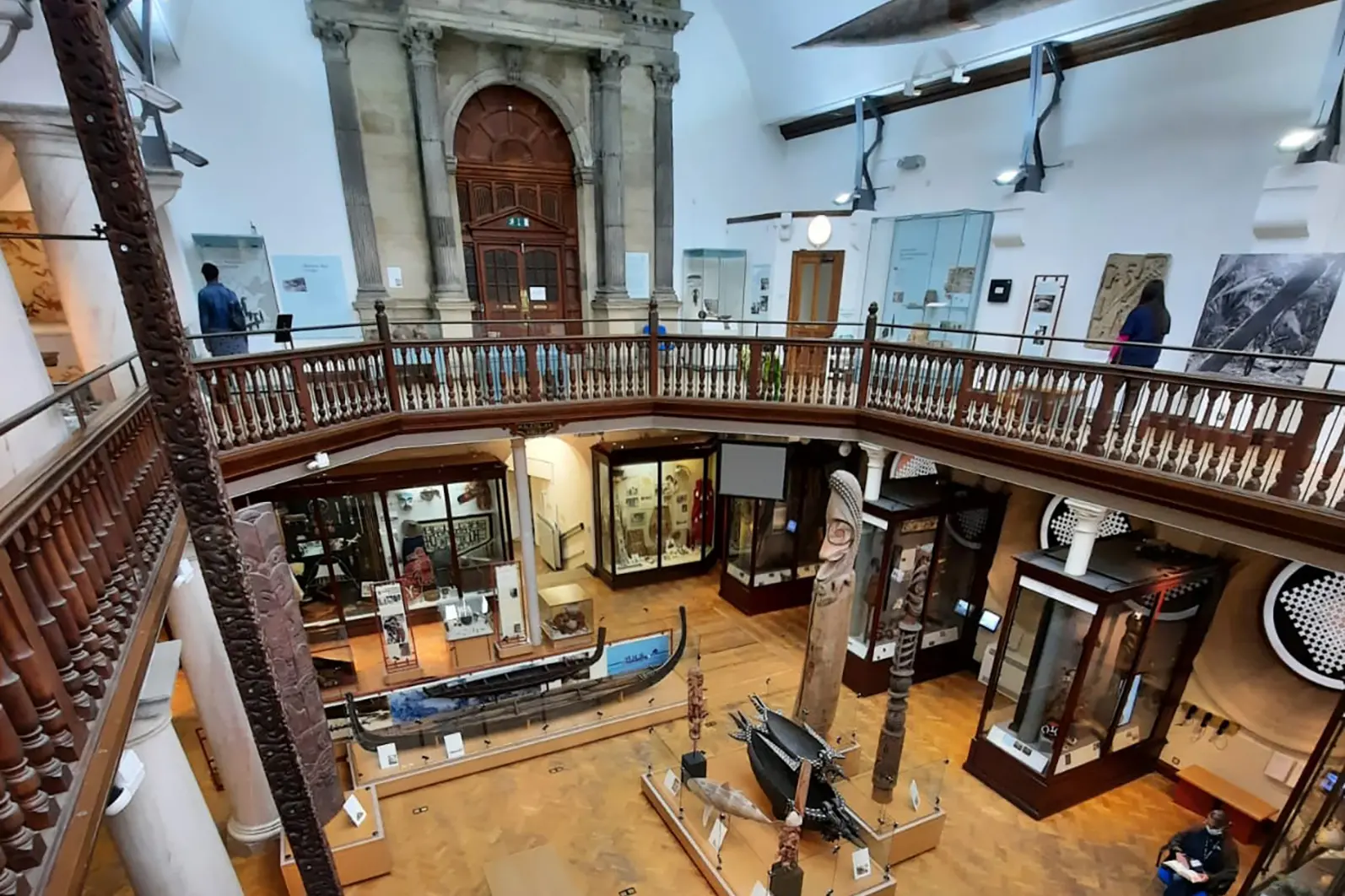
When I visited the museum last week, the lady at the front desk asked if it was my first visit and I replied that it was 69 years ago. In the Pacific gallery, I read an account of the links between Cambridge and Otago universities, centred on the careers of Peter Gathercole and Jack Golson.
Peter came to Dunedin in 1958 to succeed Henry Skinner at the Otago Museum. Jack went to Auckland University and both introduced archaeology courses for the first time in New Zealand. Peter built up the Department of Anthropology over the decade he was here, until the authorities agreed to create the foundation chair in 1968. In addition to his administrative duties, he undertook various fieldwork initiatives that included excavations on Pitcairn Island. To everyone’s surprise, rather than apply for the new professorship, he resigned and returned, without employment, to England. He told me that he was resolved never to stay in the same job for more than a decade.
Fortunately, he was appointed the director of the University Museum, and to this day, the Pacific collections were very much his own initiative. There, he researched the contexts of more than 250 artefacts that Cook collected during his three voyages, the largest assemblage known. For example, he wrote on the putatara shell trumpet that Johann Forster acquired at Queen Charlotte Sound on the June 4, 1773.
After leaving Otago, Peter was in his element working on the Cook collections.