

PHOTO
Between Dreams: Resistance and Representation in Asian Aotearoa
Edited by Grace Gassin
Te Papa Press
Reviewed by Jessie Neilson
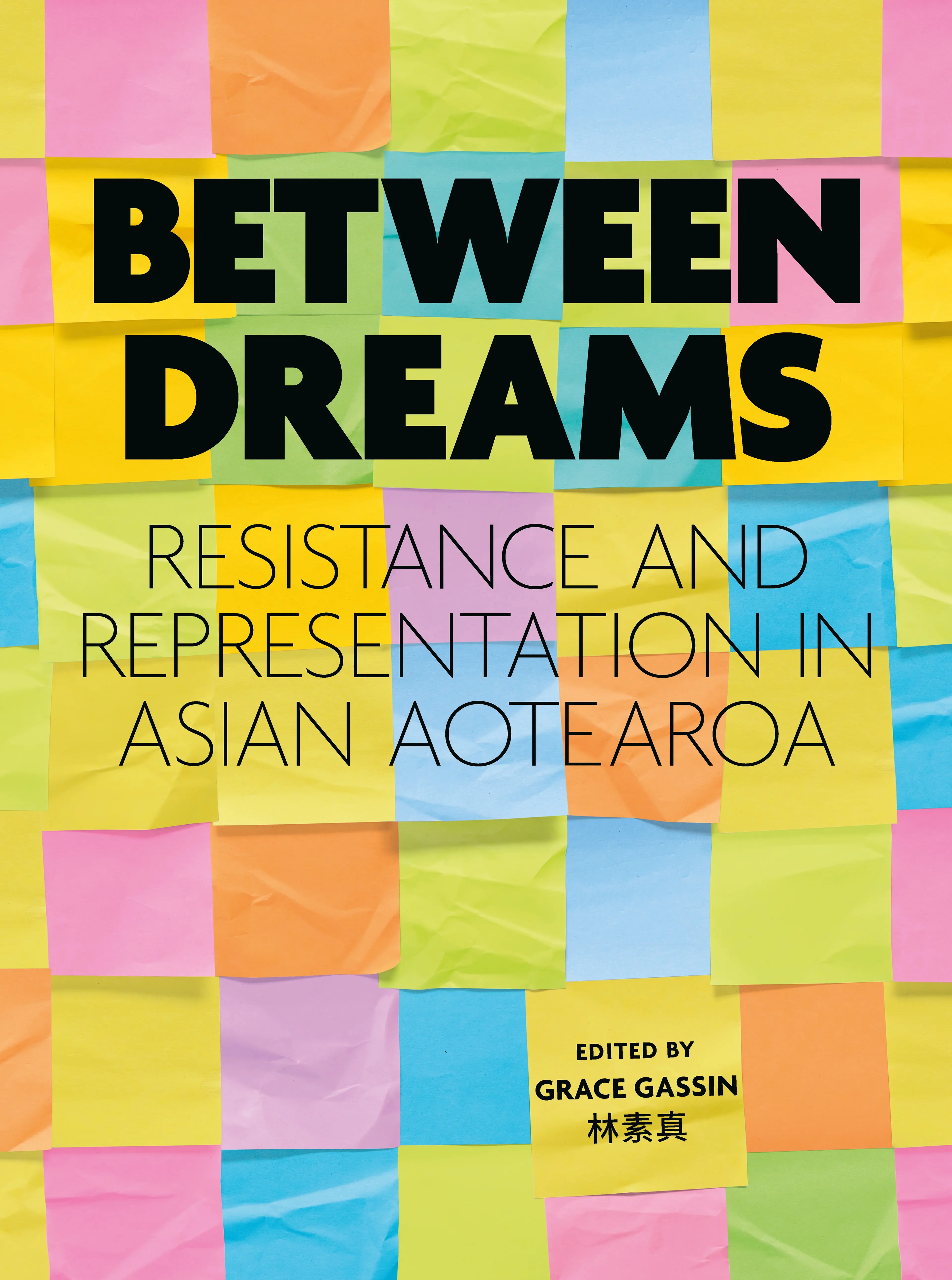
The vibrant, attention-grabbing cover of Between Dreams shows a multitude of layered sticky notes, each blank but with unlimited potential.
This wall of notes encompassing the physical book is but one example of a Lennon Wall, a form of protest enthusiastically taken up by Hong Kong’s democratic supporters from 2014.
Rather than turn to violence or anger, this collective form of protest announces solidarity, freedom of speech, and resistance.
Between Dreams showcases many such instances of Asian communities taking a stand against the legacies of colonialism and oppression here and abroad.
We also hear of individuals’ integration throughout the years into life and communities in Aotearoa.
The structure is eight broad thematic chapters with a range of voices, opinions and experiences.
Copious photographs and other visual evidence compliment the stories.
There are continual threads running through this book and multiple places in which accounts could be slotted.
Likewise, a reader could pick up the book at any chapter.
One segment recounts a “Taiwanese and Māori whakapapa” of sorts, developed through Māori and indigenous Taiwanese individuals who have immersed themselves in each other’s lives and cultures.
Through this personal connection they have broadened New Zealand’s alliances with the Ainu and their creative practices, welcoming Māori visitors.
In turn, Māori have welcomed these indigenous people in an uplifting reciprocity.
Some stories are by descendants of early immigrants.
The Pua brothers talk of their Chinese and Samoan heritage. Their great-grandfather was the first Chinese police officer in Samoa.
They outline their forebears’ activism during the Dawn Raids.
Likewise, New Zealanders of Girmitiya descent write of Indians brought to Fiji as indentured labourers, and how descendants might reapproach this history.
Many of the stories are less uplifting, where trauma, loss and discrimination have left a deep mark.
In “War, Memory and Identity”, a detailed piece of embroidery by a Vietnamese asylum seeker illustrates the journey of boat people and accompanying brutality and incarceration.
Some sections are more academic, including multiple emotive writings speaking out against the prominence of the right-wing Hindutva movement and its “insidious evangelism” in New Zealand’s Diwali celebrations.
We are urged to move past ignorance, assess Hindu and Muslim race relations through personal education, and not be complacent in offensive and damaging representation.
However, in some cases there is a silver lining.
“Old Stories, New Perspectives” recounts the loss of nearly 500 Chinese miners’ remains being repatriated during the SS Ventnor’s 1902 sinking in the Hokianga.
This included Dunedin’s own Mr Choie Sew Hoy.
Into the void stepped local iwi, taking on the ongoing role of caring for and honouring their spirits.
From severance can come previously unimagined relationships, alliances and new ways of belonging.
Editor Grace Gassin has Asian heritage and she is Curator Asian New Zealand Histories at Te Papa.
She describes this anthology as perhaps a “kind of experimental history workshop” or a “radical memory sampler”.
The hesitancy in definition is deliberate: it points to documentation of stories such as these as an ongoing project, the “between dreams” of the title.
Thus, this book is necessarily partial, paving the way for future stories and curios from Asian diasporas far flung and diverse.
Jessie Neilson is a University of Otago library assistant