

PHOTO
Solace House
By Will Maclean
Atlantic
Reviewed by Jessie Neilson
It is the university break of June 1993 and for first year English Literature student Alex, a long and penniless stretch is ahead.
His fellow hostel dwellers at The Ridge are off on exotic adventures.
Orphaned, he is all alone.
With students fleeing, so too is the colour and texture of life.
Like his acquaintances, he has been trying out different personas, as well as tall stories “tied up in the flypaper of [his] ludicrous fiction”.
He is surrounded now merely by dated portraits of past benefactors, “grotesque and monstrous, grimacing out from murky silence”.
Yet one fellow student remains, an almost albino boy, with waxy paleness, larval.
This pale, strange boy and Alex’s adventures will be intimately tied.
Alex needs a reset and a change of scene, before the hall with its “bile-yellow” linoleum floors welcomes a new set of characters.
It is therefore a blessing when the student welfare office offers him the final place on a weeks-long cleaning project at nearby derelict Marshlands, a former hospital.
The team will focus on one building only: Solace House.
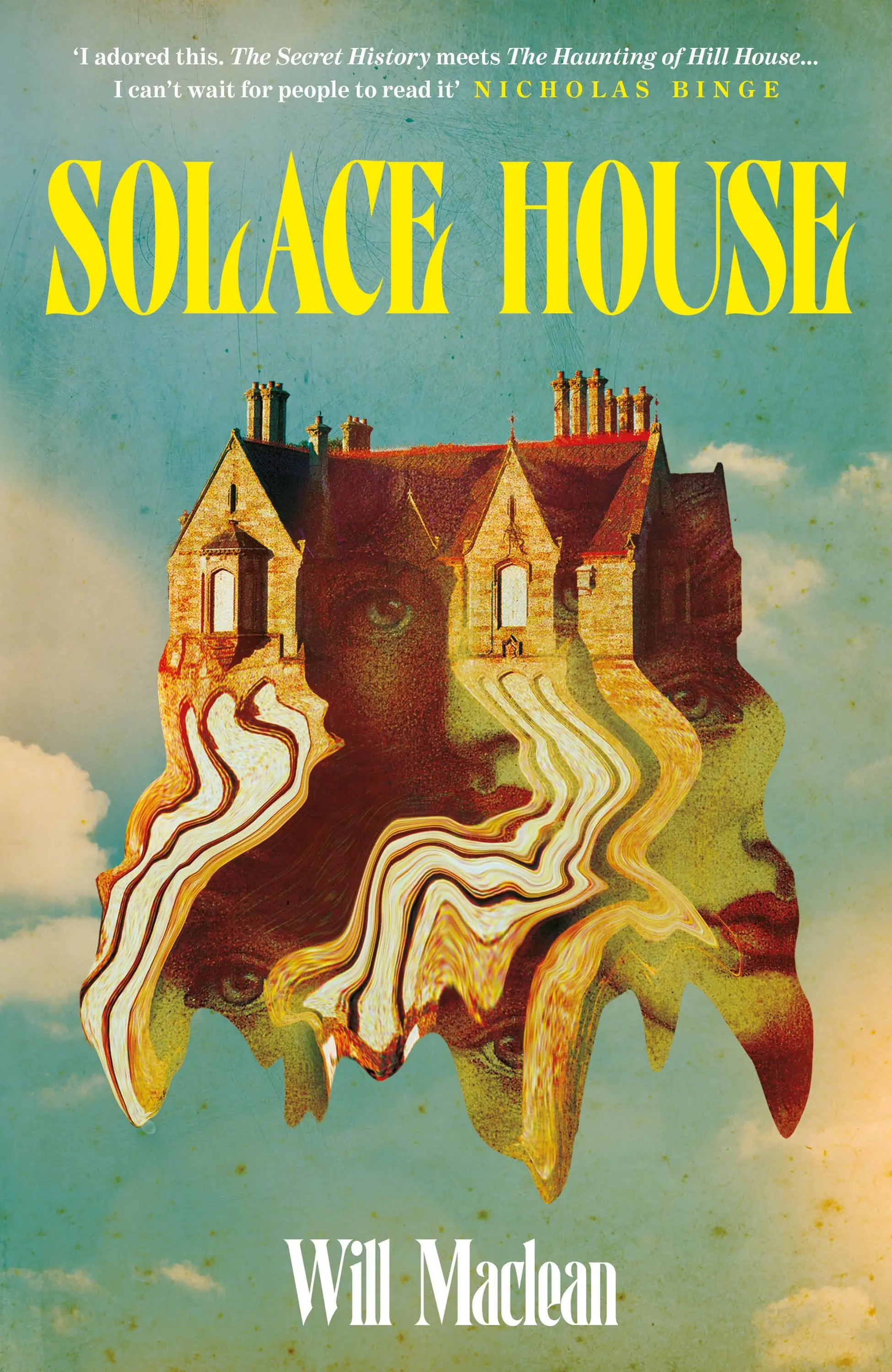
Its reclusive owner, Flayne, is dead, and like a remnant from a Victorian Gothic horror novel, the house looms out of the empty landscape.
Alex’s world has narrowed to this microcosm where outside the boarded-up windows is only “thrilling stillness”, and inside, a motley crew of 7 or 8 students decked out in boiler suits.
These personalities will interact exclusively, forming an assembly line as they deal with a lifetime of hoardings in this stone mansion of endless rooms.
Fittingly, the novel soon leaves its realist bounds and enters an increasingly fantastical realm.
Alex himself is a dubious protagonist, as he hints at the science fiction element within his own life.
We are presented with the further unknown within the characters of his companions, where trust and integrity lie at the heart of their venture, yet are elusive.
Flayne too is a mystery to be solved.
He, like his mansion, defies definition.
It is ironic that Alex has been telling tall stories, for his new reality will make these seem very small.
Much of the following weeks becomes an “insane project”, and while terrifying for the participants, the reader is along on a thrilling, mind-bending ride.
Antiquated quatrains of cryptic verse bespeckle the chapters, consuming our characters as they try to untangle them.
One such phrase stands out starkly, the claim that humans are “but haunted meat”.
Caught in this deadly, supremely clever spider web of a plot, the group of students may feel just so.
British script writer and novelist Will Maclean can turn his hand at many genres and audiences.
He loves his ghost stories and knows exactly how to sprinkle them with the right amounts of fright, chaos and suspense.
This is a terrific, immersive novel from a highly talented and imaginative writer, who forces both the characters and readers, their sanity and its precariousness, to come face to face.
Jessie Neilson is a University of Otago library assistant