
PHOTO
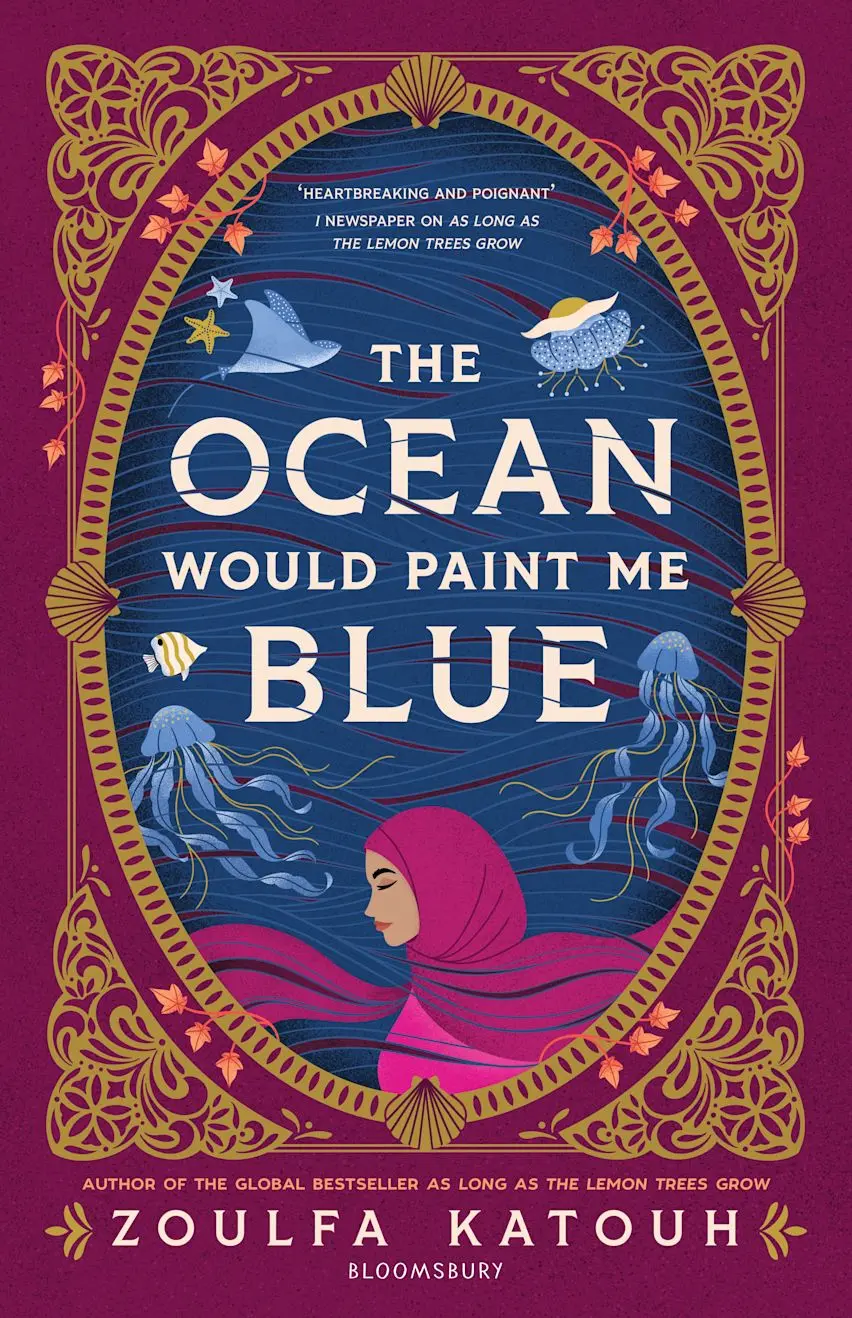
The Ocean Would Paint Me Blue
By Zoulfa Katouh
Bloomsbury
Reviewed by Peter Stupples
Zoulfa Katouh has written a coming-of-age novel set in New York.
It is, however, much more than that.
It is about emigration, the strength of religious faith, family ties, racism, intolerance, jealousy, bravery, the power of art, as well as love, of a particular kind.
In keeping with a current fashion in American fiction, it is also spliced with magic.
The story is told by Jihad, the 17-year-old American born daughter of Syrian immigrants hailing from the ancient Crusader fortress island of Arwad.
Her mother, Zaina, was an artist.
Her father, Baba, a civil engineer.
If Syria was hell, America is little better.
Zaina, after remission from cancer, is shot dead while waiting for a bus home after visiting the hospital.
She was wearing a hijab. It was a hate crime.
Jihad is devastated and tragically loses her ability to see colour.
Jihad, a word appropriately meaning “to strive”, is herself a talented artist, aspiring to enter Opus, a fictitious prestigious art school in San Francisco.
To gain entry she needs good grades, not guaranteed from the state school she attends in Queens.
Her father sinks his savings to send her to a private school, Braxton Academy, for her final senior high school year.
She finds herself a complete outsider, the only Muslim, wearing a hijab and eating halal.
Her very name, Jihad, is understood by her classmates as referring to “violent defenders of Islam” against “the hypocrites”.
For Americans, the shadow of 9/11 hangs over the word.
Her father’s generosity and mother’s wish to better her chances in America do not take into account the particular hell she has to endure — “ISIS b….”, on an almost daily basis.
To make matters worse, she is “buddied” with Jamie Murphy, the hottest guy on campus.
To the fury of the girls in her class, Jihad and Jamie get along well, but not in a way they understand.
Dating cannot be part of the deal, a fact they cannot comprehend or even believe, so jealousy is added to the toxic mix.
Jihad takes shelter from both the threatened and actual violence by pursuing her artwork centred on the life of her mother, with magical consequences.
The chapters are not numbered but given the titles of colours, starting with grey but ending with sunflower yellow.
At her lowest ebb, the chapter is entitled vermillion red, the colour of blood.
Katouh writes well.
The plot is, mercifully, not overly complex, but has unexpected twists that keeps the reader’s attention.
It spins along at pace.
The novel is a strong defence of the Muslim point of view.
Peter Stupples, now living in Wellington, used to teach at the University of Otago