

PHOTO
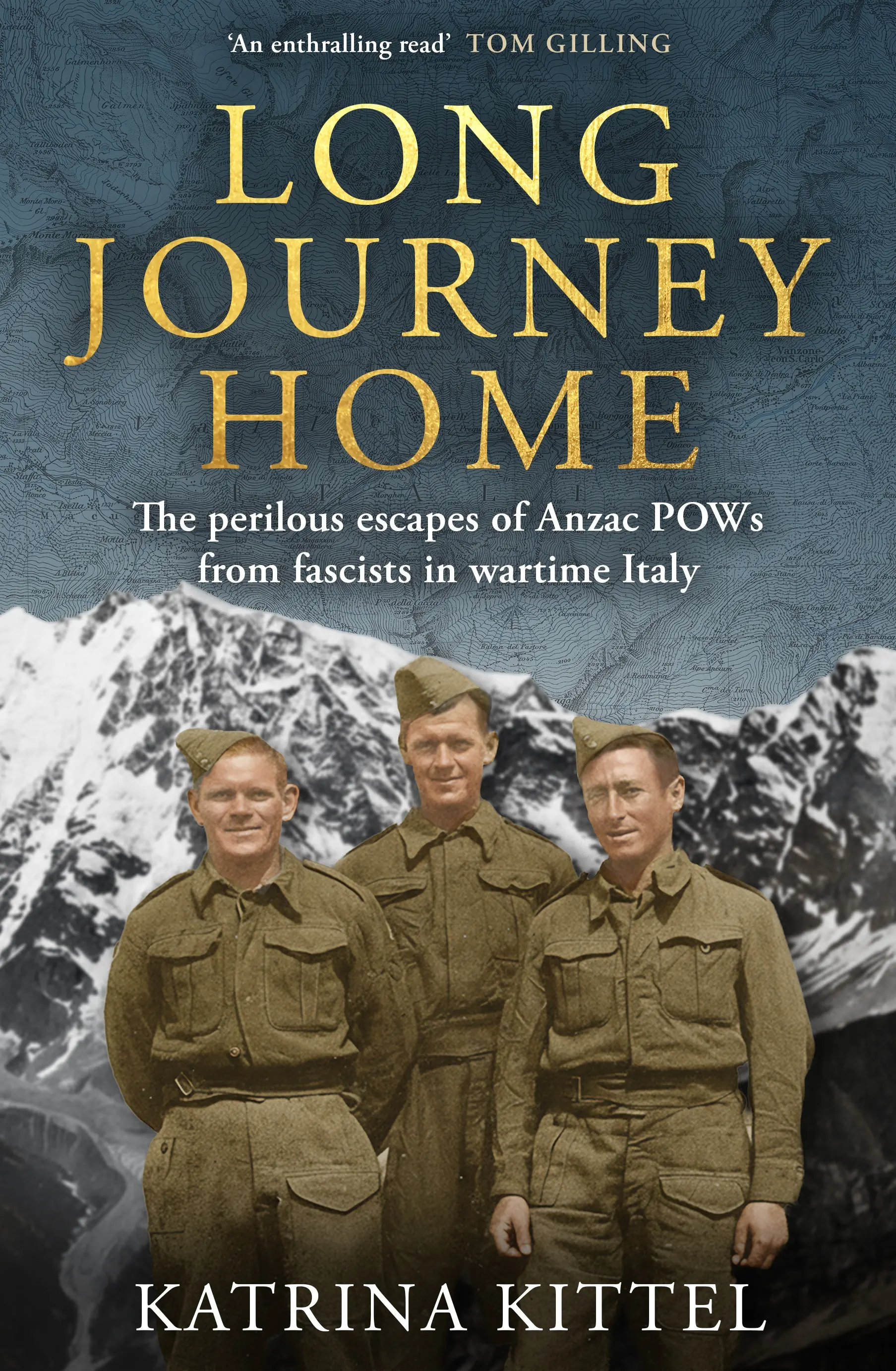
Long Journey Home
By Katrina Kittel
Allen & Unwin
Reviewed by Jim Sullivan
Prisoner of war (POW) stories once tended to focus on POWs in Germany, but in recent times the equally horrendous experiences of those held in Italian camps have been written of.
Australian historian Katrina Kittel, prompted by her own father’s incarceration, has produced a comprehensive and often moving compilation of the stories of prisoners captured in North Africa.
Unlike some recent Australian-produced histories with an “Anzacs at war” theme, Long Journey Home provides a balanced treatment of the experiences of both Australian and New Zealand soldiers.
Early attempts to push Rommel out of North Africa did not go well for the Allies and by the time of the Italian Armistice in September 1943, about 80,000 Allied prisoners were being held in more than 70 camps in northern Italy.
Some stayed put and ended up in Germany but many sought freedom, some heading south to meet up with advancing Allied units and others seeking to reach neutral Switzerland — on paper, a relatively short trek but, as Long Journey Home testifies, a journey filled with tragedy, bravery and for hundreds, a triumphant conclusion.
Kittel’s interviews with dozens of her father’s fellow prisoners are interwoven with official records and the extensive information gathered by indefatigable researcher into the POW experience, 100-year-old Bill Rudd, who told her the effects of being a prisoner never ended for the men who were “in the bag”.

Thus, her book is rich with personal stories which never found their way into official records, many of them recording the outstanding bravery shown by Italian civilians who sheltered the escapees, which often led to fatal consequences for peasant families determined to oppose the fascist regime under which they had suffered.
Amidst the “on the run” narratives is an unexpected chapter, Effectively Harassed the Enemy, which deals with those (many of them New Zealanders) who turned to “resistance” activities; destroying bridges and railways and generally causing mayhem throughout German-held territory.
Like all POWs, the men on the run put food as the strongest of their needs, followed closely by the importance of mateship and the chances of survival.
Survival was made more difficult by the confusion which engulfed Italy after the Armistice.
Fascists, royalists, some Italian police and even locals keen to win the ransom money of 4000 lira (about $NZ1400 today) offered by the Germans, threatened the wandering prisoners who never knew who to trust.
The work of the reception areas in Switzerland is given full coverage and in-keeping with the book’s focus on personal experience, offers much from diaries and memoirs.
To expand on these experiences in a review would perhaps diminish the reader’s inevitable emotional involvement when actually absorbing the detailed, mile by mile, crisis by crisis, sometimes romantic narrative Kittel presents.
But when you read of prisoners (including New Zealanders whose heartbreaking ends are described) and Italian civilians being executed by German troops and marvel at the ingenuity displayed by locals in hiding these men from the far side of the earth to avoid a similar fate, you can readily understand the bonds, still strong, which link many Anzac families to families and memorials throughout northern Italy.
These bonds are explored as the author follows up on the post-war experiences of the men who made the long journey home, experiences which confirm that post-traumatic stress is no new thing.
POW Peter Monteath wrote, “their time in captivity alone does not define who they are. But it shaped them and it shaped those around them”.
“To know what they have been through helps us to understand them ourselves.”
The great pity is that books like Long Journey Home were not more common when the prisoners of war were still with us.
Jim Sullivan is a Patearoa writer