
PHOTO
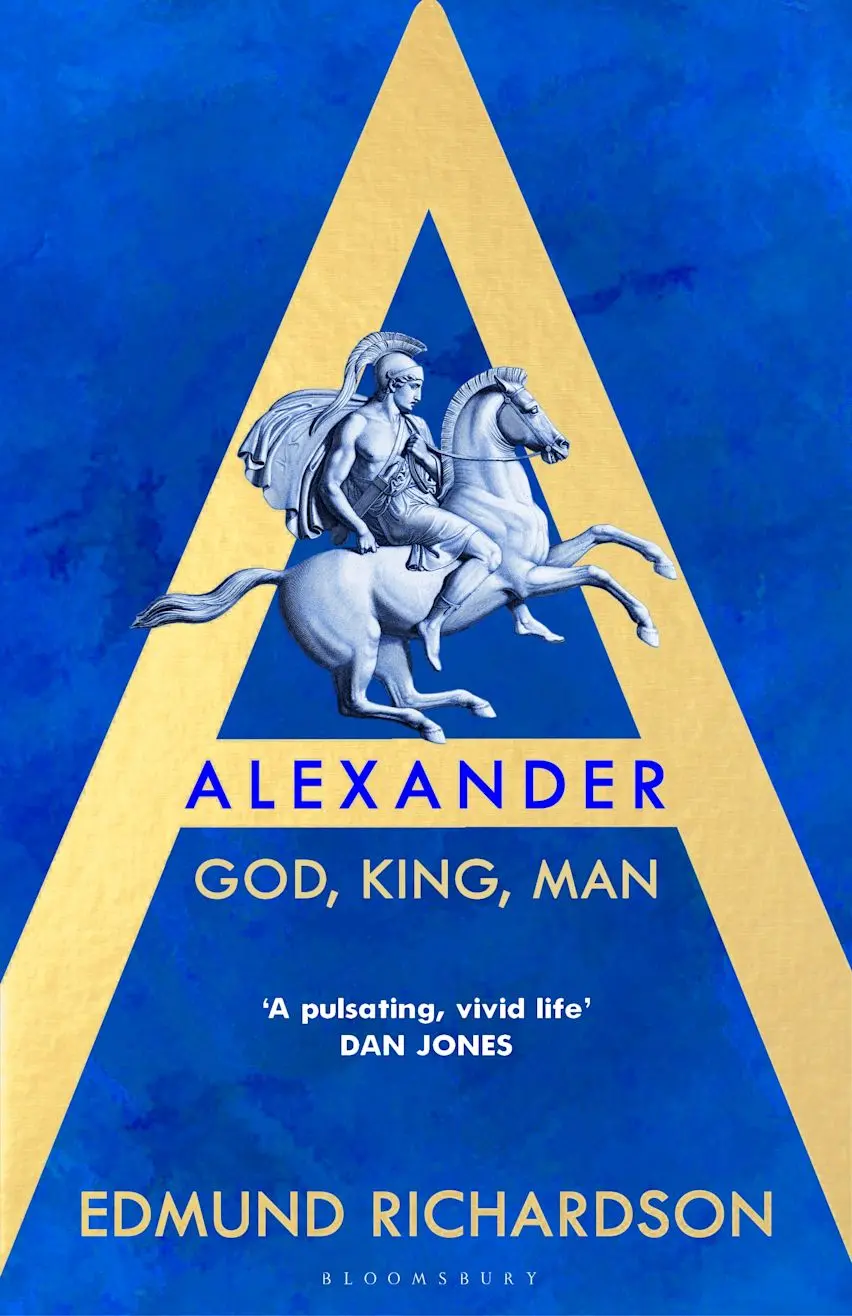
Alexander: God, King, Man
By Edmund Richardson
Bloomsbury
Reviewed by Peter Stupples
Edmund Richardson’s account of the life of Alexander the Great is clearly aimed at the general reader.
At times, it seems like a script for Game of Thrones.
On the other hand, he inserts into the narrative evidence from recent archeological discoveries and research findings that serve to confirm aspects of the basic ancient texts that all writers on the topic have had to rely upon for decades.
There is sound scholarship here, as well as a relish for gruesome drama.
Though born the son of a king, that was no protection from the bitter disputes among the players for power in Macedonia, Alexander’s homeland in northern Greece.
The 19-year-old witnessed his father’s murder before his eyes, before being immediately immersed in a power play for leadership of the Macedonian armed forces that his ruthless father had drilled to perfection.
Young Alexander then led the local army against the other Greek city-states, which were soon overwhelmed.
Alexander’s declared mission was to defeat, finally, the Achaemenid Persian Empire against which the Greek city-states had so long fought for control of Asia Minor.
The now more-or-less united Greeks were successful.
Alexander’s forces soon conquered the major cities of the Persian empire before turning their attention first to Egypt, where Alexander had himself made “pharaoh”, then east into Bactria, present Afghanistan, moving on south into northwest India, before intending to return home to Greece.
Alexander was a brilliant commander.
He outsmarted any opposition.
He was ruthless and barbaric, despite being tutored as a youth by Aristotle.
He died at the age of 32, covered in battle scars.
However, Richardson finds Alexander seriously wanting in political ideas.
When his army moved on from battle to battle, it left behind vacuums that were later filled by warring factions dividing up his so-called “empire”.
“Garrisons were isolated and vulnerable . . . No bureaucrats had been dispatched from Babylon . . . His subjects had nothing in common, and nothing to bind them together apart from Alexander himself. And, from Athens to [India], it was not love for Alexander which united them, but fear.”
Alexander was moody, temperamental, a drunkard and possibly suffering from post-traumatic stress disorder as a result of his early experiences at the Macedonian court.
When you read Richardson’s account, it would be a wonder if all Euro-Asians were not suffering from PTSD.
War was endemic, brutal and took no prisoners.
Peter Stupples, now living in Wellington, used to teach at the University of Otago