
PHOTO
Every winter, the same questions return. Will this be a good snow season? When will the next storm arrive? Will there be enough snow for the school holidays?
Snowfall has always captured our attention. It fuels weather forecasts, dominates conversations around Queenstown and Wānaka and determines whether skiers and snowboarders rush to the mountains or postpone their plans. Yet while we often focus on the next snowfall, we rarely stop to ask a more important question: what role do our mountains play in the future of Aotearoa New Zealand, and what are we doing to ensure they continue to fulfil that role?
The Southern Alps are far more than a winter playground. They are the source of New Zealand's major rivers, underpin hydroelectric power generation and freshwater resources and are home to internationally significant mountain environments. They also support one of New Zealand's most recognisable tourism industries. Images of snow-covered peaks and ski fields have become inseparable from the identity of Queenstown and the wider Southern Lakes region, attracting visitors from around the world and contributing substantially to regional economies.
But the future of skiing is increasingly being questioned as the climate warms.
Warmer winters will inevitably affect seasonal snow. Higher snowlines, more frequent rain-on-snow events and an increase in winter snowmelt will all place pressure on ski areas, particularly those at lower elevations. These are genuine challenges that deserve careful attention.
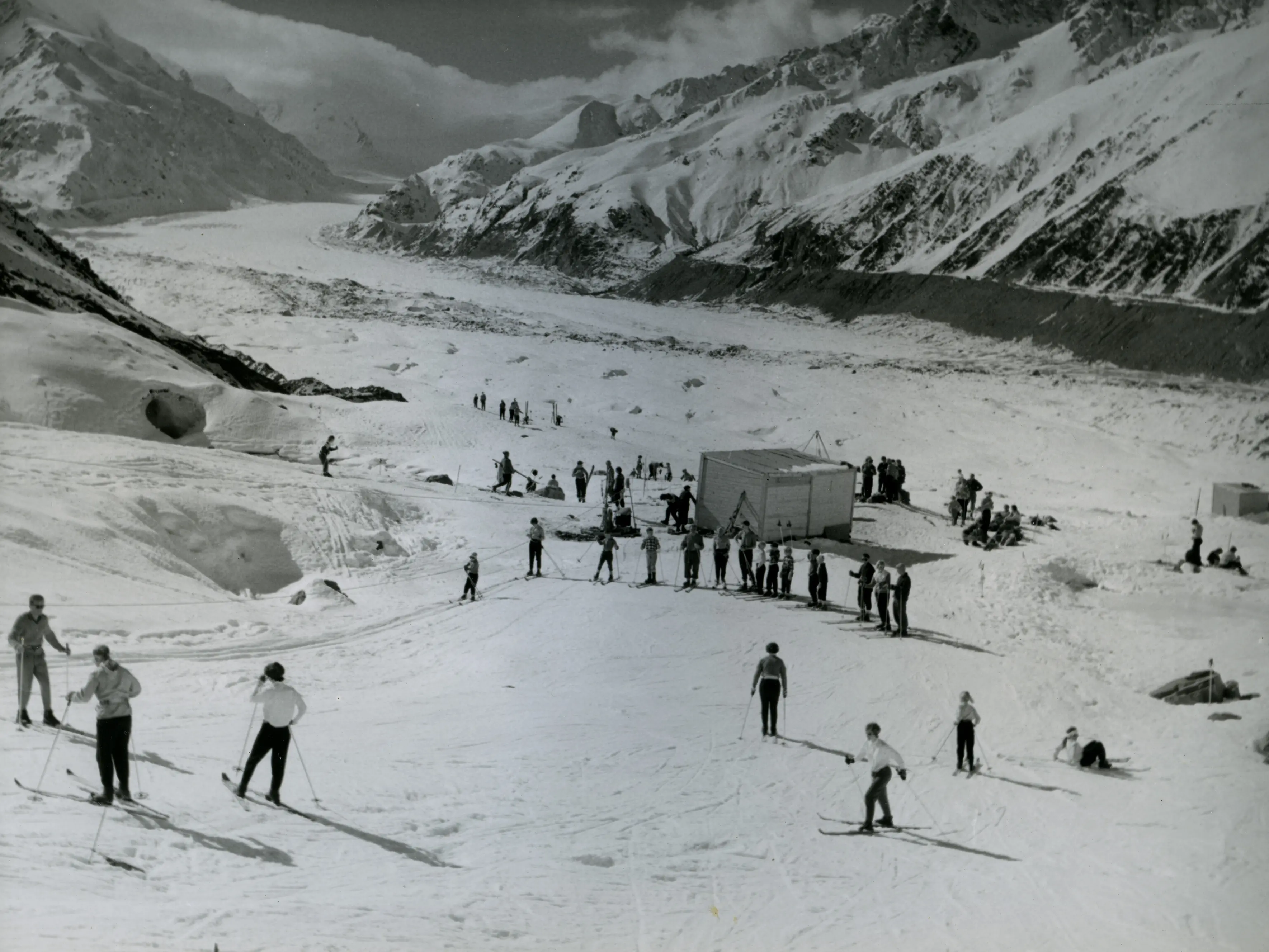
However, history shows that the ski industry has never stood still, evolving through several distinct phases of development. Organised recreational skiing began on Mt Ruapehu in 1913 with the formation of the country's first ski club, while the winter recreation potential of the Mt Cook region was beginning to be recognised. The Mt Cook region experienced a ski boom during the 1930s, establishing Ball Glacier as one of New Zealand's premier winter destinations. Coronet Peak opened in 1947 as New Zealand's first commercial ski field, followed by decades in which ski clubs played a major role in expanding access to skiing and developing mountain recreation across the South Island, including the Castle Rock ski field on the Rock and Pillar Range. The development of Mt Hutt, Treble Cone and Cardrona during the 1970s, followed by The Remarkables in 1985, expanded commercial skiing and established the South Island as the country's principal destination for alpine recreation.
History also reminds us that not every ski field survives. Ball Glacier illustrates how the fortunes of ski areas can change over time. Its eventual decline reflected a combination of glacier retreat, the loss of Ball Lodge and repeated damage to the access road. The Rock and Pillar Range tells a different, but equally important, story of changing snow reliability and evolving recreational demand. The lesson is not that ski areas inevitably disappear, but that the long-term success of ski areas has always depended on their ability to adapt to changing environmental, technological and economic conditions.
Climate change undoubtedly raises the stakes, but it does not necessarily signal the end of skiing in New Zealand.
Research into seasonal snow suggests a more nuanced picture than is often portrayed. Snow modelling indicates that snowlines will continue to rise over coming decades, increasing the importance of elevation and terrain. Yet long-term observations show that changes are not always straightforward. At The Remarkables ski area, for example, a continuous snow record spanning more than four decades shows no long-term decline in seasonal snowfall. What remains uncertain is how much more winter precipitation is falling as rain rather than snow and how much faster the snowpack is melting between storms as temperatures rise. These processes may ultimately prove more important than snowfall totals in determining the quality and persistence of the seasonal snowpack.
This distinction matters because it changes how we think about adaptation.
Importantly, adaptation options already exist. Modern snowmaking technology is far more efficient than it was even two decades ago, allowing resorts to make better use of marginal weather windows. Equally important is where future ski infrastructure is developed. While higher elevations will become increasingly important, not all terrain is equally resilient. Aspect, shading and wind redistribution strongly influence where snow accumulates and how long it persists. Improved snow modelling and forecasting can help identify terrain that is naturally more resilient, guiding smarter investment and long-term planning for New Zealand's ski industry.
This is not simply about preserving a winter sport. It is about sustaining a major tourism industry, supporting regional economies and ensuring our mountain environments continue to deliver social and economic benefits in a changing climate.
For almost four decades, New Zealand’s ski industry has seen little major development, even as the climate and mountain environment in which it operates have continued to change. Every successful phase of our skiing history has been driven by innovation, investment and adaptation. History suggests it is time for the next major phase in the evolution of New Zealand skiing.
The question is not whether the climate is changing — it is. The real question is whether we are prepared to respond. We can choose to invest strategically in the next phase of New Zealand's ski industry through modern infrastructure, improved snowmaking and the careful development of more snow-secure ski terrain, or we can allow our ski industry to slowly follow the path of Ball Glacier and the Rock and Pillar Range.
The snow will continue to fall. Whether future generations continue to enjoy skiing in Aotearoa New Zealand will depend on the choices we make today.
Prof Nicolas Cullen is a climate scientist in the School of Geography Te Iho Whenua, University of Otago Ōtākou Whakaihu Waka and member of He Kaupapa Hononga: Otago's Climate Change Research Network.