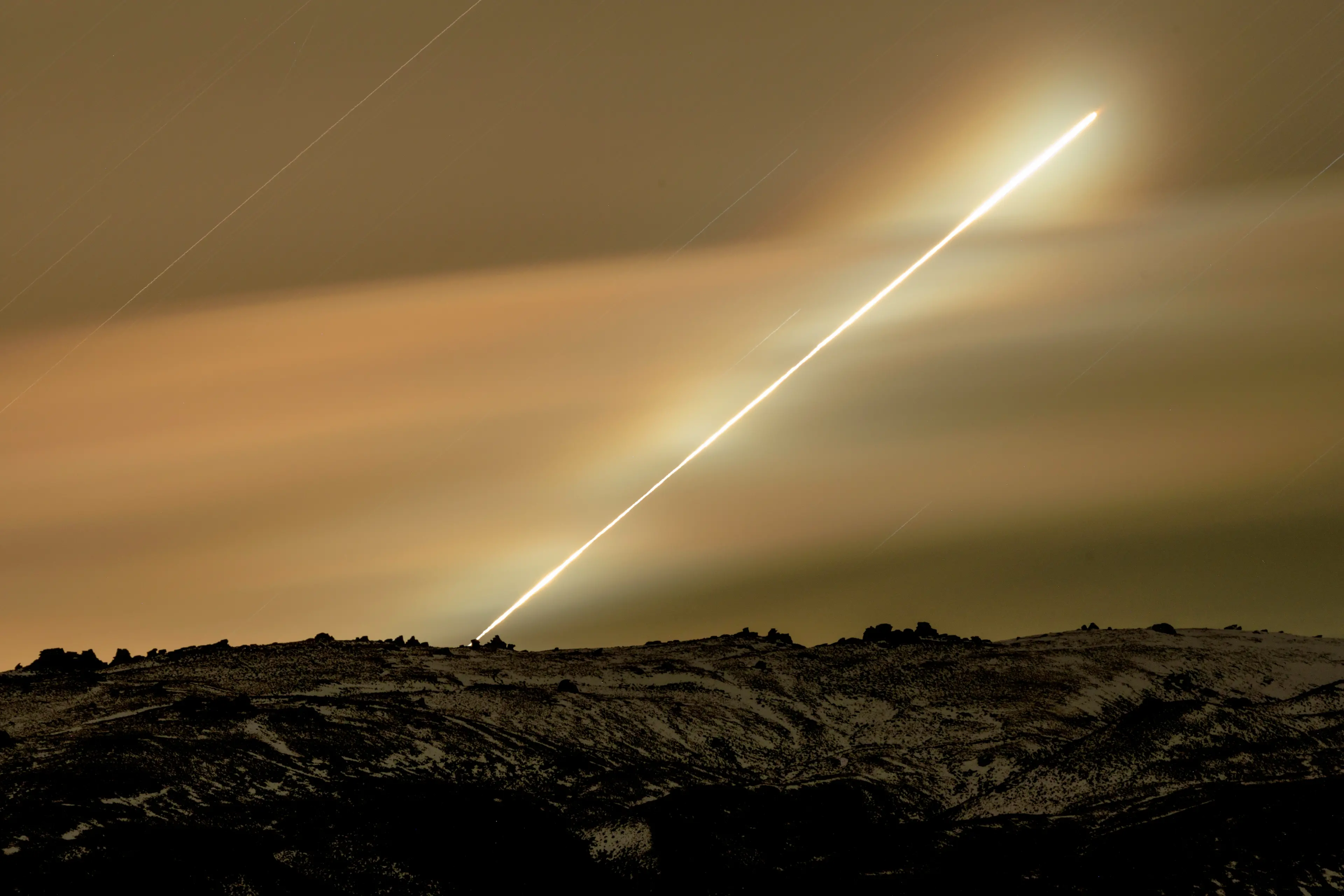
Venus is impossible to miss at present. At sunset it stands almost 40 degrees above the north-western horizon, shining like a tiny lamp in the deepening twilight. The planet is moving through Virgo and, over the next six or seven weeks, it will become even brighter. Venus is already by far the brightest object in the evening sky after the Moon. That brightness comes partly from its nearness to Earth, and partly from the thick clouds that completely cover the planet and reflect a large proportion of the sunlight falling upon them. Its brightness also changes because Venus has phases, just as the Moon does. At present, a small telescope shows the planet looking roughly half illuminated. During the coming weeks, Venus will move closer to Earth, so its apparent disc will grow larger. However, at the same time the illuminated portion we see will shrink towards a crescent. Greatest brightness comes when those two effects reach their best compromise: Venus is close enough to look large, but still shows enough sunlit cloud to send a remarkable amount of light our way. How remarkable? Under a very dark, clear, moonless sky, Venus can be bright enough to cast a faint shadow. This is not the bold shadow made by the Moon, but something much more delicate. A white sheet of paper or a pale wall offers the best chance of seeing it, especially once your eyes are fully accustomed to darkness. This week’s photograph shows Venus setting behind the Rock and Pillar Range. During the long exposure, Earth’s rotation stretched the stars into fine trails. Venus produced the blazing diagonal line. Venus itself did not cause the changes along that line. Thin cloud, haze and the growing thickness of atmosphere near the horizon repeatedly dimmed and scattered its light. Where the air was clearer, the trail narrowed and brightened. Where cloud intervened, the light spread into a broad glowing halo. A single photograph has therefore recorded two very different things: the steady motion of a planet across the sky, and the restless movement of our own atmosphere in front of it.