
PHOTO
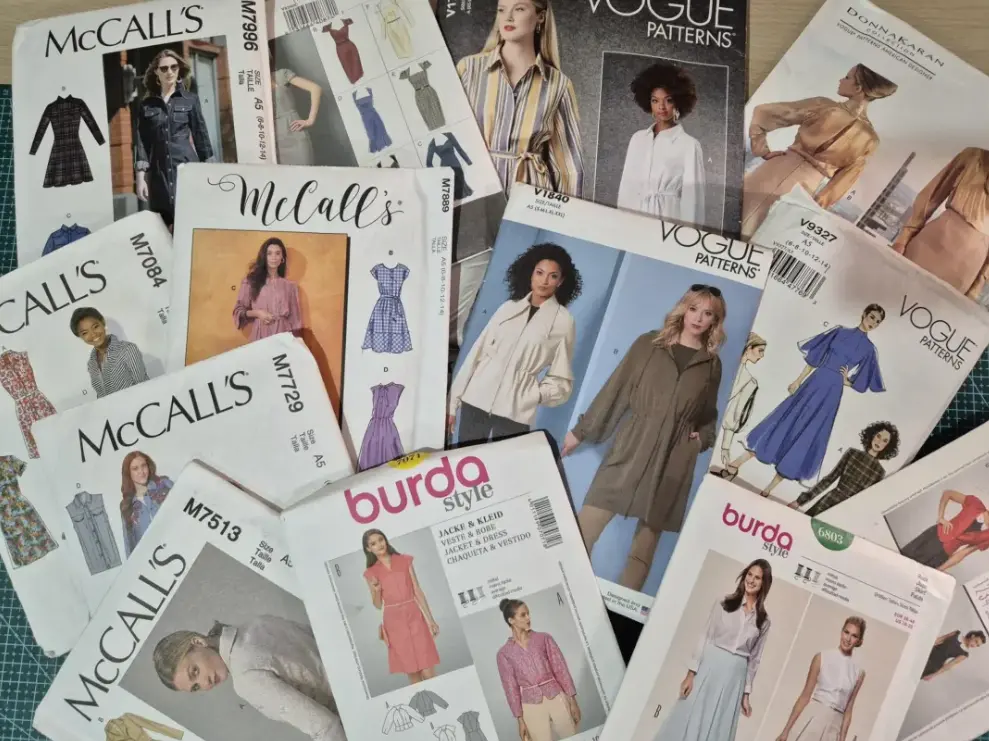
For generations, sewers discovered their craft by leafing through catalogues, unfolding tissue sheets and choosing patterns from drawers of numbered envelopes. That ritual is under threat.
For New Zealand's sewing community, the news landed like a dropped pin: paper patterns from the "big four" brands may soon vanish from local shelves.
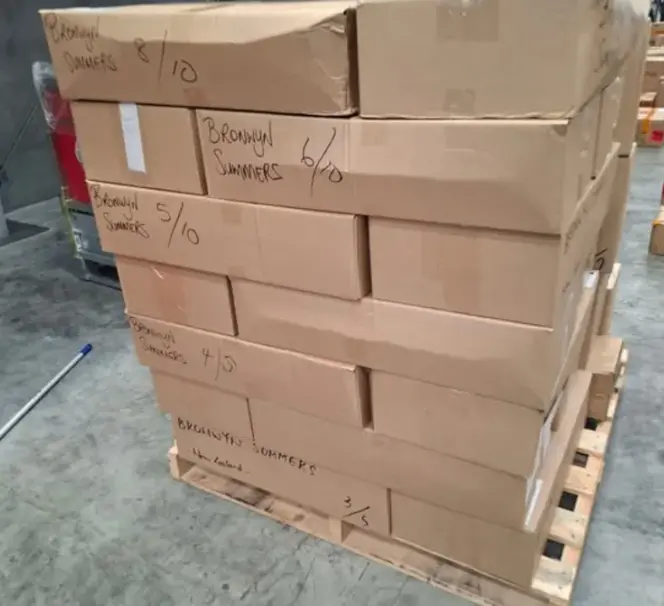
Online shop Pattern Postie owner Bronwyn Summers, based in Whangārei, says she has bought a year or two's worth of stock after learning the Australian distributor would close and stop supplying the major brands - including Simplicity, New Look, Vogue, Butterick and McCall's - to Australia and New Zealand.
“It went nuts, especially when I posted the Facebook post about that there will be no more [paper patterns restocked]. The website just went insane,” Summers says.
The Australian warehouse’s remaining stock was reportedly sold to Spotlight before staff were made redundant, according to a News Corp outlet report.
Spotlight has been approached for comment.
Other retailers, like The Ribbon Rose in Penrose, have also seen a rush on major‑brand patterns.
“We are picking patterns every hour of the day for customers getting them while they can - while we still have thousands of patterns in stock, this number is reducing very quickly,” The Ribbon Rose told RNZ in an email.
Summers, who has run her business for 14 years, is struggling with the idea of parting with the last of each pattern.
“I've got a bit of a collection of personal patterns that I'm really fond of, and I still find it really hard to believe that it's happened.
“It was really out of the blue… [The Australian supplier’s staff] were just such a lovely bunch of people. A lot of them had been there a really long time and they were like a family.”
She worries too about sewing teachers and school textile classes that rely on bulk orders. “It is going to have a flow‑on effect.”
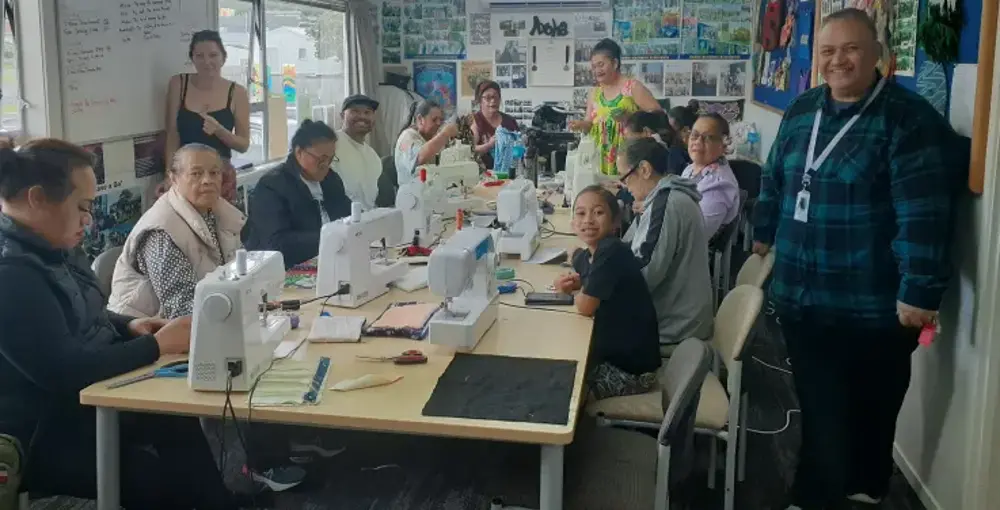
South Auckland community sewing teacher Heather Black - who taught herself sewing as a child out of necessity - worries people may now hold on to patterns rather than donate them, cutting off access for those who can’t afford new ones and a cheaper alternative to pricey occasion gowns.
“It’s going to be such a great loss and a lot of people don’t yet how big of a loss is going to be because it hasn’t really hit [yet].”
Black says printable and projector format patterns require a cost which may be out of reach for disadvantaged communities or those looking to make a start into what once was an accessible hobby passed down through the generations.

Why are they closing?
The closure stems from a wider restructure after former parent company Design Group in the United Kingdom sold its US division, DGA, to a turnover firm.
DGA cited trade tariffs and a “challenging operating landscape for several years, compounded by the loss of a major customer”, believed to be US craft chain Joann, which declared bankruptcy last year.
Although Simplicity - the paper pattern-making operation - was later sold to a private equity firm and announced a relaunch, its paper patterns are currently shipped only within the United States, according to its website.
Overseas customers are instead offered PDF and “projectable” formats.

What's happened to paper pattern-making locally?
New Zealand once had its own paper pattern‑making companies, but most wound down after the 1960s.
Dunedin based designer Tara Viggo, of Paper Theory Patterns, knows the struggle all too well.
Despite strong global and local demand, she abandoned paper patterns a few years ago due to rising printing and shipping costs - and stuck with printable and projector formats.
“It nearly bankrupted me and then my printers also realised around the same time how much producing the patterns was costing them. The paper prices had just gone so high that they had become bankrupt too,” Viggo says.
“I've got quite a big size range. So fitting all of that paper into an envelope for many sizes was expensive. Financially, I probably needed to cut out my bigger sizes if I wanted to cut a profit, but I didn't want to do that.”
Printable PDF patterns can run to 50 A4 pages (which still need to be pasted together and cut out). While projector setups require some tech know‑how, Viggo says their use is picking up steam and they can be cost‑effective once established.

What comes next?
Waipukurau’s Curtis Fabrics wonders whether stores might eventually print patterns themselves or pivot away from dressmaking.
“Over the past five years, we’ve noticed a decline in everyday garment sewing, with most customers now making for special occasions or costumes,” co-owner Andrea Collier said in an email to RNZ.
“It really does feel like the end of an era - flipping through the catalogue, unfolding the tissue, the rustle of the paper (and the cat inevitably getting involved). There was something reassuring about knowing the instructions were well tested and the finished result would match the picture on the front.”
Some, like Auckland sewer Christine, see an opportunity for local designers to grow and for people to learn to draft their own patterns.
And she hopes paper patterns will still surface in thrift shops, swaps and second‑hand sales.
