


 Anzac biscuits
Of course there has to be a recipe for a traditional Anzac biscuit, made special by its mix of golden syrup or treacle and rolled oats. This one comes from a classic itself: The Australian Woman’s Weekly.
Prep + cook 35min
Makes 35 biscuits
Ingredients
125g butter, chopped
2 Tbsp golden syrup or treacle
1 Tbsp water
½ tsp bicarbonate of soda (baking soda)
1 cup (230g) firmly packed light brown sugar
½ cup (45g) desiccated coconut

1 cup (150g) plain (all-purpose) flour
Method
Preheat oven to 160°C . Line baking trays with baking paper.
Stir butter, golden syrup and the water in large saucepan over low heat until smooth. Remove from heat; stir in bicarbonate of soda, then remaining ingredients.
Roll tablespoons of mixture into balls; place about 5 cm apart on trays, flatten slightly.
Bake about 20 minutes. The biscuits should still feel soft when they're cooked; they will firm up as they cool. Leave to cool on trays.
Store in an airtight container at room temperature for up to a week.
The book
The Classic Australian Cookbook (2nd edition) by Australian Geographic, with some recipes courtesy of The Australian Women's Weekly. Photography courtesy of The Australian Women's Weekly and by James Moffatt. Illustrations by Emily O’Neill.
 Anzac cake
The Anzac biscuit originated as a treat sent by wives and women’s groups to soldiers serving in the Australian and New Zealand Army Corps (ANZAC) in World War 1. Baked from ingredients that are resistant to spoiling, they kept well during the many weeks it took to transport them to the front. There are just about as many recipes for Anzac biscuits as there are households in Australia, but Helen Goh, now a London-based pastry chef, thought that the simple ingredients of butter, golden syrup, oats and coconut would translate deliciously into a cake recipe for her Australian newspaper column in the Good Weekend. "It worked a treat! I thought I would include it here for everyone – transporting the recipe from Australia to the other side of the world, in the spirit of the original Anzac biscuit itself."
Serves 8
Cake
100g rolled oats
200ml coconut milk (see Preparation tip)
170g plain flour
1¼ tsp baking powder
¼ tsp bicarbonate of soda
¾ tsp fine sea salt
120g unsalted butter, at room temperature, plus extra for greasing

100g golden syrup
2 large eggs, at room temperature
Topping
75g unsalted butter
95g soft light brown sugar
95g dried shredded coconut
60ml thickened or pure (double) cream
¼ tsp fine sea salt
To finish
icing sugar, for dusting
whipped cream, to serve

Preheat the oven to 175˚C fan-forced. Grease a 20cm x 10cm loaf tin (1kg capacity), then line with baking paper, leaving some overhang to lift the cake out once baked.
Place the oats in a food processor and pulse a few times. Transfer to a bowl with the coconut milk, stir to combine, then set aside to soak.
Sift the flour, baking powder, bicarbonate of soda and salt into a bowl and set aside.
Combine the butter, brown sugar and golden syrup in the bowl of a food processor fitted with the paddle attachment and mix on medium-high for about 2 minutes, until creamy. Add the eggs, one at a time, beating well after each addition. Scrape down the sides of the bowl, then add the soaked oats and liquid. Beat on low speed until just combined, then add the sifted dry ingredients. Mix for a few seconds, then fold them in by hand using a flexible spatula until combined and scrape the batter into the prepared loaf tin.
Bake for 45 to 50 minutes, or until a skewer inserted into the cake comes out clean.
Meanwhile, place all the topping ingredients in a saucepan and stir over low heat until the butter is melted. Spoon the topping mixture evenly over the surface of the cake when it comes out of the oven, then pop back into the oven for 15 minutes until golden brown.
Cool in the tin for 15 minutes before lifting the loaf out onto a wire rack to cool completely. Sift some icing sugar over and serve with whipped cream.
Preparation and Serving Tips
Coconut milk from a tin, rather than the kind sold in a carton, will yield a richer, more fragrant crumb.
The cake needs no adornment except for a light dusting of icing sugar and perhaps a sprig of rosemary in the centre, for remembrance.
The book
Baking and the Meaning of Life by Helen Goh, photography by Laura Edwards. Murdoch Books RRP $59.99.
 Oat and coconut butter bars
New Zealand cook Olivia Galletly describes these butter bars as being super indulgent. "I like to keep them in the fridge so they stay extra chewy." They are loosely based on a recipe from The New York Times, with the addition of an Anzac biscuit-style base.
Makes 25 squares
Oat and coconut base
150g salted butter
¾ cup (150g) soft brown sugar
2 Tbsp golden syrup
1 cup (75g) desiccated coconut
1½ cups (155g) rolled oats
⅔ cup (85g) plain flour

Butter toffee topping
80 g salted butter, softened
1 cup (200g) soft brown sugar
1 teaspoon vanilla essence
1 size 7 egg
⅓ cup (50g) raisins, roughly chopped
1 Tbsp plain flour
1 Tbsp cream
1 pinch sea salt flakes, to finish
To make the base, preheat the oven to 180°sC regular bake and line a 20cm x 20cm slice tin with baking paper.
In a large saucepan over a low heat, melt the butter, sugar and golden syrup. Remove from the heat and add the remaining base ingredients, then stir to combine.
Transfer the mixture to the prepared tin and spread it out evenly using the back of a spoon.
Bake for 15-17 minutes or until golden brown. While the base is cooking, make the topping.
In a bowl or the bowl of a stand mixer, cream the butter and sugar until pale. Add the vanilla and egg and beat for 2 minutes. Add the raisins, flour and cream and fold through.
Pour the topping over the base (while still hot) and bake for 17-20 minutes or until golden and a crystallised layer has formed on top. Remove from the oven, sprinkle with sea salt flakes and leave to cool in the tin.
Using a sharp knife, cut the slice into bite-sized pieces. The bars are best kept in an airtight container in the fridge for up to 1 week.
The book
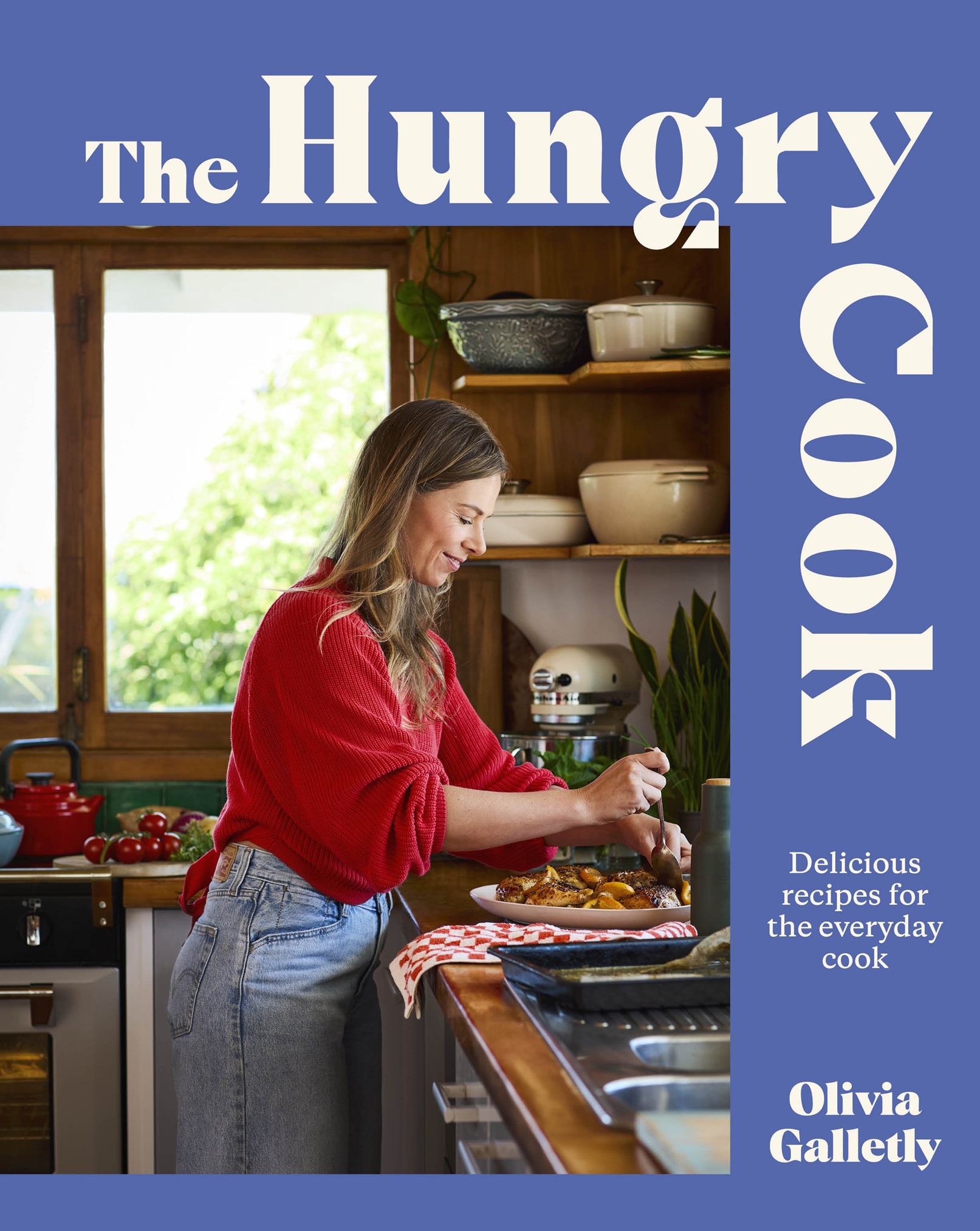
The Hungry Cook by Olivia Galletly, published by Allen & Unwin, RRP $45. Food images © Olivia Galletly Cover and lifestyle images © Manja Wachsmuth.


