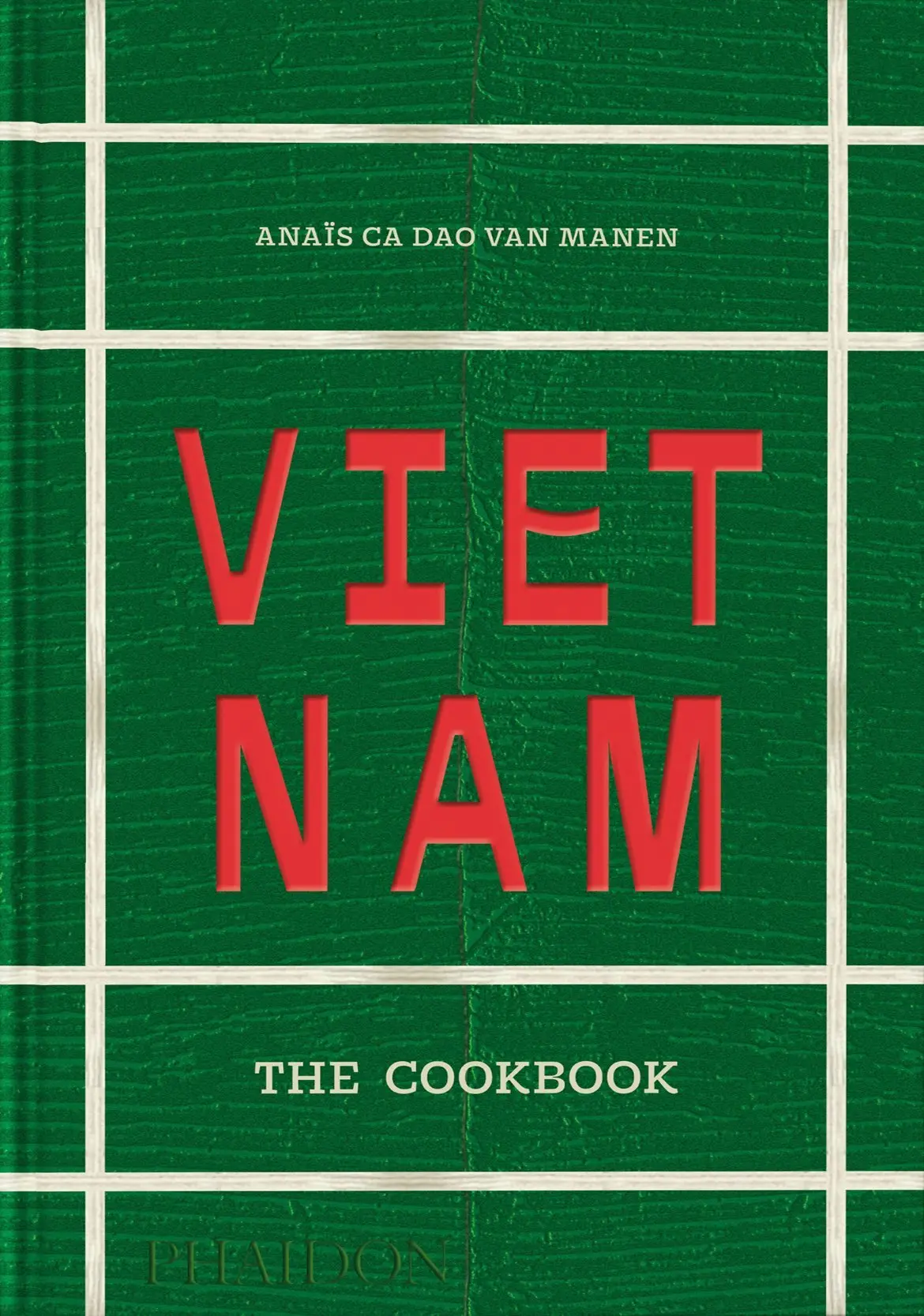
Anais Ca Dao van Manen moved to Vietnam to fully immerse herself in the food culture. PHOTO: MA BET After a failed attempt at becoming a graphic designer, Anais Ca Dao van Manen realised her passion and focus lay in cooking.
French-born with Vietnamese parents, Ca Dao connected with her parents’ culture through food growing up and it was her solution to homesickness when she moved away from home.
Her realisation led her to London and to becoming a chef. She worked in various restaurants and introduced her own version of Vietnamese food through various pop-ups.
She wanted to write a book about Vietnamese food but found the reality was more complicated than she first thought as Vietnamese cooking begins in the home kitchen.
‘‘We Vietnamese are very opinionated about food, and rightfully so.’’
She discovered by the age of 30 that Vietnamese cooking is something that must be experienced first-hand, learned through watching and doing and most importantly, ‘‘from our elders who carry generations of cooking knowledge’’.
This led to the decision to move to Vietnam to fully immerse herself in the foods.
‘‘With 54 distinct communities, each with their own customs and stories and strongly regional cuisines, capturing it all in one book seemed daunting.’’
THE BOOK: Vietnam: The Cookbook RRP $80. Published by Phaidon. phaidon.com
She learnt from talented home chef Nguyen Thi Thu Ba and from countless others she met during her travels. After a year’s in-depth research, she spent a year travelling across the country, learning from various communities.
‘‘With the help of generous friends and guides, I discovered techniques, dishes and ingredients I had never heard of before - from black pigs in Ha Giang to crickets and various edible worms.’’
While pho and banh mi have brought worldwide attention to Vietnamese cuisine, it extends far beyond these dishes. So in her book Vietnam: The Cookbook she has tried to include as many varied dishes as she could.
‘‘It is not a complete reference, but an invitation to come and learn more.’’
PHOTOS: SUPPLIED
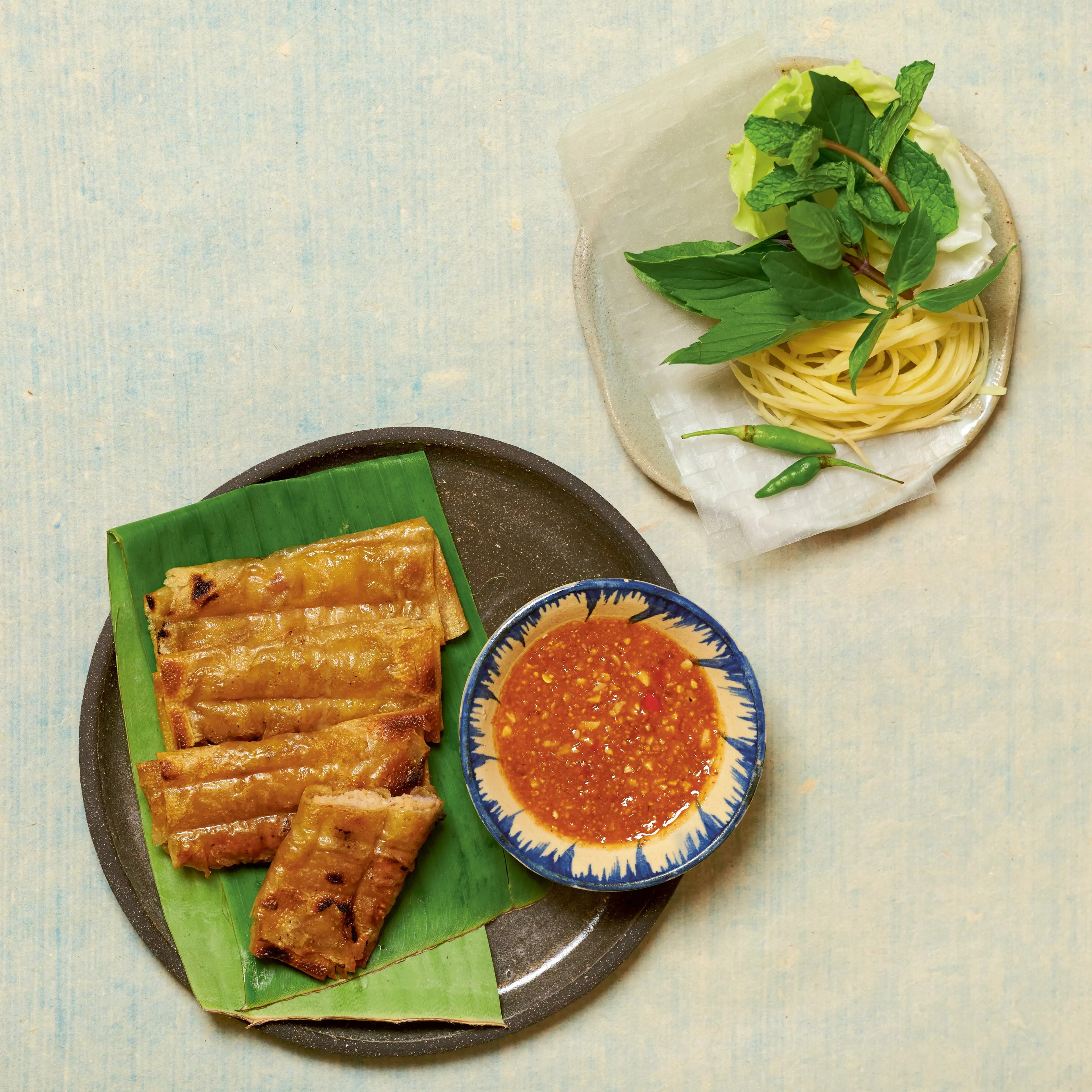
Grilled flattened spring rolls ‘Chalui’
Originally from La Gi, a coastal city in Binh Thuan province, this dish has spread to neighbouring tourist destinations like the port cities Phan Thiet and Vung Tau.
The key lies in the grilling technique: the meat wrapped in rice paper requires constant attention, with skilled vendors flipping the long flat skewers every few seconds to achieve a crispy crust without burning.
Once grilled and cut into bite-size pieces, these rolls are served with various condiments and a sweet sauce, balanced by the nutty crunch of toasted peanuts.
Makes 20 flat rolls
Serves 5-6 as a starter (appetiser)
Ingredients
20g peeled shallots
60g prawns
½ tsp chilli and lemongrass oil
1 tsp neutral oil
150g minced pork
80g pork paste (or equivalent extra pork mince)
1 tsp annatto oil (optional; gives the dish its red colour)
1 tsp fish sauce
½ tsp black pepper
½ tsp sugar
25 sheets thin, square brown rice paper (banh ram ha tinh)
To serve
30g roasted peanuts (see note); finely pounded (not too pasty)
1 quantity basic dressing for salad (see below)
Mixed herb salad (rau ghem lettuce, Thai basil, watermint, fish mint)
Thin rice paper (banh trang)
50g shredded mango
Method
Blend the shallots, prawns, chilli, lemongrass oil and neutral oil until a paste-like consistency is achieved.
In a bowl, combine the blended paste with the mince. Add the pork paste, annatto oil, fish sauce, pepper and sugar and thoroughly mix.
Place one piece of moistened brown rice paper on a clean work surface. Place a portion of the meat mixture in the centre of the rice paper. Fold both ends inwards, then fold the mixture lengthways to form a 6cm-long flat roll. Repeat filling and rolling until all the meat mixture has been used, making a total of 20 flat rolls.
Prepare a charcoal barbecue (red embers).
Carefully thread the flat rolls on to flat skewers, securing them in place.
Grill for about 15 minutes, turning every 5 seconds to prevent burning, until cooked through.
Cut the grilled rolls in half diagonally.
In a small bowl, mix the pounded peanuts with 100g basic dressing to create a dipping sauce.
Serve the grilled flattened spring rolls with the dipping sauce, herb salad, thin dry rice paper and shredded mango.
Basic dipping fish sauce ‘Nuoc mam cham’
Makes 450mL
Serves 8 to 10
Ingredients
300ml (1 and ¼ cups) coconut water
100g light brown sugar
3 Tbsp fish sauce
2 Tbsp rice vinegar
30g garlic, minced
15g red chilli (about 1), deseeded and minced; add 10g minced for extra heat
Method
In a small saucepan, combine the coconut water and sugar. Place over a medium heat and bring to a simmer, stirring occasionally with a wooden spoon until the sugar completely dissolves, 2-3 minutes.
Remove the saucepan from the heat and let it cool for 3-4 minutes.
Add the fish sauce and rice vinegar to the coconut water mixture, stirring well to combine.
Add the garlic and chilli (including the extra chilli, if using) to the sauce.
Stir well to evenly distribute all the ingredients. Let the sauce cool 20 minutes before serving.
Can be stored in the refrigerator for one week in a clean, airtight container.
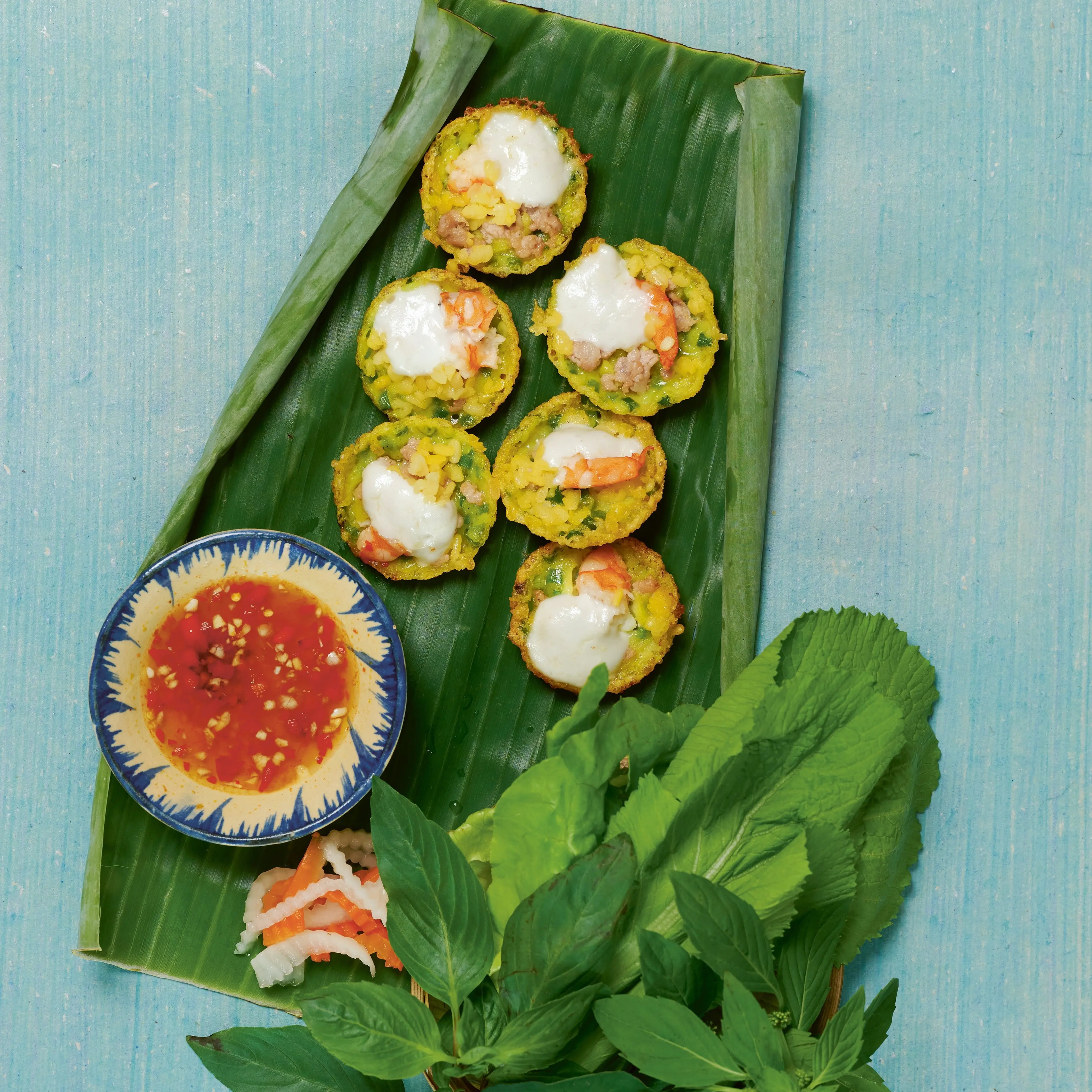
Mini savoury pancakes ‘Banh Khot’
The name khot is said to come from the sound made when removing the cakes from their moulds.
According to some bánh khot artisans, the dish may have evolved from bánh cãn of Bình Thuan, Ninh Thuan and Khánh Hòa provinces.
While both use rice flour, bánh khot is fried in oil using cast iron or aluminium moulds, whereas bánh cãn is poured directly on to earthenware moulds over a charcoal fire without oil a technique requiring considerable skill to prevent them from sticking.
The two cakes also differ in their toppings depending on the region, with this version drawing inspiration from the southwest, adding turmeric to the batter and finishing with seasoned coconut milk for richness.
Makes 30 mini pancakes
Serves 6
Ingredients
15 medium prawns (shrimp), boiled and peeled
50g (¼ cup) yellow split mung beans, soaked for at least 5 hours or overnight
Neutral oil, for frying
• Basic Dipping Fish Sauce, to serve.
For the batter
100g (⅔ cup) rice flour
30g crispy fried powder mix (bot chiên giòn)
½ tsp ground turmeric
220g (scant 1 cup) coconut milk
40g spring onion (scallion) greens, chopped
For the pork filling
1 Tbsp neutral oil
5g shallot, coarsely chopped
5g garlic, coarsely chopped
100g pork belly (side), thinly sliced or minced
1 Tbsp fish sauce
For the coconut cream
140g (scant ⅔ cup) coconut milk
¼ tsp salt
1 tsp tapioca flour (starch)
1 tsp plain (all-purpose) flour
Method
To prepare the batter, in a large mixing bowl, combine the rice flour, crispy fried powder mix, 220ml (¾ cup plus 2½ Tbsp) water, the ground turmeric and the coconut milk. Whisk until the mixture is completely smooth, then let it rest for 20 minutes. Stir in the chopped spring onion (scallion) greens.
Meanwhile, to prepare the pork filling: heat the oil in a pan, add the shallot, garlic and pork belly (side) and cook for one minute. Add the fish sauce and continue frying for two minutes, or until the meat is fully cooked through.
Cut each boiled and peeled prawn (shrimp) in half and remove the prawns digestive tract, if visible.
To make the coconut cream, in a small pot, combine the coconut milk, salt, tapioca flour (starch) and plain (all-purpose) flour and whisk well to combine. Cook over a low heat for two minutes, whisking constantly until thickened. Set aside.
To cook the mung beans, drain the soaked mung beans, then place in a saucepan with 500 ml (2 cups) of water. Bring to the boil and cook for 20 minutes, or until tender. Drain well and set aside.
Preheat a bánh khot pan (or you could use a Dutch mini pancake/poffertjes pan) over a medium heat.
To cook a pancake, add ½ tsp of oil to each mould. Fill each mould halfway with the batter, then add ½ tsp of the cooked mung beans, a small amount of the pork filling, then place one prawn half in the centre. Cover and cook for four minutes. Uncover and cook for an additional one minute to one minute 30 seconds until golden.
Remove the pancake from the mould and repeat with the remaining batter and fillings.
To serve, divide the pancakes among serving plates, then drizzle with coconut cream and serve immediately with small bowls of the basic dipping fish sauce on the side.
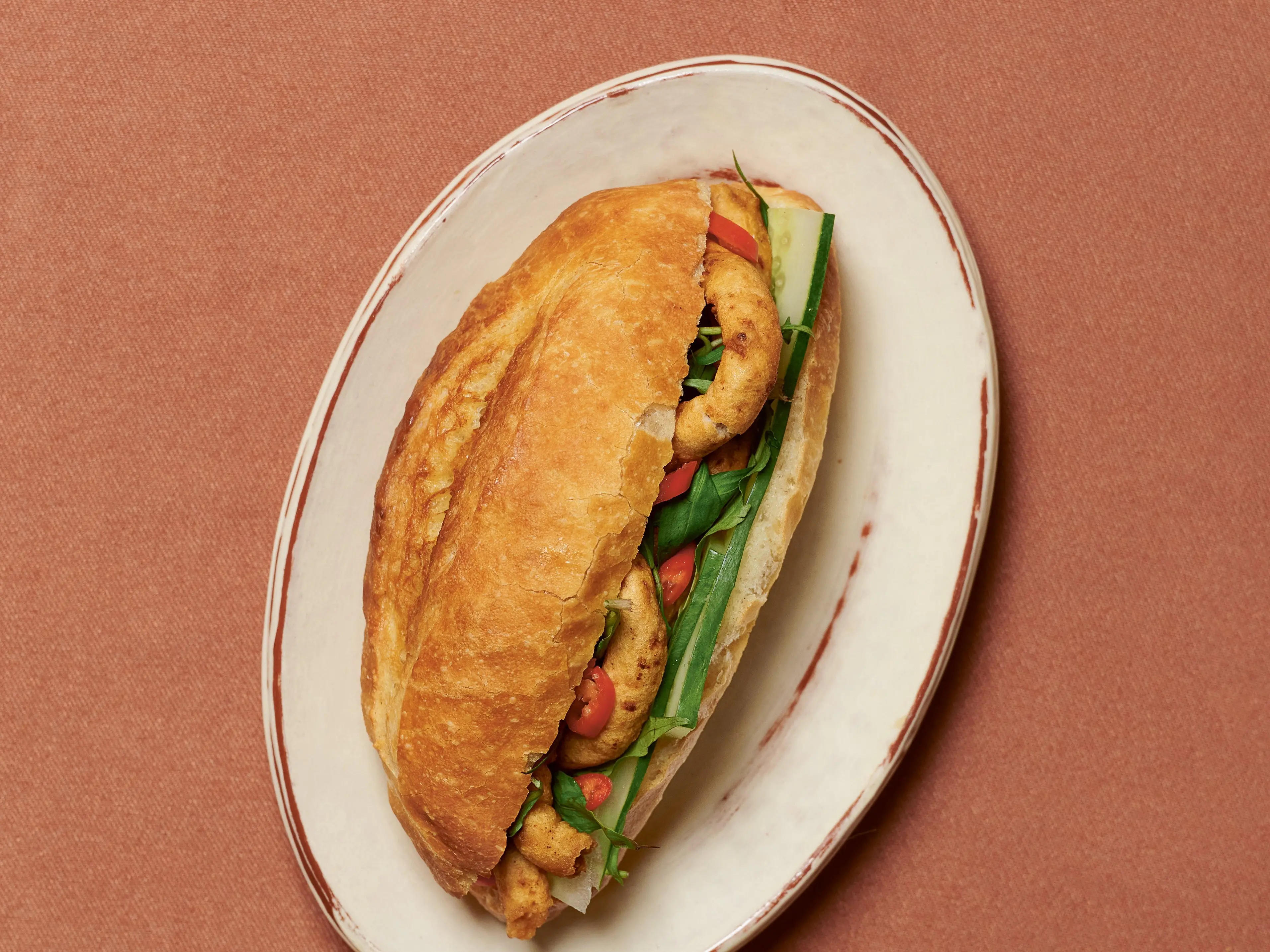
Vietnamese baguette with fish cake ‘banh mi cha ca’
Traditionally these fish cakes were shaped into round patties and then thinly sliced.
A new style has emerged, where the batter is pressed into long noodles directly into hot oil for crispier edges. I like to add pickled daikon and carrots to this banh mi.
Makes 1 baguette
Ingredients
1 Vietnamese baguette
Soy sauce (I use Maggi) or sweet and sour fish sauce, for drizzling
Hot sauce, for drizzling
40-50g tuna fish cake, piped before cooking
4-5 chilli slices
25g cucumber, sliced
10g Vietnamese coriander/cilantro (rau ram)
Method
Using a sharp knife split the baguette lengthways.
Layer the ingredients in the following order: sauce of your choice, hot sauce, fish cake pieces, chilli slices, cucumber and Vietnamese coriander/cilantro.
To make the fish paste, in a blender, combine all the ingredients, except the Vietnamese coriander/cilantro, and blend until it forms a smooth paste. Fold in the Vietnamese coriander.
In a large pan, pour enough oil to half-fill. Add the lemongrass stalks and heat the oil over a medium heat. Shape the fish paste into small patties or balls.
Carefully place the fish cakes in to the hot oil. Fry on both sides until golden brown and cooked through, 3-5 minutes per side.
Remove the fish cakes from the oil and drain on paper towels.
Serve hot as a starter (appetizer) or main dish with a dipping sauce or in a baguette.
Note: To make piped fish cakes, heat the oil, then put the fishcake mixture into a piping (pastry) bag and pipe directly into the hot oil. Or you can make the fish cake into patties and then cut it into pieces to serve.
Basic salad dressing
This quintessential and basic dressing is used for salad (goi).
But you can also keep it in a jar in the refrigerator for 1 to 2 weeks and use it to dress any salad mix you have at home.
It has just the right balance of sweetness, tang and heat for all kinds of vegetables.
Makes 235ml (1 cup)
Serves 8-10
Ingredients
35g garlic, finely minced
1 long red chilli, deseeded and minced
85ml (⅓ cup) fresh lime juice (about 3 limes)
75-100g (⅓-½ cup) white sugar
65ml (¼ cup) fish sauce
Method
Place the garlic and chilli in a mixing bowl with the lime juice. Add 75 g of the sugar and the fish sauce to the bowl.
Using a spoon, stir the mixture for about 2 minutes, or until the sugar is completely dissolved.
Taste and add more sugar if desired, stirring until dissolved. Use as a dressing for salads.