

But he has made them "better for you" by adding more wholesome ingredients rather than taking things out of them in River Cottage Good Comfort.
"They are dependably delicious and wholeheartedly nutritious."
He has recognised how some people’s favourite winter comfort foods like bangers and mash, macaroni cheese and steamed sponge with custard not only make tummies rumble but also hearts sink as we think of the "not so good for you" reputation they have.
"There’s a general perception that the food we crave and love is one thing, while the food that is actually good for us is another, and never the twain shall meet."
However, he promises it does not have to be that way.
Fearnley-Whittingstall admits to creating his fair share of "rib-sticking" comfort recipes over the years but more recently he has been looking at foods and the combination of ingredients that help keep people well. He believes both approaches can come together.
So he has taken the classics of the "comfort canon" — the pies, stews, crumbles, puds, curries and cakes — and reworked them, sometimes just a little, at other times a lot so comfort treats can still be treats, just in a "better, healthier" way.
"It shouldn’t be overcomplicated or ‘fancy’ either, but full of textures and flavours that are soothingly familiar, often recalling our childhoods, or those formative experiences that make us who we are."
He believes to be a comfort, food does not need to be heavy, cloying, too rich or too sweet.
That means the more unrefined ingredients we can get on our plates the better. So "whole foods" can and should be the building blocks of these favourite comfort food dishes.
Fearnley-Whittingstall describes it as "wholing up" by adding many more vegetables and fruit in the recipes than would be found in conventional recipes.
"It’s amazing how root vegetables and fresh and dried fruits can add natural sweetness and a welcome moist texture to teat-time treats and puds."
His savoury recipes are full of beans, lentils and chickpeas but "never too full" and he prefers to use wholemeal flour as it has about three times the fibre of plain flour.
"We know a varied diet is associated with better gut health and increasingly we are discovering what profound benefits that brings. So be ready to expect a little of the unexpected."
There is less sugar in the recipes just as there is at River Cottage, where sugar is reduced in cakes, puds and treats by 20%.
"I’m betting you’ll positively enjoy the difference."
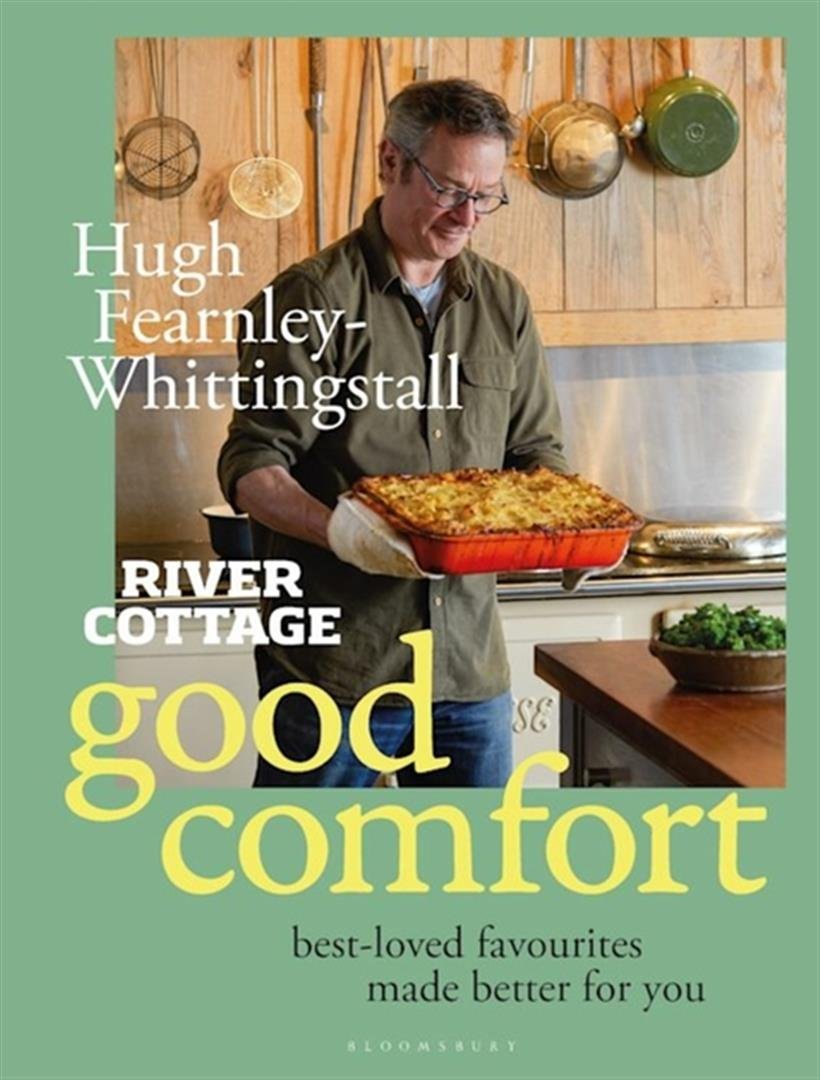
The book
River Cottage Good Comfort, Hugh Fearnley-Whittingstall, Bloomsbury Publishing, RRP $54.99
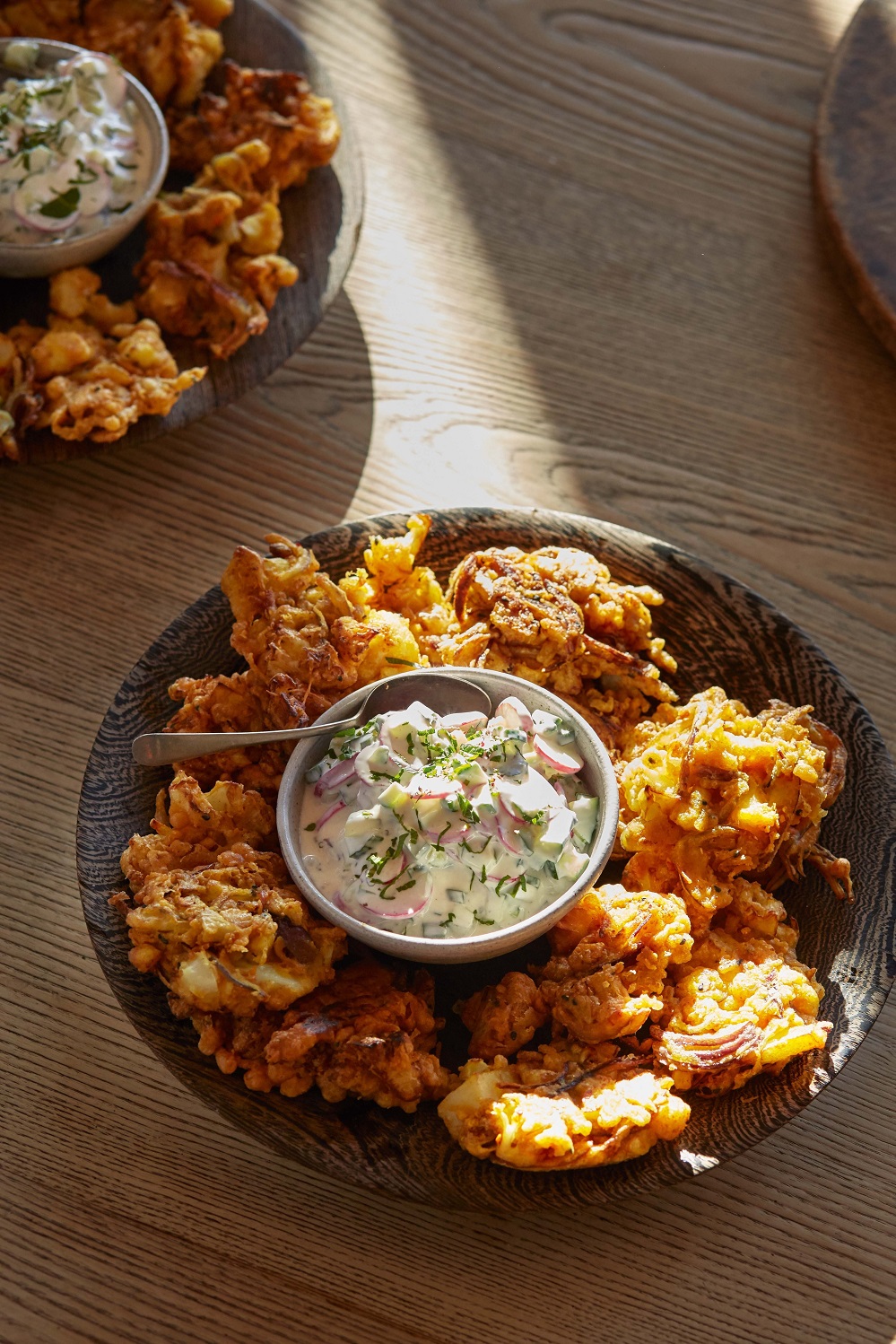 Cauliflower pakora with radish raita
If you’re going to batter and fry something, you might as well make it a vegetable! And this is a really tasty way to dish up cauliflower. Fried snacks like this are a once-in-a-while treat but shallow- rather than deep-frying the pakora means you need far less oil. And a radish raita on the side boosts the goodness — you’re getting four different veges in every well-sauced, crisp, golden mouthful!
Serves 6 as a starter (or 10-12 as a nibble)
Ingredients
1 medium cauliflower (about 800g)
1 large red or brown onion, quartered and thinly sliced
Vegetable oil, for frying
Batter
175g (chickpea) flour
½ tsp baking powder
2 tsp ground cumin
2 tsp ground coriander
½ tsp ground turmeric
A pinch of dried chilli flakes
½ tsp black onion seeds (nigella/kalonji seeds)
½ tsp salt
Radish raita
150g radishes, thinly sliced
200g piece of cucumber, seeds scooped out, diced small or grated and squeezed
150g natural (or plant-based) yoghurt
A scrap of garlic, grated or crushed (about ¼ clove)
1-2 Tbsp finely shredded coriander or mint (optional)
Sea salt and black pepper
To serve (optional)
Lemon or lime wedges
Method
First make the raita, put all the ingredients into a bowl and stir to combine thoroughly. Set aside in a cool place, ready to serve.
To make the batter, put the flour, baking powder, spices and salt into a large bowl and whisk these dry ingredients together well.
Measure out 200ml cold water and start whisking this into the flour.
Stop when you have a smooth batter with the consistency of standard double cream. Set aside for a moment.
Remove any tough or dirty outer leaves from the cauliflower, quarter it and trim away the tough stalk base. Roughly chop the cauliflower so you end up with a chunky cauliflower rubble: break it into florets first, then chop these smaller so nothing is bigger than 2cm in any direction.
Chop the stalk into similar-sized chunks.
Toss the cauliflower and onion together in a bowl, breaking up the slivers of onion as you go.
Add these veg to the batter and stir together well so everything is coated.
Preheat the oven to a low setting (so you can keep the cooked pakora warm).
Heat about a 1cm depth of oil in a frying pan over a medium-high heat. To test that it is hot enough, drop a little batter into the oil. It should fizz and bubble straight away, and turn a crisp golden brown in a couple of minutes.
Drop heaped teaspoonfuls of the battered veg into the hot oil. Each spoonful should flatten out a bit once in the pan, but you can help it gently with the back of a spoon. Leave a bit of space in between them and don’t add too many or you will cool the oil down. Cook the pakora for 3-4 minutes, flipping them over once or twice, until they are a rich golden colour all over.
Scoop the cooked pakora out with a slotted spoon, place on a baking tray lined with kitchen paper and put into the oven to keep warm.
Lift out any stray bits of veg or batter in the oil between each batch, so they don’t burn.
Continue to cook spoonfuls of the battered veg, making sure you keep the oil temperature fairly consistent. You can turn the heat down if it is starting to get too hot and burn the batter.
If, on the other hand, you think the oil is cooling down, give it a little time in between batches to come back up to heat.
Serve the hot, crisp pakora as soon as they are all ready, with a little sprinkling of salt if you wish, the bowl of raita to dip them in, and some lime or lemon wedges on the side if you like.
 Kedgeree
This classically comforting rice and fish dish — traditionally enjoyed for breakfast or brunch but also a lovely tea — has always been a big F-W family favourite. I’ve evolved the recipe over the years, replacing white rice with brown basmati, upping the spice a little, and incorporating peas (and sometimes lentils). This version is, I dare to claim, "best ever" — both for taste and goodness. If you are wavering about the raisins, I urge you to give them a try.
Serves 4
Ingredients
175g brown basmati rice
1 Tbsp olive or vegetable oil
1 large onion, finely sliced
4 medium eggs
500g sustainably caught smoked pollack or haddock fillet
150g frozen peas or petits pois
100g cavolo nero, stalks removed and leaves shredded (optional)
A knob of butter (about 15g)
1 tbsp mild curry powder or paste
½-1 small red chilli, finely chopped (deseeded for less heat if you prefer)
25g raisins (optional)
100g cooked brown, green or Puy lentils, or drained, tinned lentils (optional)
2 Tbsp chopped coriander or parsley
1 Tbsp chopped lovage (optional)
Sea salt and black pepper
Lemon wedges, to serve
Method
Rinse the brown rice well and leave it to soak in cold water for at least 15 minutes, or up to 2 hours.
Drain the rice, rinse it again, then transfer to a large pan (it needs to be large because you’ll be mixing all the other kedgeree ingredients into this before serving).
Cover the rice with plenty of cold water, bring to a simmer, cover and cook for the time suggested on the packet, minus 5 minutes (soaking reduces the cooking time).
While the rice is cooking, heat the oil in a large frying pan over a medium heat. Add the sliced onion with a pinch of salt and get everything sizzling, then put the lid on the pan and reduce the heat. Let the onion sweat gently for 12–15 minutes, until nicely soft and golden.
This is also a good time to cook the eggs: bring a small saucepan of water to the boil, carefully lower the eggs into the pan and simmer for 7–8 minutes.
Meanwhile, slice the smoked fish off its skin and then cut it into 2–3cm chunks; set aside.
Once cooked, lift the eggs out of the pan and run them under cold water to stop the cooking, then lightly crack and peel the shells (under a gently running cool tap).
Test the rice — it should be tender but still have a slight bite at this point. When it is, stir in the peas, and cavolo if using, bring to a simmer and cook for 4–5 minutes. Drain thoroughly and return the rice and green veg to the hot pan, drop in a knob of butter and stir lightly with a fork. Turn off the heat and cover the pan to keep the rice warm while you cook the fish with the onions.
Stir the curry powder or paste into the softened onions, along with the fresh chilli, and the raisins if using, and cook for a minute or so longer. Add the chunks of raw smoked fish to the spicy onions and cook for about 5 minutes, until just cooked through. Stir in the lentils, if using, and cook for a minute or two, to heat them through. Add the spicy fish mixture to the pan of rice and green veg, along with half the chopped herbs, and toss through gently. Taste and add more salt or pepper if needed.
Halve or quarter the warm boiled eggs and place on top of the rice.
Finish with the rest of the chopped herbs and a grinding of black pepper then serve, with lemon wedges.
 Squeak and bubble
Good old bubble and squeak is a much-loved dish in my house. Rather than one ingredient being "bubble"and one "squeak", the name is thought to refer to the sounds emanating from the frying pan as the dish is cooking. Nevertheless, I thought I’d reverse the title, to acknowledge that I’ve tipped the balance in this recipe towards greens rather than spuds. As so often, a handful of frozen peas can make up any shortfall of green goodness. A fried egg goes very nicely on top too ...
Serves 2-3
Ingredients
1 Tbsp olive or vegetable oil (or lard or beef dripping)
1 large onion, thinly sliced
1-2 garlic cloves, chopped (optional)
About 150-200g cooked potatoes or cold mash (you can also use a mixture of roots such as spuds and celeriac or parsnips), ideally still skin-on
Sea salt and black pepper
Veg and flavourings
Flavour bombs (optional):
1-2 tsp curry paste or powder, or sliced olives, capers and/or chopped anchovies
Cooked greens:
About 150–250g cooked kale, cabbage, Brussels sprouts, cauliflower and/or broccoli, roughly chopped or shredded
Uncooked greens:
A handful of raw spinach, rocket or lettuce and/or 100g frozen peas
Herbs (optional):
1-2 Tbsp chopped parsley, chives or chervil, or a tiny bit of lovage
To serve (optional):
2–3 fried eggs

Heat the oil or other fat in a non-stick frying pan over a medium heat. Add the onion with a pinch of salt and some pepper and fry gently for about 10 minutes until it starts to colour.
If you’re adding garlic and/or curry paste/powder, stir them into the onions now and cook for a minute or two.
Tip the spuds into the pan. If they aren’t already mashed, crush them roughly with a fork or masher, but keep the texture quite chunky. Let the heat penetrate the potatoes for a minute or two then add all the other veg, and any herbs or flavour bombs, with a little more seasoning. Stir together then press the whole lot down into a rough cake. Now leave the veg cake to cook for several minutes, so that it can form a good golden-brown crust on the base. It’s tempting to move it but try not to. It’s better that the base is a little overbrowned than that the whole thing is underdone and sticks to the pan. (It still might stick a bit, but you should get some good colour this way.)
When the cake is nicely browned underneath, flip it over with a spatula and cook the other side. (If you are scaling up quantities, and making a larger cake — one that pretty much fills the pan — you can cut it into halves or quarters when the first side is crisped, and flip over each half or quarter, one at a time.) Start to finish, your S and B might take 20 minutes or more.
Serve hot, topped with a fried egg if you like. Mustard or chilli sauce are also very good on the side.


