
PHOTO
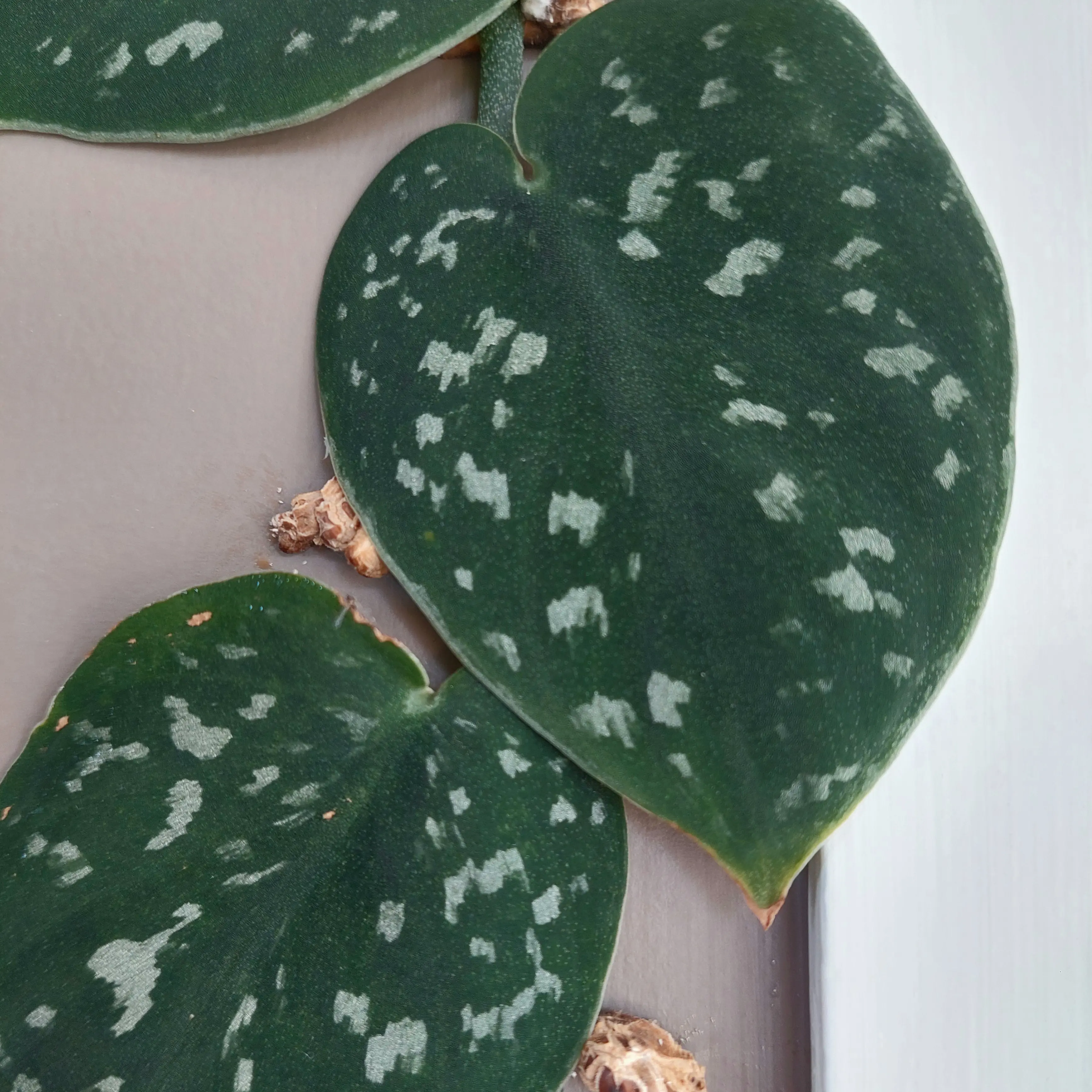
Scindapsus pictus, commonly known as satin pothos, is one of the most recognisable indoor plants in recent years, popular for its silver-patterned foliage and easy growing nature. Often grouped with trailing pothos species, this tropical vine has a fascinating biology and growth habits that many indoor plant owners never fully see.
Native to Southeast Asia, Scindapsus pictus naturally occurs in warm tropical forests throughout regions including Thailand, Malaysia, Bangladesh, and the Philippines. It belongs to the Araceae family, also known as the aroid family, alongside plants like monsteras, philodendrons and peace lilies. Like many aroids, it evolved in humid rainforest environments where competition for sunlight is intense.
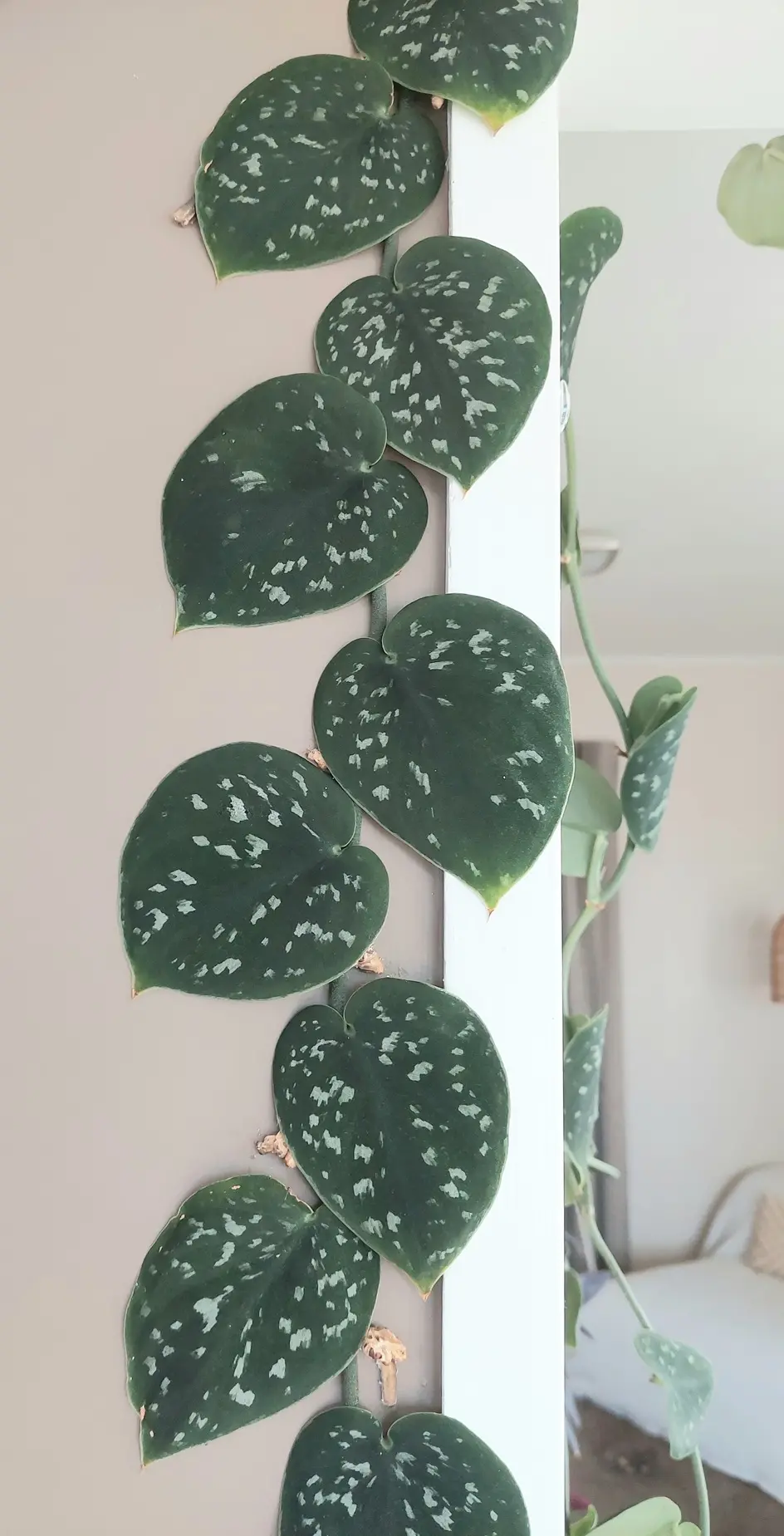
In the wild, Scindapsus pictus is primarily a climbing species. Young plants start life close to the forest floor before attaching themselves to tree trunks using specialised aerial roots. These roots act as anchors while also absorbing moisture and nutrients from humid air, mosses, and organic debris on the tree’s surface.
This climbing behaviour dramatically changes the appearance of the plant. Small trailing forms sold in garden centres are considered juvenile growth. When allowed to climb vertically, the stems thicken, and leaf size increases significantly. Mature foliage can become much larger than the compact leaves most indoor plant growers are familiar with.
One of the plant’s most distinctive features is its foliage texture. The leaves have a soft, velvety surface rather than the glossy finish seen in many common houseplants. These silver markings are created by reflective air pockets within the leaf tissue. These structures scatter and reflect light, giving the foliage its metallic appearance. Research suggests the silver variegation may serve several purposes in nature. It may help maximise available light within dim rainforest understories or assist with camouflage by breaking up the leaf outline against shifting forest light patterns, protecting it from grazing animals.
Although satin pothos rarely flowers indoors, wild plants produce small aroid type flower structures known as inflorescences. These consist of a fleshy central spike called the spadix, which is covered in lots of tiny individual flowers, surrounded by a modified leaf known as the spathe. In aroids like Spathiphyllum (peace lily) or Anthuriums andreanum (flamingo flower), the spathe is often the most visually striking part of the plant and is commonly mistaken for a flower petal. But its role is to help protect the developing flowers while also attracting pollinators. The spadix contains both male and female flowers arranged in sections, allowing insects to move pollen efficiently between plants. Some aroid species even produce heat or scent from the spadix to attract specific pollinators such as beetles and flies.
Like many members of the Araceae family, Scindapsus pictus contains calcium oxalate crystals. These compounds can cause irritation if chewed, meaning the plant should be kept away from pets and young children.
Several cultivated varieties of Scindapsus pictus can be found in New Zealand. Common ‘‘Argyraeus’’ is known for smaller leaves with fine silver speckling — it is often the variety you find in garden centres. ‘‘Exotica’’ has bigger foliage with heavy silver coverage, and ‘‘Silver Splash’’ produces irregular silver marbling and is harder to find; one for the collectors.
Despite its tropical origin, satin pothos adapts well to indoor environments. Like most indoor plants, bright indirect light is best. This will allow foliage colour to remain vibrant and encourages compact growth. In lower light conditions the plant will do well, although growth slows, and the silver variegation can become less pronounced with sparse leaves and long vines as it searches for more light. Direct sunlight, like harsh afternoon sun, can damage the foliage and cause scorch or burn marks that will turn the leaves brown. The natural habitat of this species beneath rainforest canopies explains its preference for filtered light conditions.
Watering management is the other important aspect of successful care. Satin pothos prefers lightly moist, well-drained soil. Overwatering is the most common cause of indoor plant deaths, leading to root rot, yellowing leaves, and stem collapse. Allowing the upper layer of potting mix to dry slightly between waterings usually provides the best balance. The plant shows moderate drought tolerance due to its thick leaves, which retain moisture more effectively than thinner tropical foliage. Humidity plays a role in healthy growth too. While the species tolerates average household conditions, higher humidity supports larger leaves, smoother leaf unfurling and stronger growth. Bathrooms, kitchens and grouped plant displays often create ideal microclimates for tropical aroids.
Propagation is straightforward and adds to this plant’s popularity. Stem cuttings containing at least one node can be rooted in either water or moist potting soil. Roots will develop within a few weeks. Each node contains growth points capable of producing roots and new shoots. New leaves emerge tightly rolled within a protective sheath before slowly unfurling. This process is characteristic of many aroid species, and an absolute highlight for the indoor plant parent.