
PHOTO
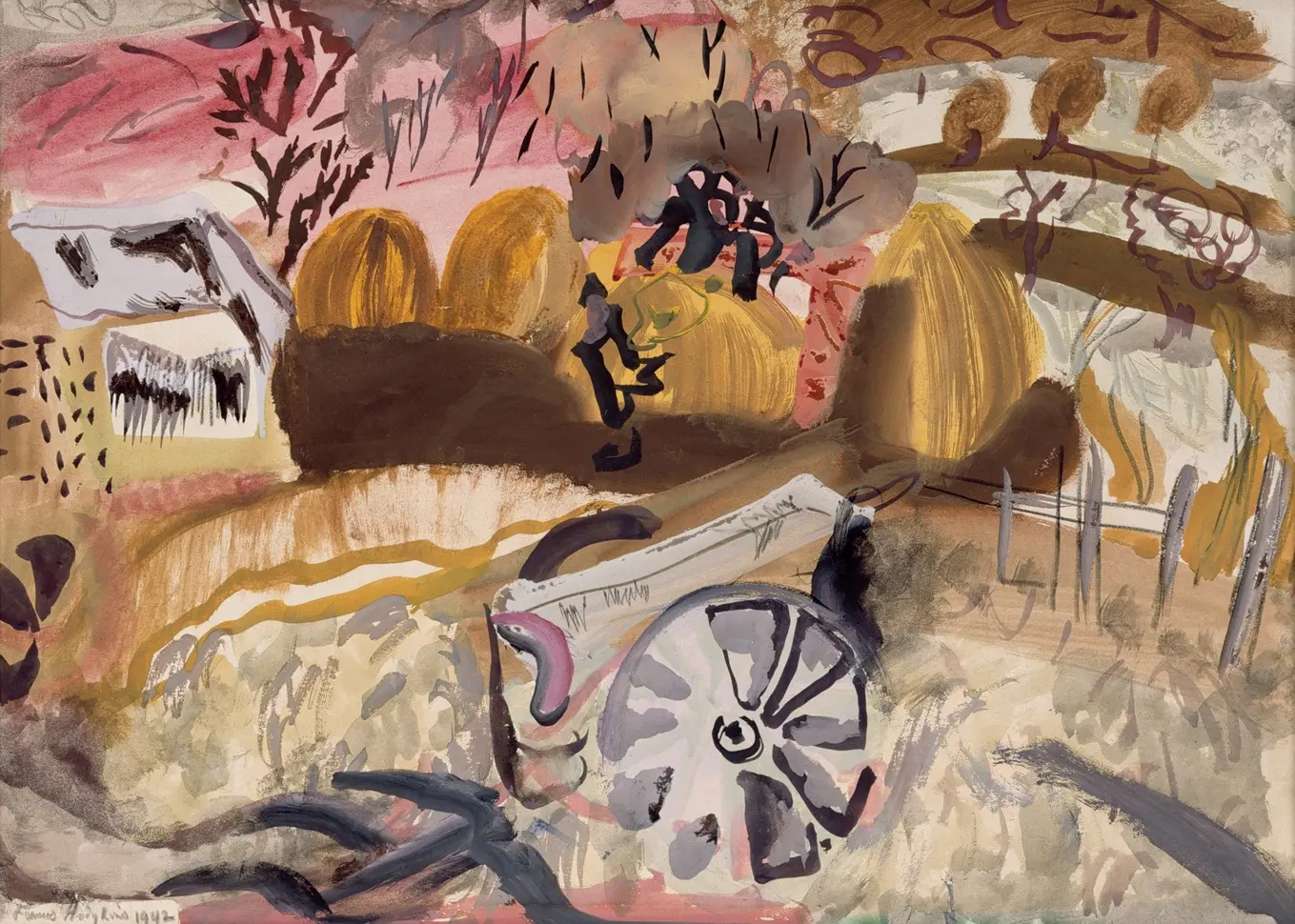

The recently opened exhibition, "Panorama", draws on works from the Dunedin Public Art Gallery collection to build an expanded context around paintings by Frances Hodgkins (1869-1947). Within the exhibition, works by Hodgkins sit alongside a group of artists also working in Europe and the United Kingdom in the late 19th and early to mid-20th centuries. Although the group of artists present in "Panorama" were not necessarily known to one another, all made works with shared and sometimes overlapping contexts.
In 1901 Frances Hodgkins left her hometown of Ōtepoti Dunedin and sailed to London, and apart from two trips home in 1903 and 1912, she spent the rest of her life travelling around the UK and Europe. She would visit and live in many different places and
the changing environments and exposure to different cultures, landscapes and artistic movements are clearly expressed in her work over time, as her subject matter is often defined by her geographic locations.
While Hodgkins never stayed in one place for long, she settled in Corfe Castle, Dorset in 1939 at the outbreak of the World War 2 and was based there until 1945. While the impacts of war made it difficult to travel far, Hodgkins travelled to Wales in 1942 and stayed in Carmarthenshire. In a letter written in September 1942 she noted "I am here & really resting brain and body ... very pleasant & friendly & comfy here — old Farm turned into Inn unpretentious — clean — good food & nice folk".
Having described the village as a "green valley", Green Valley, Carmarthenshire (1942) reflects Hodgkins’ experience of this place and sits within a wider series of landscapes made in the late 1930s and 1940s that highlight her use of rural life as subject matter.
Hodgkins’ interest in the rural landscape as subject matter is shared by other artists in "Panorama", including British artist David Jones (1895-1974). One of two watercolours by Jones included in "Panorama", titled The Park, Cumberland (1940s), offers a glimpse into Jones’ approach to depicting the landscape. Working mainly in watercolour — a medium that allowed for fluidity and opacity of his subject matter, often using transparent washes of colour — Jones prioritised painting in the landscape, or capturing glimpses from a window, rather than from memory.
Having served in the Royal Welch Fusiliers in World War 1, Jones’ experiences as a soldier had major and enduring impacts on his mental health and wellbeing, and shaped his art.
In 1927 he met Jim Ede, a curator and art collector who became a great supporter. Through Ede, Jones was introduced to patron and art collector Helen Sutherland, who would amass one of the largest private collections of Jones’ work. Suffering from what would now be described as post-traumatic stress disorder, Jones often found respite at the residence of Sutherland, which included Cockley Moor in Cumberland.
The Park, Cumberland was made during an intense painting period at Sutherland’s property in the 1940s, a larger body of work that was unified by Jones’ use of "greenish earth tones".
"Panorama — An expanded view of Frances Hodgkins" is on at Dunedin Public Art Gallery until October 18.
Lauren Gutsell is a curator at Dunedin Public Art Gallery.