
PHOTO
Ashwell is a small village with a deep history. Thankfully, it has escaped motorways and new housing developments, and the railway station is located two miles away, so commuters to London have easy access to the capital.
Ashwell has a long history for one vital reason: in the centre of the village, the water gushes out of a series of springs to form the River Cam. Fifteen miles away, the Cam flows through the University town of Cambridge and that is where I am staying.
The crystal clear water attracted settlement over two thousand years ago, as one can see by visiting Arbury Banks, which enclose an Iron Age settlement. The village is catalogued in the Domesday Book, which mentions its mill, where the sprightly young river drives a great water wheel to grind the corn. It still sits there to this day.

I have had mixed feelings about metal detectorists for some time, not knowing whether some are simply treasure hunters, or have a serious intent to discover important new sites and information. Ashwell is surrounded by cornfields and it was Alan Meek in 2002 who took his equipment into a wheat field and had a positive hit. Digging down between the rows of ripening wheat, he came across some intriguing looking pottery that, to the expert eye, were clearly Roman.
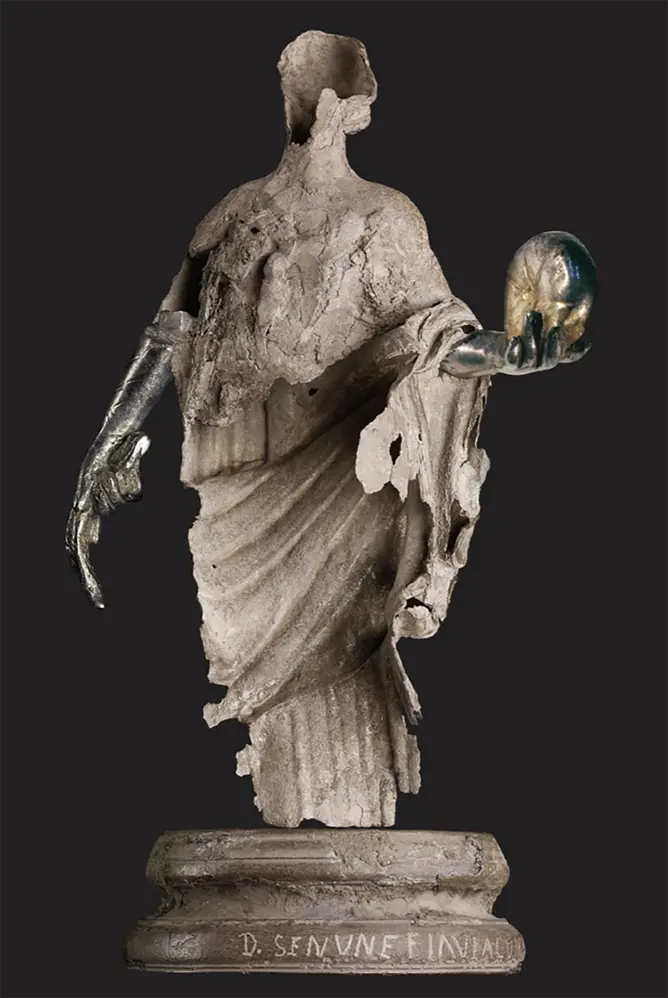
Excavations followed and before long, what has been described as a unique and sensational find was being made. It was a sanctuary to a newly discovered goddess and from the Latin inscriptions, we know that she was named Senuna.
This sanctuary attracted pilgrims from far and wide, and they made their offerings to the goddess, some of which were found in a hoard that had probably been taken out of the temple and hidden away for security during the troubled times that afflicted the last decades of imperial rule in Britain. This hoard contained 27 precious items, that include a silver figurine of Senuna herself, golden jewellery and decorative plaques.
This hoard to a previously unknown goddess is considered so significant that it was acquired by the British Museum, where it is now on display alongside the Anglo-Saxon treasure from Sutton Hoo and the Rosetta Stone. As for Ashwell village, a large assembly filled the 14th century church to hear a report on the site from an expert and a proposed new housing estate with the name Senuna Park has had its application declined — thankfully.