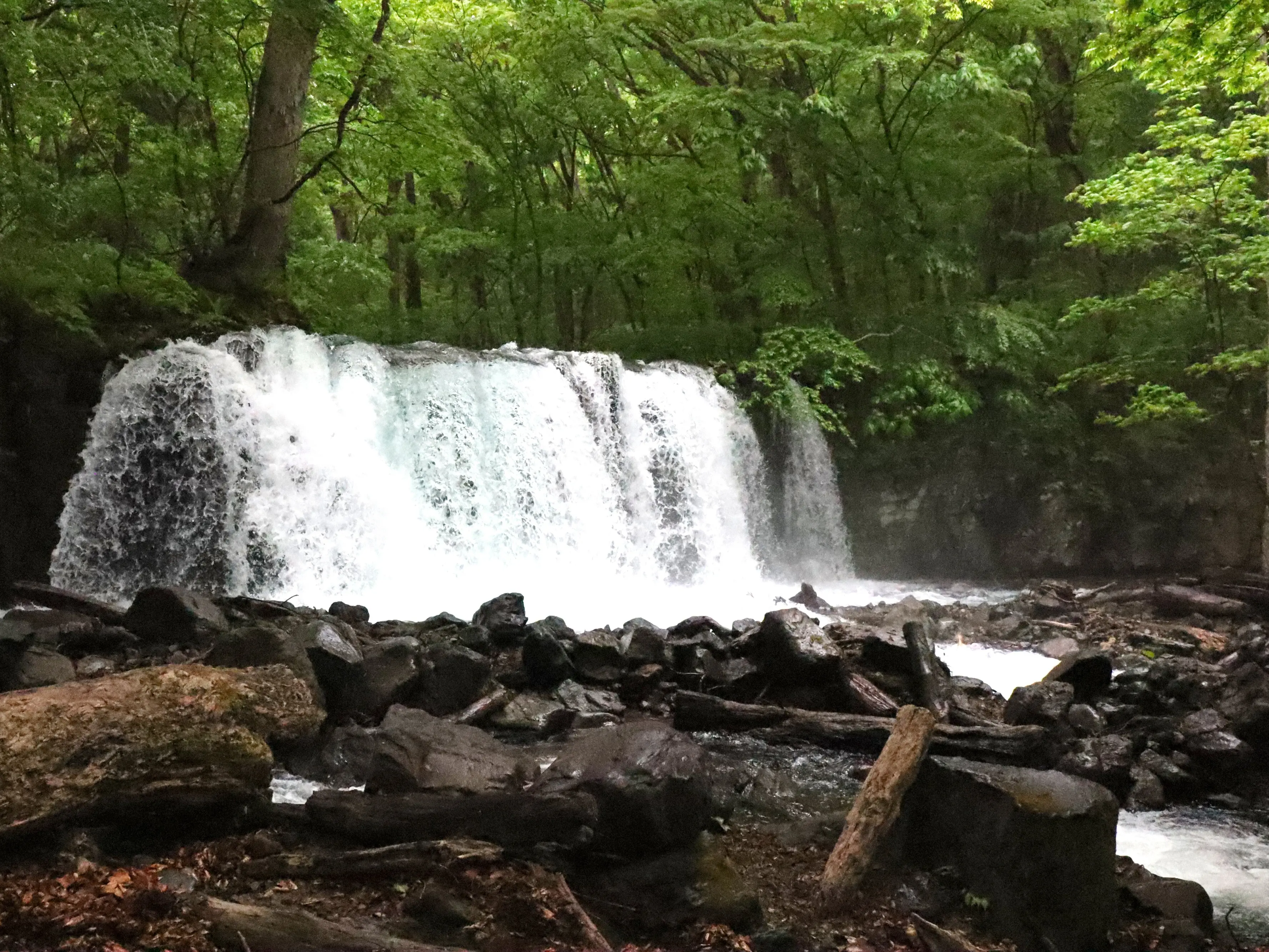
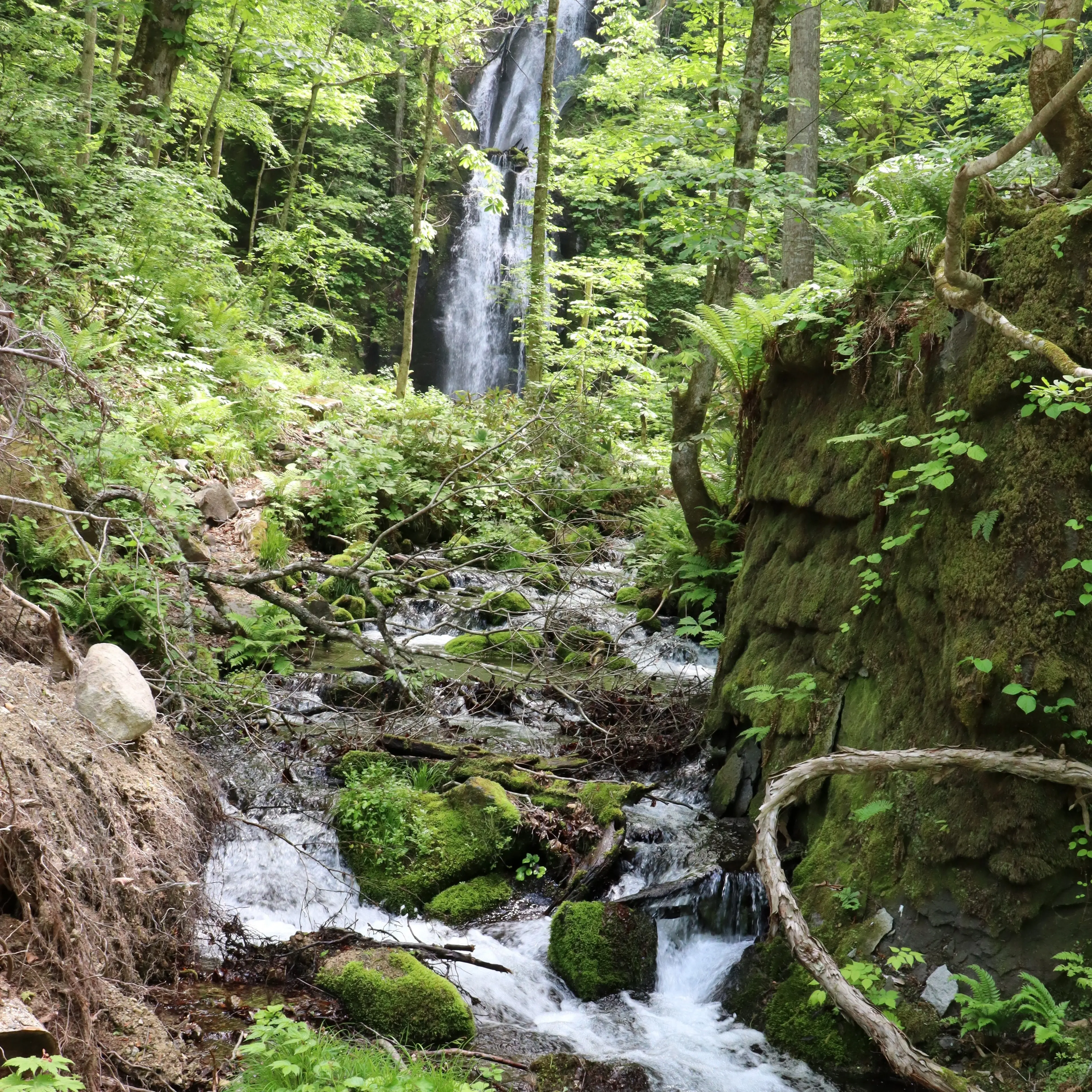
Choshi Falls in Oirase Gorge. PHOTOS: DENISE STEPHENSDenise Stephens follows a trail through a mossy green forest in the north of Japan.
A frothing veil of water tumbled into a pool that was almost black, coloured by the volcanic rocks underneath. Shaded by dense green foliage, it was a dramatic sight.
“JR once had an advertisement that called this Japan’s Niagara,” said Nori, the interpreter. We laughed together at this wild hyperbole. Despite being the largest falls in Oirase Gorge’s upstream area, Choshi Falls were on a vastly different scale from Niagara, sharing only a similar horseshoe shape.
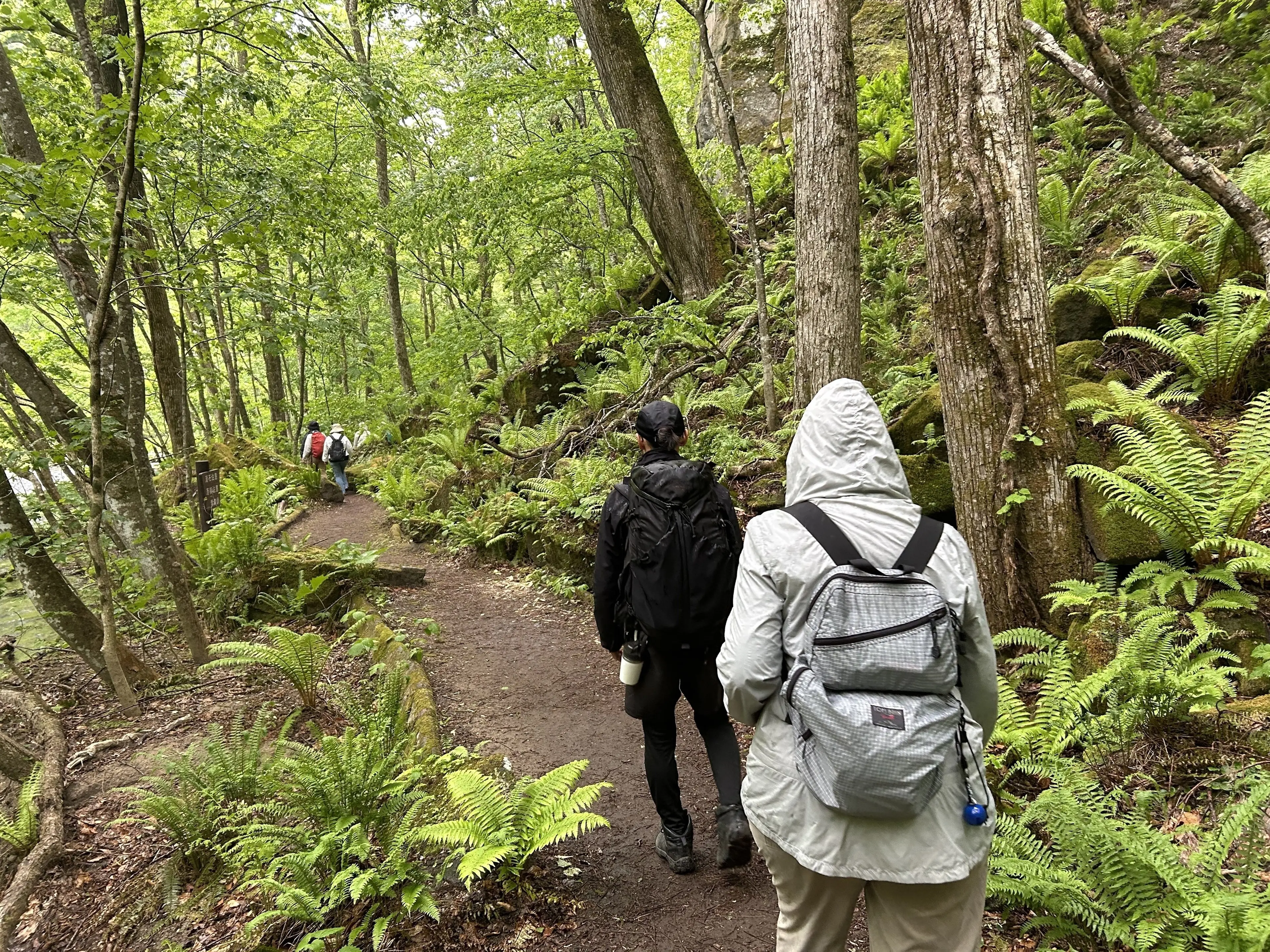
Walking the trail in the upstream area of Oirase Gorge. Photo: Hoshino Resorts
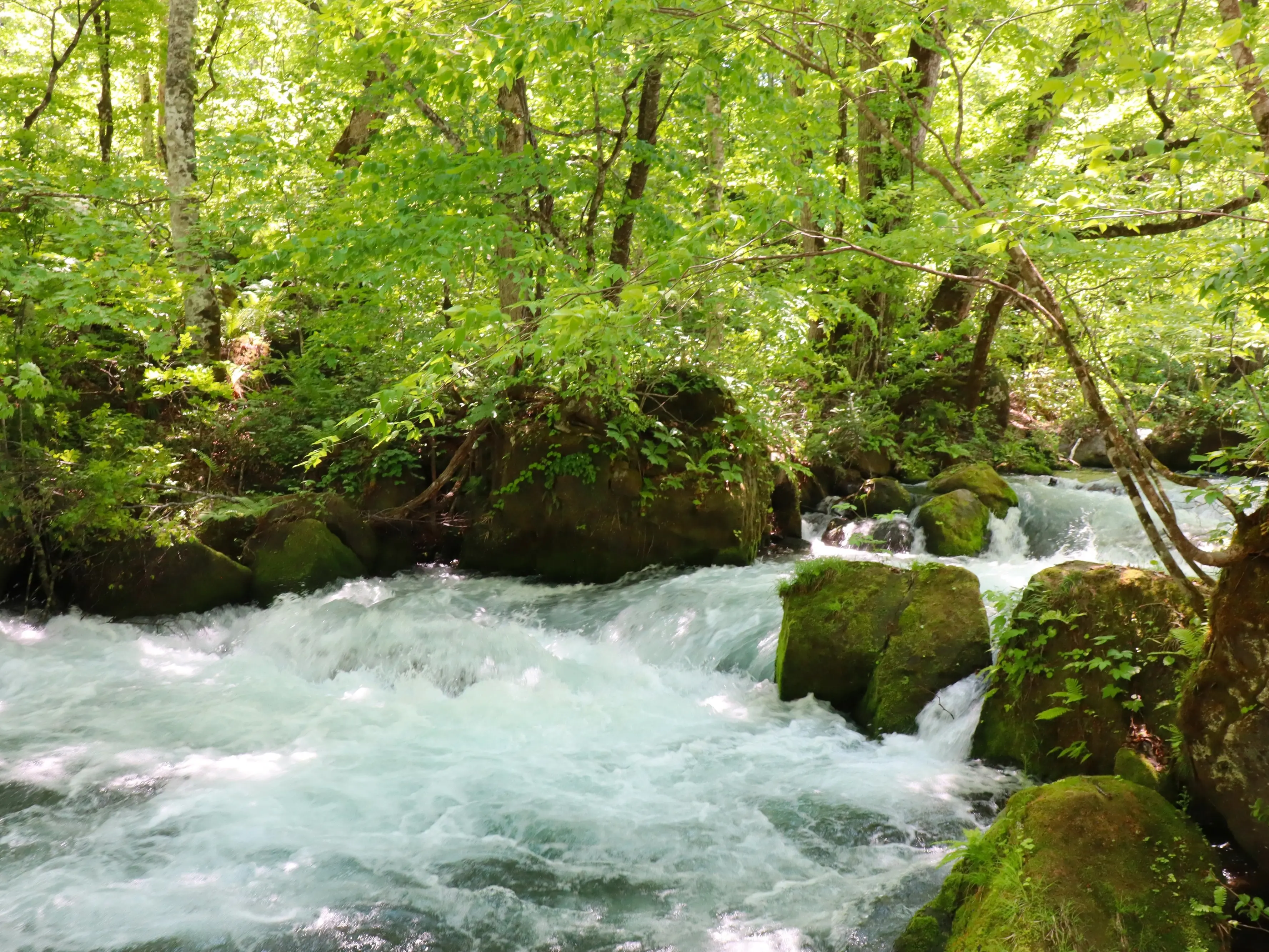
The Oirase Gorge in Towada-Hachimantai National Park is a nationally designated Special Place of Scenic Beauty and Natural Monument. From the calm waters of Lake Towada, the stream races through rapids and over rocky ledges for 14km. There’s a walking trail alongside it and, although late October’s autumn foliage is the peak visitor period, every season has its charms. In summer, it’s very green, and in winter, the waterfalls freeze over.
Rapids in the Oirase Gorge.
I visited in May, going on a rambling tour which was an excellent way to enjoy the vivid spring greenery. Led by Yasu, a local from Lake Towada, and accompanied by Nori the interpreter, I learned more about the local environment. Yasu began with a stop at the Oirase Field Museum where he used a diorama of the area to explain the origins of the gorge. Lake Towada is a caldera formed by an eruption 200,000 years ago. When the crater rim collapsed, water poured out, forming the lake’s only outlet, Oirase Stream. More eruptions over the centuries shaped the course of the stream and created the rock formations visible today.
From the museum we headed to the upstream area near Lake Towada. On either side of the gorge, waterfalls flowed over layers of black rock down to the stream below. The trail alongside the stream was easy for active walkers, even in this section which had some steps, rocks and slopes.
Guide Yasu explains the strength of beech leaves. Photo: Hoshino Resorts
Yasu stopped often to talk about the forest, which started being protected about 80 years ago. Locals had used beech trees to make charcoal before that, but there are still original patches of forest. The beech leaves falling each autumn build up layers on the forest floor that hold water in. He handed me a leaf to feel how strong it was, and explained that it took three years to fully break down.
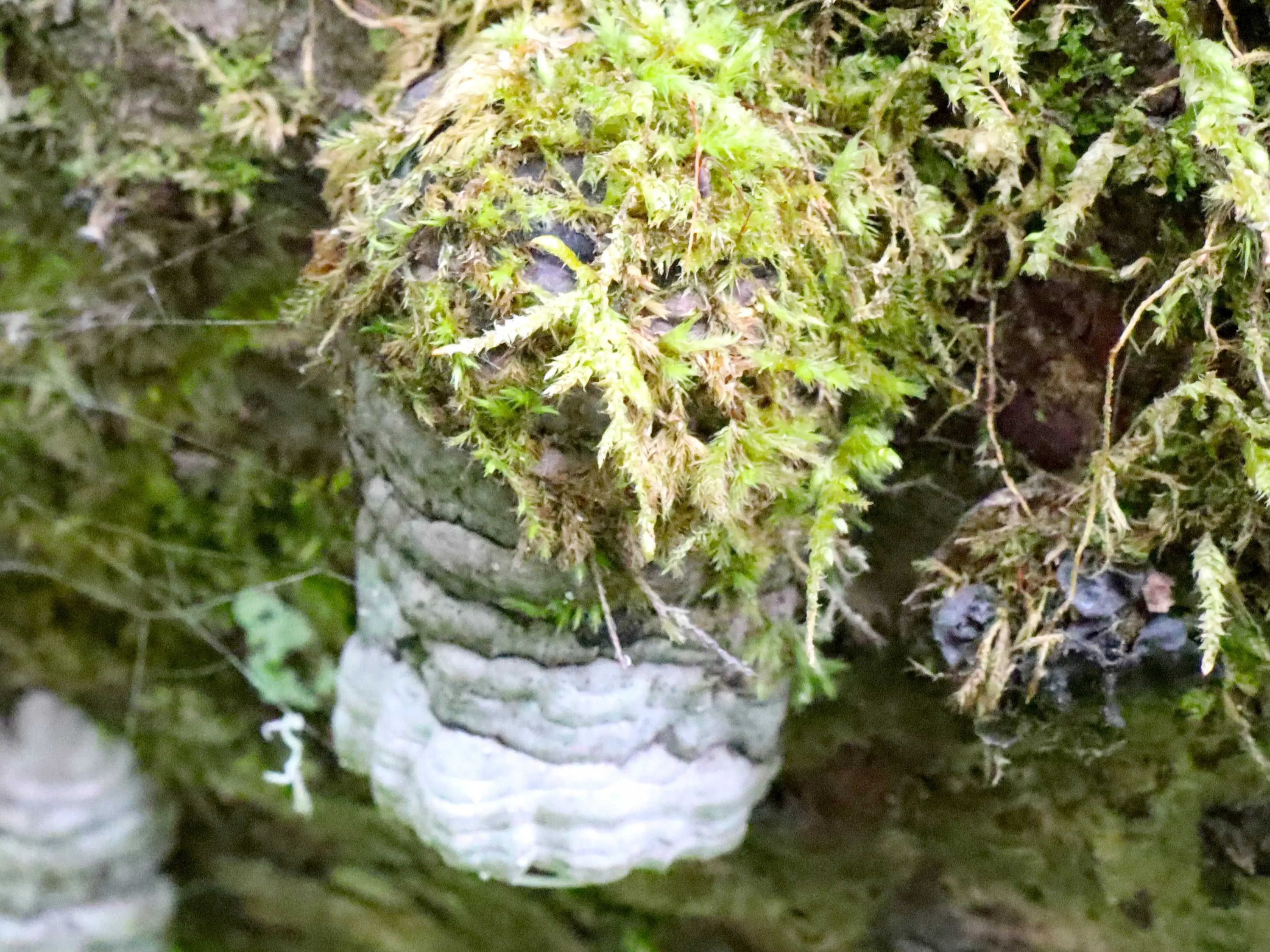
Cicadas chirped in the background as we passed ferns and bushes lining the bank. Further along Yasu spotted some white flowers high in the trees, known for attracting bees and flavouring the local honey. We stopped at a fallen tree trunk to look at distinctive cylindrical fungi that decompose the wood, returning it to the forest ecosystem.
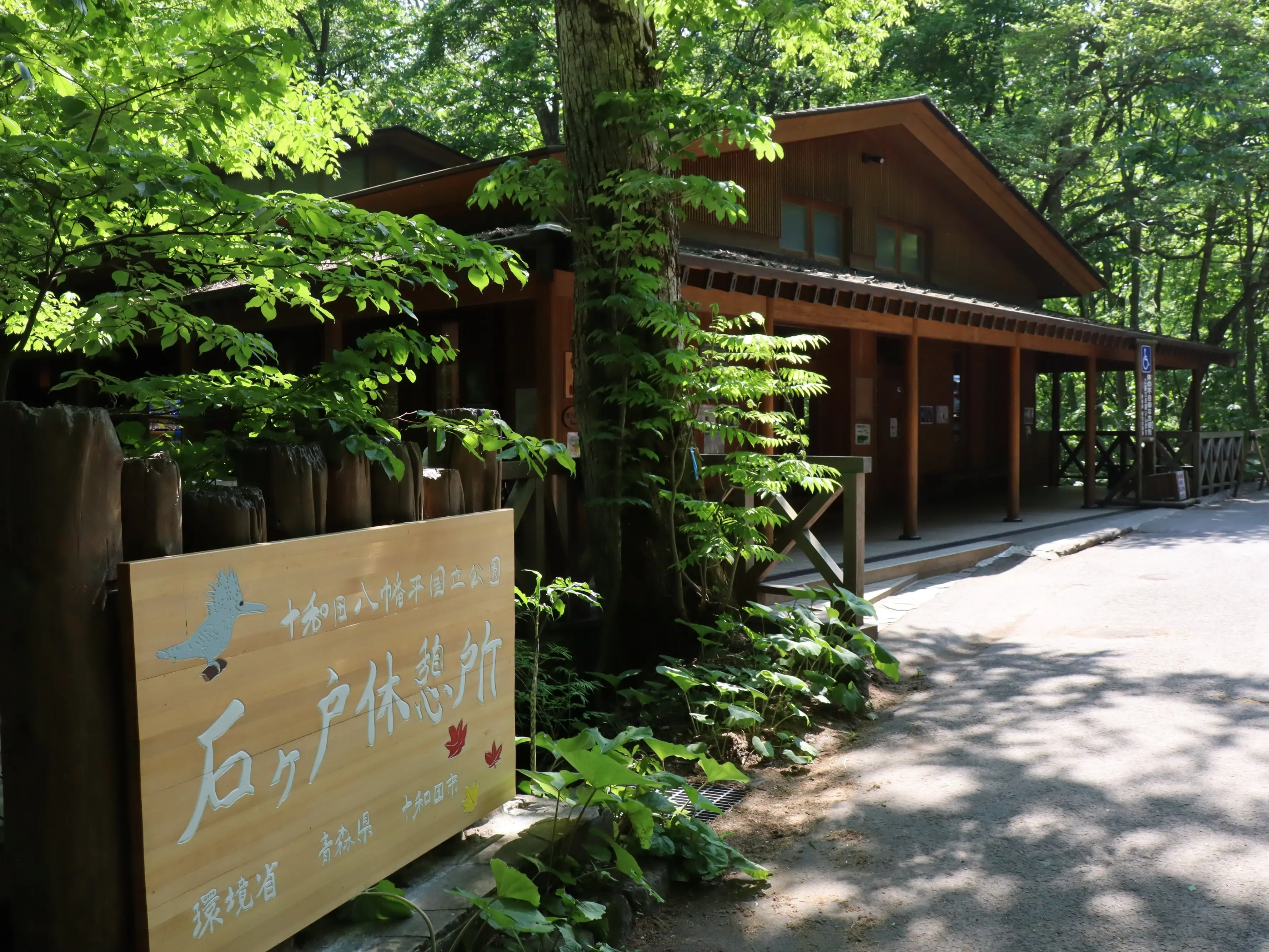
Cafe at Ishigedo.
Moss is the plant life Oirase Gorge is best known for, with over 300 species thriving in the damp shady conditions, covering rocks and tree trunks. Yasu had come prepared with magnifying glasses to get a closer look at the delicate details of the mosses. From a distance, they looked like a velvety patchwork quilt of different shades of green. Close up, the varied shapes of the leaves and stems became clear. He told me the descriptive Japanese names for some mosses, such as mouse tail and shrimp. When I looked through the magnifying glass, the reason for these names was obvious.
With the temperature dropping and a light drizzle settling in, we did a quick drive to Lake Towada. Mist drifted down from the hills as one of the lake boats arrived at the wharf. The shape of the caldera was only just visible. Disappointed that his home patch was not looking its best, Yasu decided to head back to one of his favourite spots in the forest for a tea break. He parked by a green glade and unpacked a thermos and a jar of honey. We drank tea and I tasted the delicious local honey while gazing at the midstream area that I’d walked by myself the day before.
Kumoi Falls in Japan. PHOTO: DENISE STEPHENS
Then I’d arrived at Oirase Keiryu Hotel just in time to catch their free shuttle bus that goes as far as Kumoi Falls, half way along the gorge. The falls cascaded in three tiers from the rocks above before tumbling over mossy boulders down to the roadside. I started walking back towards the hotel, stopping to look at rapids and waterfalls along the way. The trail was well-signposted and easy to follow, particularly with the walking map the hotel had given me.
The “stone hut” at Ishigedo. PHOTOS: HOSHINO RESORTS
Just before Ishigedo, I noticed a large stone slab propped on an ancient katsura tree trunk. Ishigedo means “stone hut” in Japanese, and this was what the leaning slab looked like. A sign told the legend of a beautiful female demon who lived here and would steal valuables from passing travellers. No demons were in sight, just a rest area with a historical display and rather ominous signs warning about bears. I was grateful the hotel had lent me a bear bell, even though the tinkling sound was a bit distracting. Ishigedo was a busy spot, being the only place on the trail to buy food, so I got a coffee and relaxed in the shade of the trees.
After walking further along the trail, my legs were beginning to feel tired. It was time to take the shuttle bus back to the hotel. That evening I soaked in the onsen, fed by water from Mt Hakkoda. Reputed to relieve a number of conditions including muscle and joint pain, it was just what I needed after walking. The outdoor hot spring overlooked the Oirase Gorge’s downstream section where the water gently rippled past. I lay there, my muscles and my mind relaxing in the warmth, surrounded by verdant forest.
— Denise Stephens was a guest of Oirase Keiryu Hotel.
Cylindrical fungi in Oirase Gorge.More information
Getting there: The Hayabusa shinkansen goes from Tokyo to Hachinohe in less than three hours, with multiple trains each day. A JR bus goes twice daily from Hachinohe station to Lake Towada (90 minutes, April-November only), or guests of Oirase Keiryu Hotel may use its daily shuttle bus, about 70 minutes.
Staying there: Oirase Keiryu Hotel is the only resort hotel on the banks of Oirase Gorge. hoshinoresorts.com/en/hotels/oirasekeiryu/